

Resources

Are Hormones and Incontinence Related? Exploring the Link
4 Min Read
Today I want to explore the complex relationship between hormonal changes and incontinence. This piece will provide you with a basic understanding of how hormones impact urinary control. I’m a movement teacher, not an endocrinologist, so all the information in this article is collected for your convenience, but should not be used to diagnose or treat any condition.
Table of Contents
Urinary incontinence affects about 28% of women between ages 30 and 39, and 55% at age 80
Those statistics alone should compel you to keep reading. Leaking urine is something that happens to almost every person born with a uterus at some point, but we don’t talk nearly enough about it. While there are many different causes of leakage, the impact of hormonal changes on the urinary system is discussed far less often than “sneeze pee.”
Yet urinary incontinence, when untreated, can cause massive amounts of shame, even causing people to stop engaging in activities they love because those activities cause leaking. Furthermore, incontinence is one of the driving factors that move people into long-term care and keep them from living active lives as they age. This doesn’t have to be the way it goes.
My goal with this article is for you to be able to visit your doctor with a few insights into the diagnosis, treatment, and management of hormone-related incontinence–and a few resources to go into much more depth on the topic. Recent research into hormones has demonstrated that they control much more of how the body works than we thought. It’s not just about pimples and periods and prostate exams. Hormones are part of the body’s regulation system, including functions like elimination that we shouldn’t have to think much about at all.
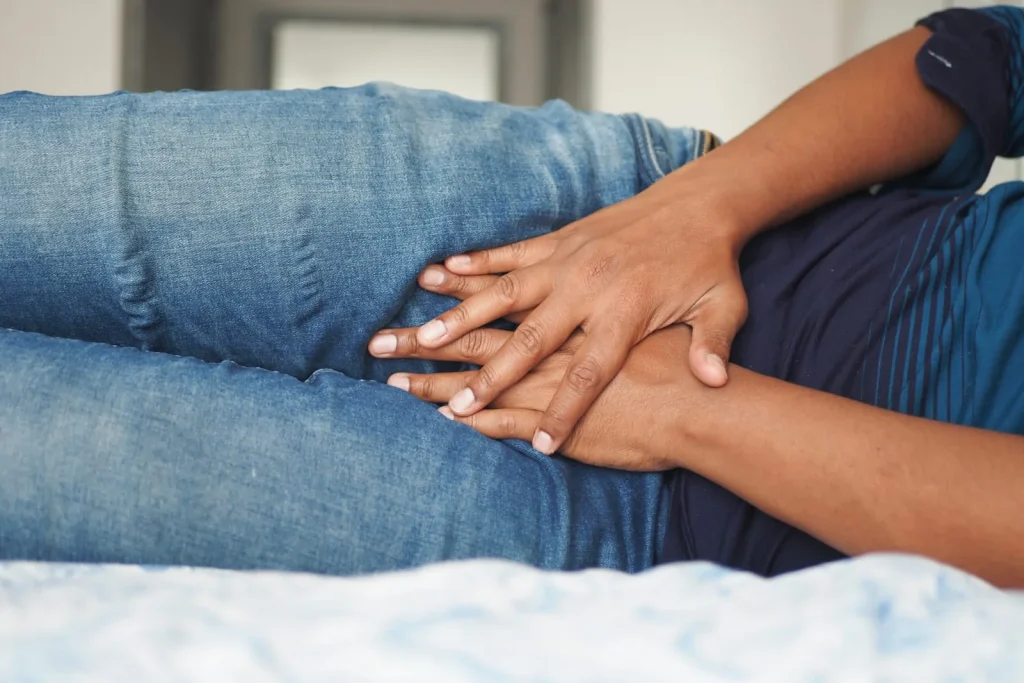
Understanding incontinence
There are four primary types of incontinence, though many people with incontinence may experience a mixture of two or more types:
-
- Stress urinary incontinence: the involuntary leaking of urine when the pelvic floor experiences a heavy load and is unable to manage it. This leaking can happen due to coughing, sneezing, jumping, etc.
- Urge incontinence: involuntary leaking of urine accompanied by a strong sense of urgency, usually due to overactivity of the tissue that composes much of the bladder.
- Overflow incontinence: leakage of urine because the bladder is too full, and can be caused by a blockage of the bladder outlet or a lack of tone in the bladder tissue.
- Functional incontinence: environmental or physical barriers to toileting that lead to incontinence.
There are several factors that may play a part in incontinence.
-
- Over- or under-active pelvic floor muscles
- Pelvic organ prolapse
- Pregnancy, especially with a vaginal birth
- Chronic constipation
- Engaging in high-impact activities
- Hormones
- Age
- Medical conditions such as enlarged prostate, tumors along the urinary tract, UTIs, etc.
If you were born with a uterus, you are more likely to experience incontinence after menopause than you are to have diabetes or hypertension. It’s more than a nuisance–regularly leaking urine can affect your skin health, your comfort with many activities, and even your sex life. While my main focus with Restore Your Core® is the physiological rehabilitation of your core & pelvic floor, hormones may be a factor in your incontinence that you might have overlooked.
The hormonal influence on the urinary system
Hormones are essential for regulating various aspects of the urinary system, including kidney function, fluid balance, and blood pressure.
How reproductive hormones play a role in the health of the urinary tract:
- Estrogen is a major influence, especially for post-menopausal people. Estrogen plays a role in maintaining the integrity of the urinary tract tissues, including the bladder and urethra. It helps prevent urinary incontinence and urinary tract infections by maintaining the tone and elasticity of the muscles in the pelvic floor and urinary sphincters.
- Progesterone’s influence on the urinary system is primarily through its effects on fluid balance and blood pressure regulation during pregnancy. It helps maintain the relaxed state of smooth muscles in the urinary tract, which can prevent urinary retention. progesterone may also negatively influence the function of the urinary tract, but th
- In people with testicles, testosterone influences the development of the urinary tract. In all people, testosterone promotes the growth and maintenance of muscle mass, including the muscles involved in urinary control.
Exploring the link between hormones and incontinence
With so many hormones involved in the urinary system, it’s no surprise that hormones can have an influence on continence. While bodies of any gender may experience incontinence, particularly as they age, the hormonal effects are very different depending on what hormones are involved.
For people assigned male at birth, the primary driver for the growth and development of the urinary tract is testosterone, and the biggest influence on urinary continence is the prostate gland. The prostate sits below the bladder and in front of the rectum, and produces seminal fluid. As people with prostates age, the prostate often continues to grow–a condition known as benign prostatic hyperplasia. The enlarged prostate then presses on the urethra, causing symptoms such as dribbling, waking up to pee at night, incomplete emptying, and urge incontinence.
Trans women who take HRT may still experience prostate-related issues in addition to the effects of estrogen described below. And trans men who take testosterone may find that they experience vaginal dryness and other symptoms due to the repression of estrogen in their systems. People who have undergone gender-affirming surgery may also have an increased risk of incontinence due to the nature of the surgeries involved.
For people assigned female at birth, estrogen is the primary hormonal player when it comes to urinary incontinence. Some studies have shown that there may be slight cyclical variations in continence for people who are experiencing regular menstrual cycles, but these have not been definitive. They do seem to indicate that some people experience more urinary incontinence at the time of ovulation. More problematic is the drop in estrogen production that occurs with menopause.

Estrogen and the genitourinary syndrome of menopause
During puberty for people with uteruses, estrogen levels increase, causing the development of breasts and other secondary sex characteristics. The rise in estrogen contributes to menstrual cycles by influencing ovulation. The presence of estrogen in your system as a whole makes penetrative intercourse more pleasant and comfortable: vaginal lubrication is increased, and the vaginal walls are thicker and more pliable. Estrogen also plays a role in your cardiovascular health, bone and muscle mass, collagen production, and brain function.
During perimenopause (which may begin for some people as early as age 35, and lasts until menstrual cycles have stopped completely for one year, usually around age 51), estrogen levels begin to decrease. As a result, all of those awesome benefits of estrogen also begin to disappear: the tissues of the pelvic floor may weaken, the vaginal walls thin, and vaginal secretions are diminished.
All of those changes can lead to increased pain with intercourse, increased risk of tearing of the vaginal tissues, and increased risk of UTIs. Urinary incontinence, which may not have been an issue earlier, often begins to occur. Leaking itself can exacerbate many of these issues, since urine left on the skin irritates the skin of the vulva, making it even more fragile. The effects of this drop in estrogen on the genitals and urinary tract are collectively called genitourinary syndrome of menopause (GSM).
While this seems pretty straightforward, everybody responds differently to the drop in estrogen. Some people will sail through perimenopause with hardly any symptoms, suddenly waking up and realizing that they haven’t had a menstrual cycle in a year. Most people do not. But how much they experience issues such as the thinning of vaginal tissues varies. So, what can we do about it? There are a few proven treatments for incontinence.
Treatment and management strategies for incontinence during perimenopause and beyond
The first step is to determine the type of incontinence. Stress incontinence in particular responds well to exercises and physical therapy. Urge incontinence can often be treated with lifestyle modifications including different strategies around emptying the bladder (e.g., waiting longer between trips to the restroom, or timing bathroom breaks so the body has a regular schedule).
Many women find success with targeted exercise programs like Restore Your Core®, which offers strategies to strengthen the pelvic floor and improve overall core function. There are also a number of pharmacological approaches, including Hormone Replacement Therapy (HRT), also known as Menopausal Hormone Therapy (MHT). It would be out of my scope to recommend specific medications, but in my research on this topic, I’ve learned that medications that reduce the frequency of urination do exist; however, they are not recommended for people with complex medical conditions, and many of us become more complex as we age.
Surgical options for severe cases include slings to help support the pelvic organs. Again, this is a topic for your doctor, but in general, surgery is a last-resort option since exercise and other less-invasive options are quite effective.
Systemic Menopausal Hormone Therapy can positively affect incontinence, though the source of hormone therapy with the fewest side effects is through vaginal estrogen creams. For many people, vaginal moisturizers are also highly effective at resolving some of the pain and discomfort that arises from the lack of estrogen. And if your body isn’t experiencing as much pain and discomfort every day, the pelvic floor muscles may function better, which is a good thing at any point in your lifespan.
For a comprehensive discussion of the medical treatments available for genitourinary syndrome of menopause, please see this excellent, detailed breakdown by Dr. Jen Gunter.