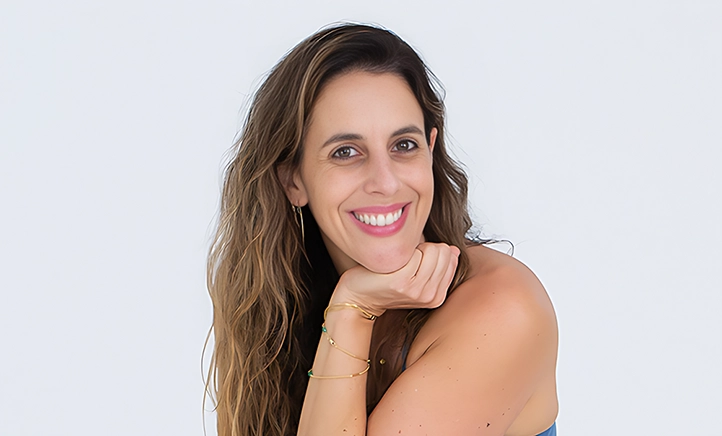
Lauren Ohayon is the creator of Restore Your Core® (RYC®), a comprehensive and sustainable whole-body fitness program that empowers women to achieve ideal pelvic floor / core function and be strong, long, mobile and functional.

Table of Contents
Motherhood doesn’t only reshape our bodies, it reshapes our lives. In caring for others (while still attempting to care for ourselves), our attention and energy can feel pulled in a million directions.
The morning itself can be a centering challenge with children. There can be multiple emergencies before you’ve even eaten breakfast. One kid is beating up on the other. Food is burning in the kitchen. Your dog is begging to go out. Meanwhile, work emails and texts are pouring in, with subjects like “Urgent” and “Time Sensitive”. Not to mention the mental ticker and open brain tabs of all the to-do’s still yet to be tackled.
Thankfully, awareness of our breath and our posture are powerful tools for helping us stay centered amidst motherhood’s never-ending demands.
This isn’t just theory either – there’s science behind it. A well-known 2015 study looking at the effects of posture on people’s moods and stress responses via facial expressions found that “muscular states are related to emotions.” How we hold ourselves in our physical bodies influences how we can hold all of the world’s responsibilities.
Connecting to our core can help us find our center.
Get free expert advice and start your postpartum healing journey today
There’s growing evidence that movement patterns don’t just shape muscles – they also influence mood and mental health. For example, a recent meta-analysis of postpartum women found a noticeable reduction in depressive symptoms when exercise was regularly performed.
Let’s do a little experiment. We’re going to make note of a few things, see their effects, and then play with a few realignments. Try to observe objectively. In other words, try to notice without judgment or attaching a story.
How we hold ourselves and how we breathe influences how we handle challenges. A recent large-scale review found that conscious breathing is a “powerful tool for regulating stress.” Another study looking at the effects of posture on our emotions found an upright and aligned spine to be related to more positive mood and processing speed, allowing people to handle more tasks.
Moms may not be able to control the amount of demands coming at us, but we can always check in with and adjust how we’re holding our body and how we’re breathing.
Let’s dig in a little deeper.
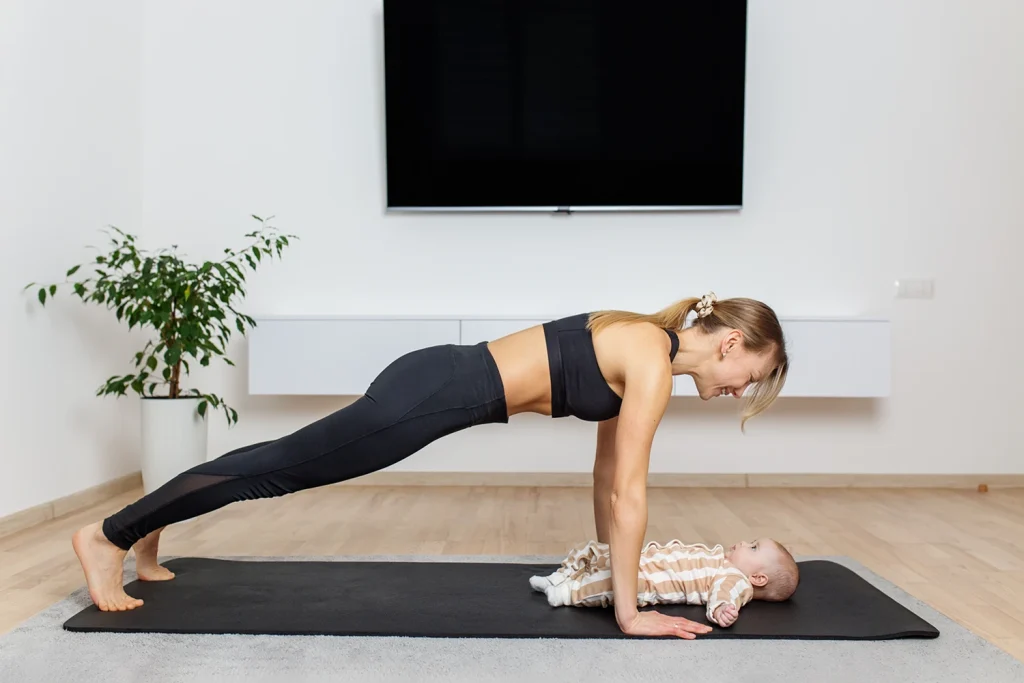
Take 3 steps toward doing the things you love again postpartum
In the nearly twenty years I’ve been teaching movement, I have worked with a lot of overwhelmed moms. While these women vary vastly in culture, age, and background, many of them ask for the same result: “Can you help me get a 6-pack?”
Rarely do busy moms book a session hoping to get more grounded or to improve their posture and breathing, yet those are the surest ways to help moms balance all they have to hold.
As the most visible section of the abdominal muscles, the rectus abdominus is understandably appealing. We love to work on results we can see. But while it may look good in a bikini, it is a very singular and external piece of a greater, magnificent system: our core.
When we say “core,” most people assume we simply mean the tummy and abdominals. Instead, let’s think about it as our entire trunk, including shoulders to hips. Picture an apple that has been eaten to its core. What remains is the central structure that holds everything.
The rectus abdominis is the most superficial layer in both its anatomical position (“superficial” literally means closest to the skin or surface) and also its function. Its main job is spinal flexion, rounding the back. Which means that when it’s overdeveloped, it can pull us into a hunched position, messing with our breath, and as a result, our mood and stress tolerance.
In order to have a truly strong core and center, we need to dive even deeper (literally).
Discover the top 3 steps to regain your fitness and strength postpartum–free
The “deeper core”, sometimes known as the hidden core, are the stabilizers beneath the surface. They work in symphony and when well-coordinated keep our spine strong and our limb movements fluid. Research shows that diaphragmatic motion and pelvic-floor muscle activity are closely linked – illustrating that our breath and base of support are intertwined. They are responsible for us lifting our children without throwing our back out every time. And not falling over when life (or the bus) comes to a sudden stop.
When our spine is well-aligned, the deeper core muscles can work more optimally. It’s a give-and-take relationship. Alignment supports activation and activation supports alignment.
Here are some of the key muscle systems we will want to consider:
These muscles harmonize most effectively when the spine is in a neutral position. In yoga we call this Tadasana or Mountain Pose.
The most important piece of any pose is always your spine. We can live without limbs, but the spine is the essential structure of the body.
Motherhood can shift our alignment. This can be due to pregnancy or carrying children. For example, some women find their pelvis pressing forward. Others may be more arched in their lower back. Some find one hip hiking from carrying children on the same side. Another’s chest collapses and her head pushes forward. In all of these misalignments, the main structures of the deep core are out of order, which means our diaphragm and pelvic floor cannot synchronize as effectively.
A “straight” spine is actually a misnomer since sections of the back are curved concavely or convexly–what is referred to as lordotically or kyphotically, respectively.
When viewed from the side, aim to align these bony landmarks for neutral:
Ear hole → Shoulder head → Outer hip → Outer knee → Outer ankle
Get 3 (free) scientifically-proven steps and regain your postpartum strength and fitness
Now, let’s play with three simple movements to help you access your deeper core muscles.
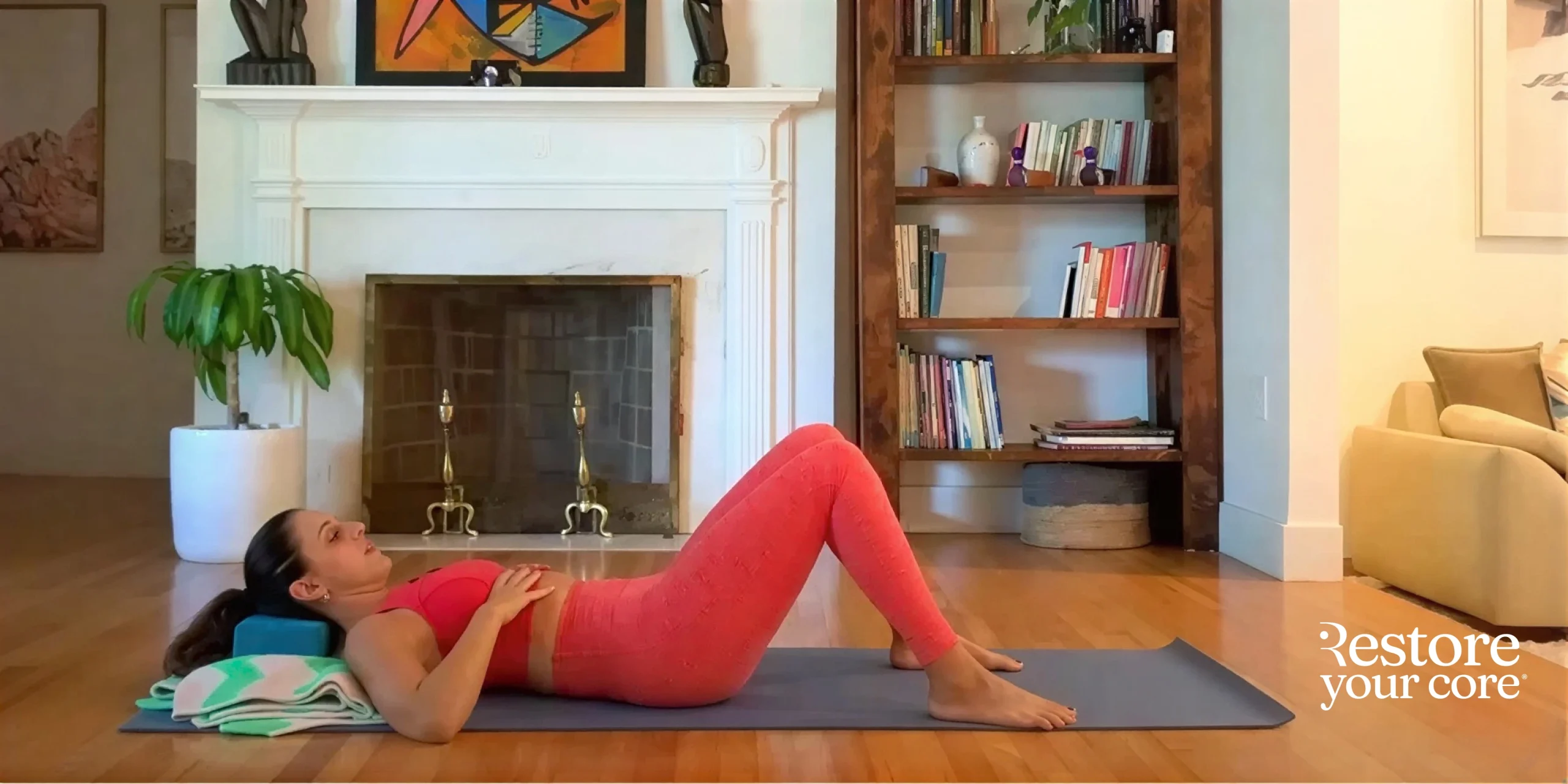
360 degree breathing in Chair Pose Against a Wall: We are carrying a lot of responsibilities on our shoulders as busy moms. The weight of the world can feel especially heavy when we are not centered. This posture will help us practice our spine alignment and breathing within intensity. It is also a great way to learn how to stay uplifted when things feel heavy.
How to:
Wall Press: How often does it feel like you are pressing against a wall in motherhood? Someone is not listening or you are getting resistance from outside systems when advocating for your kid? Imagine how much steadier we could be to handle these circumstances if we led with our center. That is what this variation teaches us. How to engage our deepest core muscles through pressure.
How to:
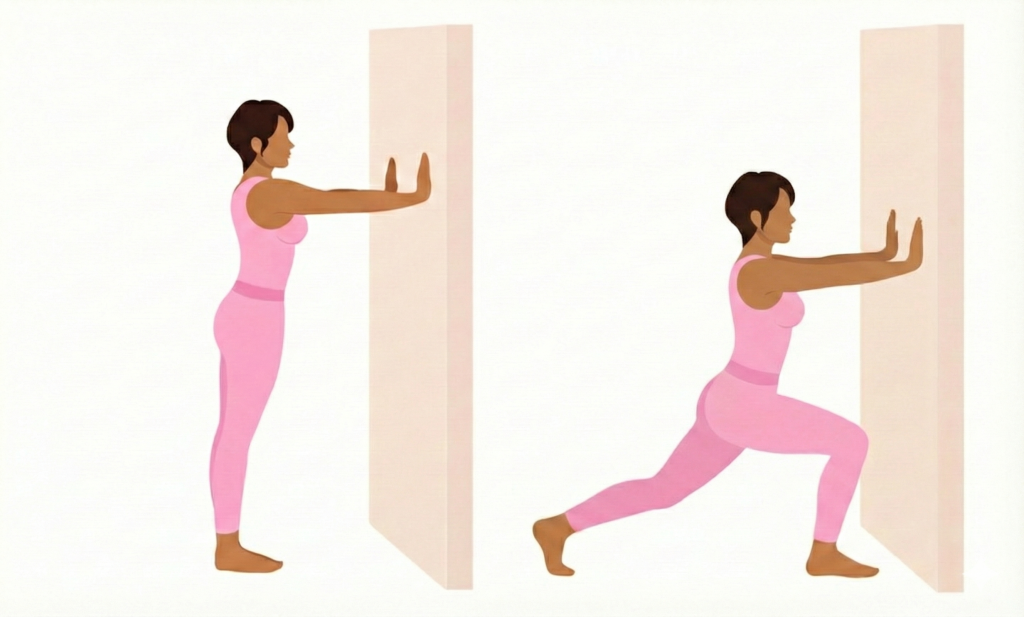
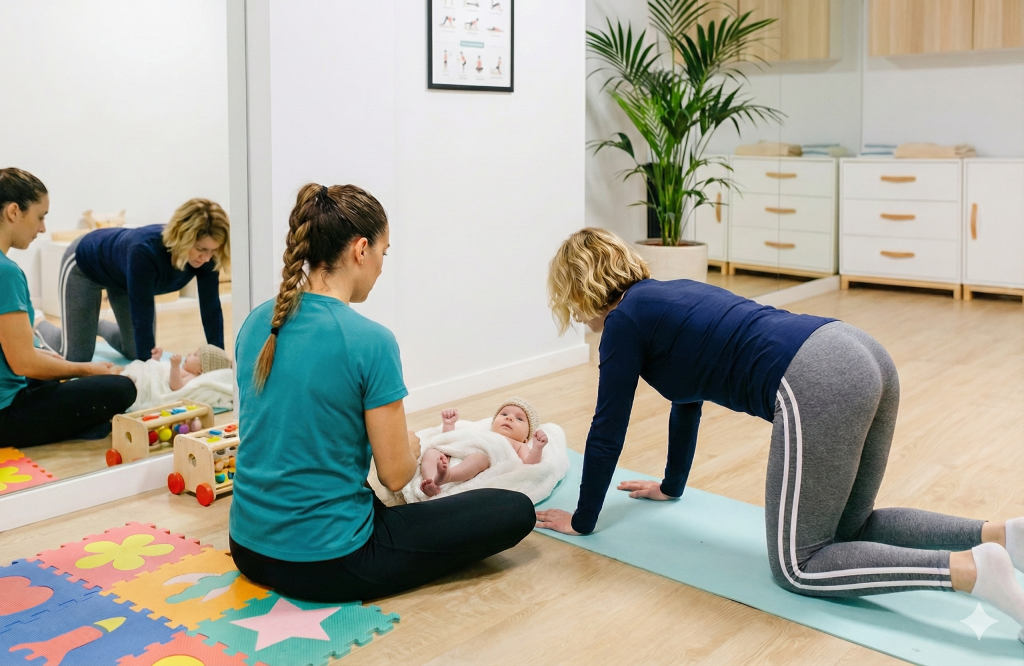
Table top with knees hovering: Ever feel like you’re carrying the weight of the world (or at least your household) on your shoulders? This shape teaches you how to distribute that weight with more balance and support. When we hover the knees, we tap into the deeper stabilizers of our core. These are he muscles that help us stay centered and grounded even when things feel shaky. It’s less about strength and more about awareness. How do you organize yourself under pressure?
How to:
The next time you’re juggling a crying toddler in one arm, a heavy scooter in the other, while chasing your 5-year-old, notice where your spine is in space. Pause, realign, and take a few deep breaths.
It might not make your little one ride their scooter the rest of the way home, but it will help you meet the chaos of motherhood with a steadier, more centered energy.
Awareness of posture and breath is a simple way to find center and feel integrated. When we are integrated on a physical level, we can meet the mental and emotional loads of motherhood with more ease.
Yes! These movements are safe to perform pre and postnatally, however always check in with your provider before engaging in any physical activity. And maybe most importantly, check in with yourself. If a movement doesn’t feel right, skip it.
These gentle alignment and breathing practices can support healing, but it’s always best to work with a pelvic floor trained professional (like a Restore Your Core instructor) who can tailor movements to your needs.
Absolutely not. The goal is responsiveness, not rigidity. Your core should be adaptable, which means it’s able to activate when needed and soften when not. Also, as Lauren teaches, our core engages on its own. Otherwise our insides would fall out! We’re looking for optimization and efficiency versus perfection and constant tension.
Many people feel shifts in awareness and breath after just one session. Structural and strength changes take consistency. Think in weeks or months, not days, Even small, mindful check-ins make a big impact. And awareness is the first step. If you catch yourself hunching or arching or holding your breath, that is a win! You noticed.
Absolutely. It’s never too late to reconnect to your core. These systems are adaptable at any age or stage! We also need centering tools in perimenopause, menopause, and post menopause.
[1] Awad, S. et al (2021). Embodiment: I sat, I felt, I performed – Posture effects on mood and cognitive performance.
[2] Deprato A, et al (2025). Impact of postpartum physical activity on maternal depression and anxiety: a systematic review and meta-analysis.
[3] Little, Abbie (2025). The A52 Breath Method: A Narrative Review of Breathwork for Mental Health and Stress Resilience.
[4] Nair, S et al (2015). Do slumped and upright postures affect stress responses? A randomized trial.
[5] Popajewski, M., Zawadka, M., Wójcik-Załuska, A., & Milart, P. (2024). Maternal Parity Effect on Spine Posture Changes and Back Pain During Pregnancy. Healthcare, 12(22), 2202.
[6] Sicilia-Gomez, C., Fernández-Carnero, S., Martin-Perez, A., Cuenca-Zaldívar, N., Naranjo-Cinto, F., Pecos-Martín, D., Cervera-Cano, M., & Nunez-Nagy, S. (2022). Abdominal and Pelvic Floor Activity Related to Respiratory Diaphragmatic Activity in Subjects with and without Non-Specific Low Back Pain.
“There is no thank you big enough for Lauren Ohayon existing and thinking and helping so many of us. Every time I do something I never thought I’d do again she is part of the reason why.”
Laura Gregg
in this FREE video and get the support you deserve

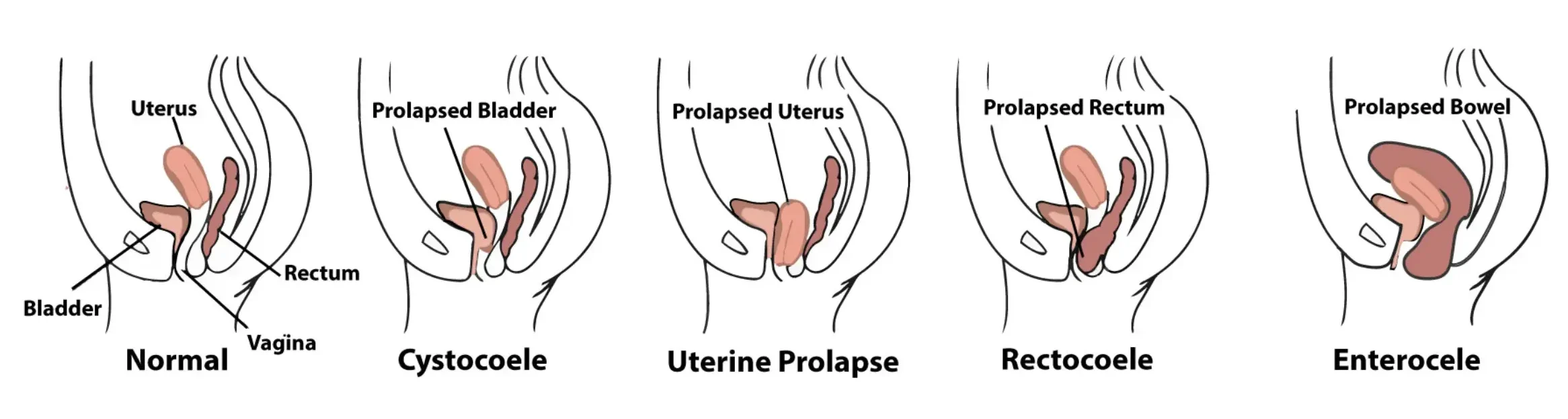
Postpartum physical therapy can be a great way to restore function and strength in your core and pelvic floor muscles. Giving birth places a strain on your body and it...

The postpartum recovery period typically lasts well beyond common expectations. Guiding and supporting your postpartum patients and clients through this transitional period requires effective strategies tailored to their individual needs....
Postpartum recovery can be difficult for anyone, but there are particular considerations to keep in mind after a C-section. Read on to learn more about how to begin a safe...

Have you just had a baby, or are you about to give birth? Read on for pelvic floor exercises that facilitate faster postpartum recovery, enhance overall well-being, and improve long-term...
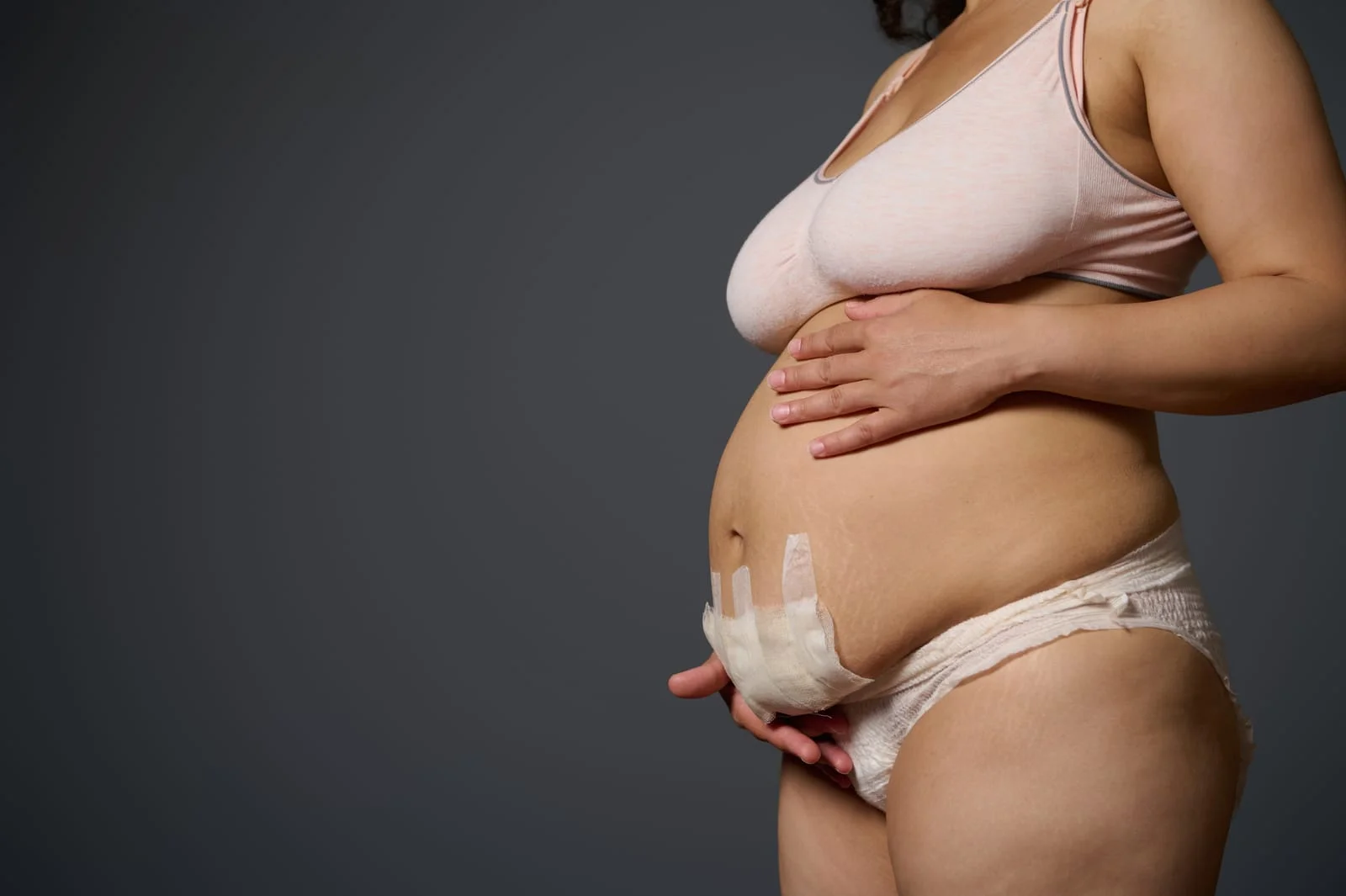
Introduction Pregnancy and delivery are a massive undertaking. Your body has to adapt and expand to allow the baby to grow, and having a C-section means you face a whole...

Giving birth takes a toll on your body – both physically and emotionally. Many postpartum people will feel overwhelmed and exhausted after giving birth, which can make it difficult to...
Before you begin any exercise routine, consult with your doctor for medical clearance. Practice patience with yourself and your body, and rest, lots of rest! I recommend waiting at least...
*No spam, just quality content and support

Please check your inbox soon.

Take 3 steps toward doing the things you love again postpartum
in this FREE video and get the support you deserve