Lauren Ohayon is the creator of Restore Your Core® (RYC®), a comprehensive and sustainable whole-body fitness program that empowers women to achieve ideal pelvic floor / core function and be strong, long, mobile and functional.
Hi! I'm Lauren.
Nice to meet you
Lauren Ohayon is the creator of Restore Your Core® (RYC®), a comprehensive and sustainable whole-body fitness program that empowers women to achieve ideal pelvic floor / core function and be strong, long, mobile and functional.
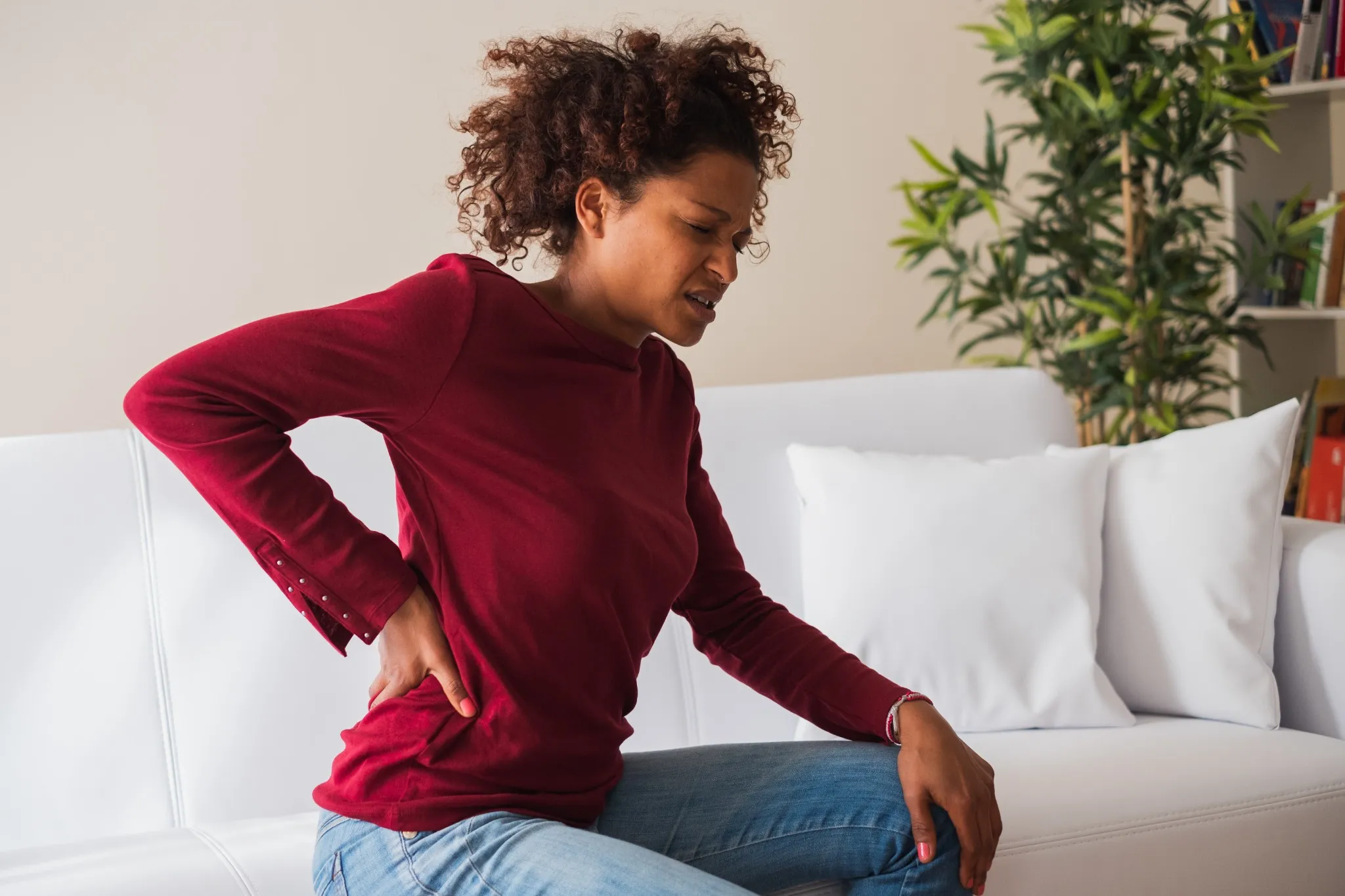
For years, I lived with a nagging pain deep in my butt that I couldn’t explain or ignore. I was told it may be my piriformis muscle. I learned that the piriformis is a small muscle located deep in the buttocks. When overworked or compressed, it can irritate the sciatic nerve, causing pain.
Like many people living with chronic pain, I kept pushing through and tried using tennis balls, foam rollers, and anything else I could to try to allow it to let go.
Start your healing today with this free workout
Table of Contents
When My Body Forced Me to Pay Attention
Eventually, my back gave out completely. I herniated three discs in my lower spine – L4, L5, and S1. If you’ve experienced a disc injury, you know how intense and overwhelming that pain can be.
At that point, surgery was suggested. But deep down, I wanted to understand why this happened, as it could happen again. I wanted to address the root cause, not just the symptoms.
I went to physical therapy (PT) and realized that many of the exercises I was given felt very similar to movements I’d experienced in yoga.
Yoga wasn’t widely accessible in the early 2000s, so I decided to become a certified yoga instructor. I wanted to learn more, not just to heal myself, but to truly understand how the body moves.
Learning That Strength Isn’t About Pushing Harder
Through yoga, I learned that stability didn’t mean forcing or gripping, and finding a mind/body connection was central to healing.
A few years later, I discovered the Pilates Reformer and began working with a skilled teacher. Pilates helped me:
build strength in my pelvis
improve joint mobility
move with more precision
After eight years of practice, I became a Certified Pilates Teacher.
My back began to heal, but the pain in my butt never fully disappeared.
Understanding Posture, Patterns, and Asymmetry
Still searching for answers, I found the Postural Restoration Institute(PRI). PRI focuses on how our bodies adapt over time, often creating asymmetrical movement patterns without us realizing it.
Here’s what I learned:
I was living primarily on my right leg.
I was stuck in external rotation of my right leg, overloading the piriformis.
I was teaching all the yoga moves on my right side while watching students move to the left side.
How to recognize my movement patterns.
For the first time, I understood that my piriformis wasn’t the problem – it was responding to years of imbalance and overload.
Asymmetries that began in my early 20’s and were exacerbated by pregnancy.
I learned a lot, but the pain in my butt would still come back!
Try 18 minutes of healing, nourishing movement – the RYC® way
When the World Shut Down, a New Door Opened
In 2020, access to my usual support team disappeared:
RYC® didn’t begin with strengthening or stretching. It began with breathing.
Candle breath became my favorite. Imagine, on the exhale, blowing out 100 birthday candles.
Work on supination and pronation.
Pelvis awareness through pelvic rocking and pelvic clock, creating a connection to the pelvis.
Rib mobility. If the ribs are not moving, you are not breathing, and it will be difficult to connect to your pelvic floor.
Each part of the body was given a chance to “find its home” again.
As a yoga teacher, I understood nervous system regulation in theory, but these movements were somatic and deeply connecting. They allowed tension to melt away rather than be forced out.
Enjoy a free, pelvic-floor & core healing whole-body workout today
When the Piriformis Finally Let Go
After more than 15 years, something remarkable happened.
The piriformis pain eased.
My nervous system felt safer.
My body allowed me to move more slowly, without fear.
I realized my body:
Wasn’t weak
Was resilient
Simply needed time, patience, and the right support
For the first time in over a decade, I was free from daily pain.
Why This Work Matters, for My Students and Me
With Pilates, my discs stabilized. With RYC®, my nervous system became regulated. Together, my glutes and piriformis could finally do their jobs with ease.
The sequencing I learned through RYC® has been transformational for my students as well. This isn’t just about “fixing” the core, it’s about:
Feeling safe in your body
Moving with confidence and ease
Finding joy in daily movement
I feel deeply grateful to have found this work and honored to share it with others on their healing journey.
Five exercises to help with piriformis pain.
Candle breath. Inhale, expand the ribs in 360 degrees, and exhale like you are blowing out 100 birthday candles. Can be done standing, sitting, on your back, or on all 4s.
Pelvic rocking. Imagine a clock and your pubic bone is at 12:00 and your navel is 6:00- rock 12 to 6, and 6 to 12. Slowly, softly, with breath guiding you. Exhale 12 to 6, inhale 6 to 12. Can be done standing, sitting, in a short lunge, or lying on your back.
Windshield wipers. Legs wide, keeping both feet on the ground, lift your right butt cheek off the ground, imagine the right hip bone reaching to the left knee. Repeat the same on the other side.
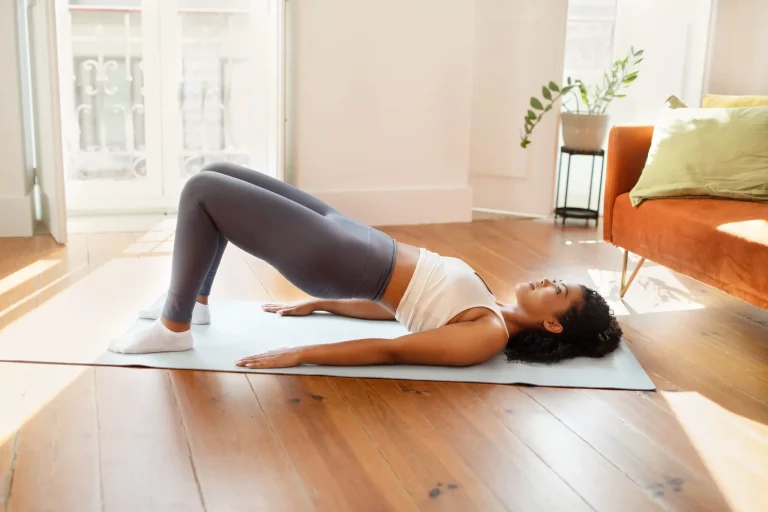
Bridging. I like to bridge in 3 ways. Legs parallel, legs wide-externally rotated, and knees touching feet apart (internally rotated). I feel like I can connect to the entire hip.
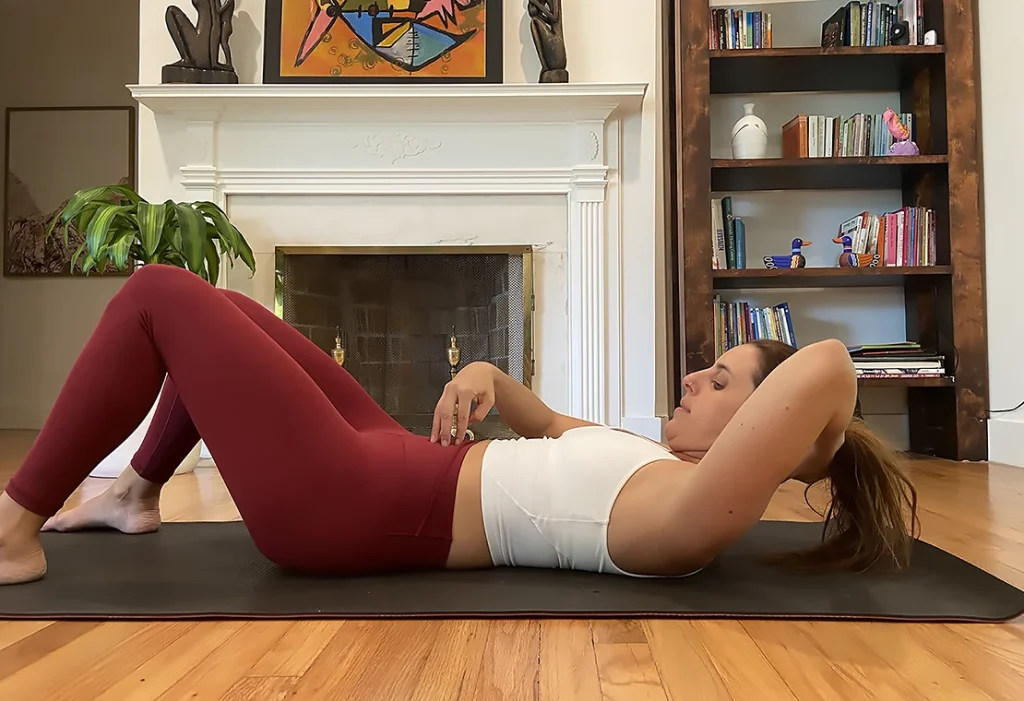
Hip Loading. Lie on the floor and bend your knees. Bring one leg toward the chest and place the same-side hand on that leg (can use a block). Push the hand into the leg and the leg into the hand. Exhale as you push.
FAQ
What is the piriformis muscle?
The piriformis is a small muscle located deep in the buttocks. It helps stabilize the hip and assist with leg rotation. When overworked or compressed, it can irritate the sciatic nerve, causing pain.
Why didn’t stretching alone fix my pain?
Pain is often related to how the body moves and breathes—not just muscle tightness. Without addressing posture, breathing, and movement patterns, stretching can miss the root issue.
What role does the nervous system play in pain?
When the nervous system feels unsafe or overstimulated, muscles and fascia may stay tense as a protective response. Gentle, somatic movement helps signal safety and allows muscles and fascia to relax.
Is slower movement really effective?
Yes. Slower movement improves awareness, coordination, and nervous system regulation – often leading to more lasting results than pushing harder.
“There is no thank you big enough for Lauren Ohayon existing and thinking and helping so many of us. Every time I do something I never thought I’d do again she is part of the reason why.”
Laura Gregg
Free pelvic-floor friendly TLC for your low back
Start healing your low back today with 18 minutes of gentle, restorative movement
You’ve likely heard over and over again: strengthen your core to reduce back pain. But is back pain due to weak core muscles? I’m going to explore that question and...
Sacroiliac (SI) joint dysfunction can sometimes lead to lumbar spine and leg pain. The SI joint is located between the sacrum and and ilium bones in the pelvis, connecting the...
Symphysis Pubis Dysfunction (SPD) happens when the ligaments that keep your pubic bone and pelvis stable become overstretched and no longer stabilize your pelvis. Essentially, a structure that is designed...