
Restore Your Core®

Types of Hernia: Causes, Symptoms, and Treatment Options Explained

Restore Your Core Promotion

Types of Hernia: Causes, Symptoms, and Treatment Options Explained

By 10/21/2025

4 Min Read

If you’ve noticed an unusual bulge or are experiencing discomfort in your abdomen or groin, you might be dealing with one of several types of hernia. Whether you’re researching symptoms, have been recently diagnosed, or are supporting someone through treatment, understanding the different types of hernias can help you make informed decisions about your health. 

What Is a Hernia?

A hernia occurs when an organ or tissue pushes through a weak spot in the surrounding muscle or connective tissue that normally holds it in place. The sac or bulge that protrudes from the weak spot may contain either a part of the intestine, a piece of the fatty lining of the colon (called the omentum), or other organs, depending on the type of hernia and the location.

What Causes a Hernia?

Your abdomen and pelvis are made up of multiple layers of muscles, tissues, and organs that work together to provide structure and support. A hernia may be congenital (present at birth) or may develop later in life. Prior surgeries, injuries, or factors such as heavy lifting, chronic coughing, constipation, obesity, pregnancy, or connective tissue disorders can weaken these supportive tissues. Over time, vulnerable spots may form, allowing internal tissues or organs to protrude, resulting in a hernia.

Common Types of Hernias

Understanding the various types of hernias helps you recognize symptoms and seek appropriate treatment. Most hernias fall into several main categories based on location.

Groin and Pelvic Floor Hernias

Inguinal Hernias

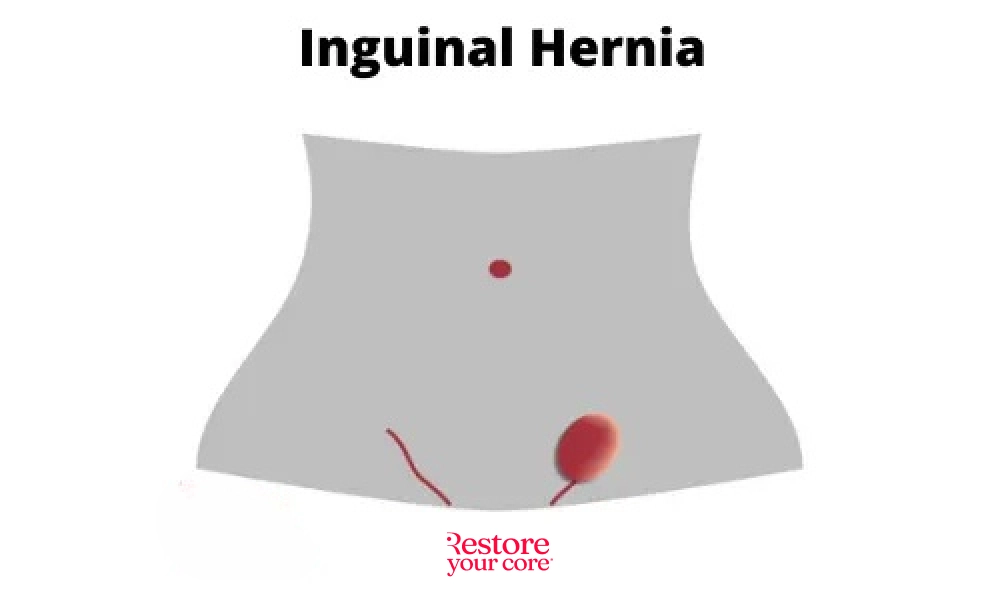
Inguinal (groin) hernias are the most common type of abdominal hernia, accounting for about 75% of all abdominal wall hernias [1]. Inguinal hernias occur when part of your intestine protrudes through a weak spot in your lower abdominal wall, affecting an area known as the inguinal canal region.

There are two types of inguinal hernia:

  • Indirect: Hernia sac enters the inguinal canal, more common in infants/young children
  • Direct: Hernia sac pushes directly through the abdominal wall without entering the inguinal canal, seen in older adults

While risk factors include (but are not limited to) heavy lifting, chronic coughing, constipation, obesity, and prior surgeries, inguinal hernias are more common in men and can affect people of all ages, including children.

The primary characteristic is a lump or bulge located on either side of the pubic bone when the thigh meets the groin. You may notice this more when you cough, stand, or strain and may be painful during these activities. Often, the lump recedes when lying down.

It is important to note that one of the primary dangers of an inguinal hernia is strangulation. While many hernias may cause few symptoms and can be managed conservatively, a strangulated hernia can cut off blood flow to the intestine, leading to severe pain, nausea, vomiting, and bowel obstruction. This is a medical emergency and requires immediate attention.
Femoral Hernias

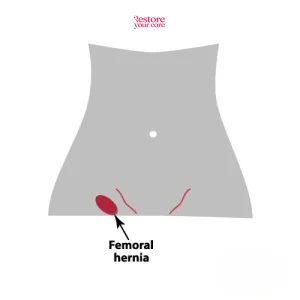
A femoral hernia occurs when tissue pushes through the femoral canal, a narrow passage medial to the femoral vein at the base of the groin. This canal typically contains lymphatic vessels and fat, but it can become a point of weakness in the lower abdominal wall. Femoral hernias are less common than inguinal hernias but tend to occur more frequently in women due to differences in pelvic structure.

Like an inguinal hernia, a femoral hernia can pose serious health risks. They are often small and may go unnoticed until complications such as strangulation occur. When this happens, blood supply to the trapped tissue is cut off, creating a life-threatening emergency.

If you notice a lump or bulge near the groin crease or in the upper thigh, it is crucial to seek medical advice promptly, even if it is not painful.
Perineal Hernias

Perineal hernias occur when abdominal or pelvic contents protrude through the pelvic floor into the perineum – the area between the anus and the genitals. They may be congenital (present at birth) but are more commonly acquired, following pelvic surgery, difficult childbirth, or conditions that weaken the pelvic floor.

Risk factors include multiple pregnancies, chronic straining from constipation, obesity, or previous surgery such as the removal of part of the rectum. Because the pelvic floor is already under pressure in these situations, weak points can form, allowing tissue to herniate.

Symptoms may include a visible or palpable bulge in the perineum, discomfort when sitting, or pelvic pressure that worsens with straining. In some cases, perineal hernias are discovered only during imaging or surgery. As with other hernias, they carry a risk of incarceration or strangulation and should be evaluated by a healthcare provider.

Sciatic Hernia

Sciatic hernias occur when abdominal or pelvic tissue protrudes through the greater sciatic foramen – a natural opening at the back of the pelvis that allows structures such as the sciatic nerve and blood vessels to pass into the buttock and leg.

These hernias are more often seen in women and may be associated with factors that weaken or stretch pelvic tissues, such as multiple pregnancies, chronic constipation, or significant weight loss. Due to their location, sciatic hernias can be challenging to diagnose and may not present with an obvious bulge. Instead, people may experience buttock or hip pain, sciatica-like symptoms, or signs of bowel obstruction if the intestine becomes trapped.

Although extremely rare, sciatic hernias carry the same risks of incarceration and strangulation as other hernias. Prompt medical evaluation is essential if symptoms arise.

Obturator Hernias

Obturator hernias are the rarest type of pelvic floor hernia. They occur when abdominal tissue, usually part of the intestine, protrudes through the obturator canal — an opening in the pelvic bone that allows passage of the obturator artery, vein, and nerve into the thigh.

These hernias are most often seen in older women, especially those who have experienced multiple pregnancies or significant weight loss, as these factors can weaken and widen the pelvic tissues.

Unlike other hernias, obturator hernias may not cause a noticeable bulge. Instead, they can present with pain along the inner thigh or knee due to pressure on the obturator nerve, and they carry a high risk of bowel obstruction and strangulation. Prompt diagnosis and treatment are essential.

Anterior Abdominal Wall Hernias

Your abdominal wall is made up of paired muscle groups on either side of your body, including the rectus abdominis muscles (your 6-pack), the internal and external obliques, and the transversus abdominis. Together with connective tissue and fascia, these muscles form the anterior abdominal wall, providing strength and stability while helping contain and protect the abdominal organs. Weakness in these structures can lead to various types of abdominal wall hernias, including umbilical, epigastric, and incisional hernias.
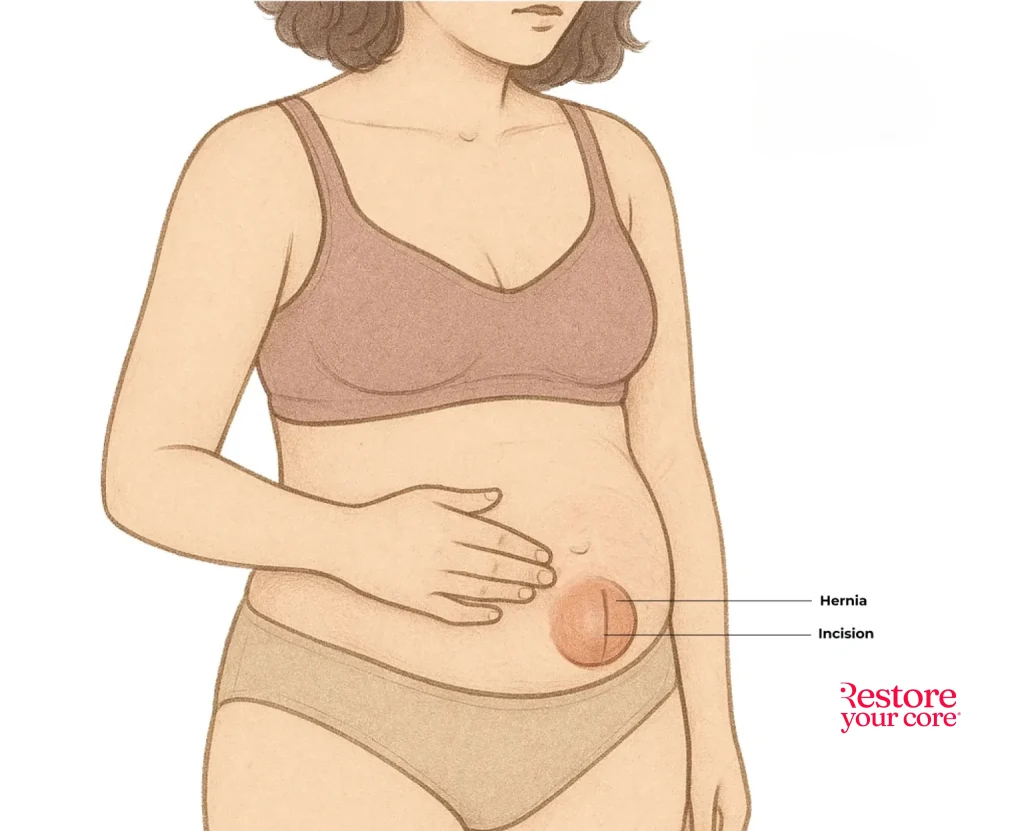
Umbilical Hernia

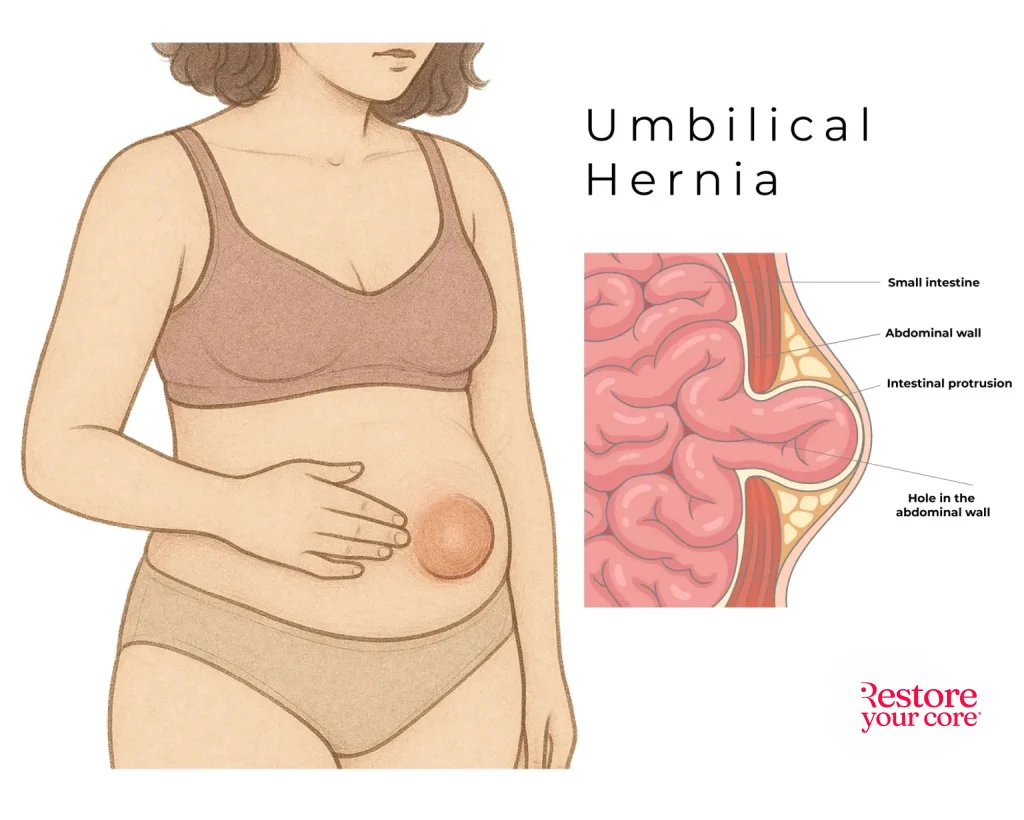
Umbilical hernias are the second most common abdominal wall hernia, accounting for approximately 6-14% in adults [2]. They typically occur more frequently in children, but can also affect adults. Umbilical hernias occur when fat or part of the intestine pushes through a weak spot in the muscles near the belly button.

In adults, umbilical hernias are more common in women and are often associated with conditions that increase abdominal pressure. They are sometimes classified by size (small, medium, large) and by the type of tissue that protrudes.

Risk factors include:

  • Heavy lifting (especially without proper technique)
  • Being overweight
  • Increase age
  • Multiple pregnancies 
  • Chronic cough
  • Enlarged prostate causing straining
  • Chronic constipation
  • Chronic vomiting

Umbilical hernias in newborns are common and usually resolve on their own without treatment. Surgical repair in children is generally only considered if the hernia persists beyond age 4-5, or if complications such as strangulation occur (which is rare in infants).

In adults, however, umbilical hernias are far less likely to close on their own. Because the abdominal wall is no longer developing, most adult umbilical hernias require surgical repair, especially if they are painful, enlarging, or at risk of complications such as incarceration or strangulation.

Umbilical Hernia – RYC®

Epigastric Hernia

Epigastric hernias occur along the linea alba, the fibrous band between the breastbone and the belly button. They develop when fat or other tissue pushes through a weakness in the tissue. In rare cases, bowel or omentum may become involved.

Epigastric hernias may be mistaken for diastasis recti, another condition affecting the rectus abdominis and linea alba; however, unlike diastasis recti, which is a stretching of the midline without a true defect, an epigastric hernia involves an actual opening in the abdominal wall.

Spigelian Hernia

A Spigelian hernia is a rare type of abdominal wall hernia, making up less than 2% of cases. It occurs through the spigelian fascia, a layer of tissue at the outer border of the rectus abdominis muscle near the semilunar line. These hernias are most often found in the so-called “spigelian belt”, a horizontal zone of weakness just below the navel and above the groin.

Because Spigelian hernias can develop between muscle layers, they may not produce a visible bulge, which makes them particularly challenging to diagnose.

Spigelian hernias also carry a higher risk of incarceration and strangulation than many other hernia types, making timely diagnosis and treatment important.

Incisional Hernia

An incisional hernia occurs at the site of a previous abdominal surgery. Even though the abdominal wall is repaired during surgery, the healing process can leave the area weaker than the surrounding tissue. Over time, increased pressure inside the abdomen or stress on the scar can allow tissue or part of the intestine to push through this weakened spot. 

Incisional Hernia – RYC®

Posterolateral Abdominal Wall Hernias

Lumbar Hernia

A lumbar hernia occurs when abdominal contents protrude through a weak spot in the muscles of the lower back or flank region. This type of hernia is rare and should not be confused with a herniated lumbar disc, which involves the spine rather than the abdominal wall.

Diaphragmatic Hernias

The diaphragm is the large muscle that separates the chest cavity from the abdomen and plays a key role in breathing. Weaknesses or defects in the diaphragm can allow abdominal organs to move upward into the chest cavity, leading to several different types of hernia.

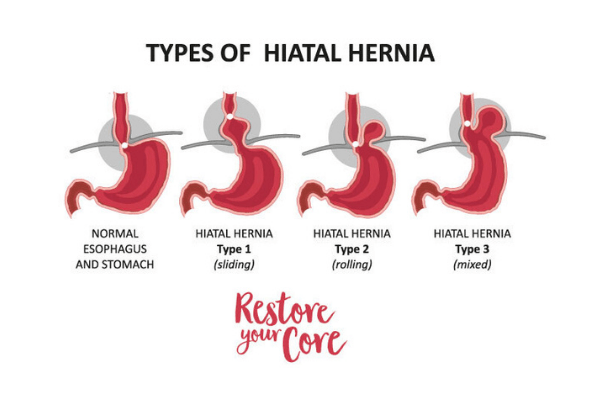
Hiatal Hernias

A hiatal hernia occurs when part of the stomach pushes up through the diaphragm into the chest cavity. Unlike abdominal wall hernias, a lump isn’t visible from the outside. Instead, symptoms often resemble acid reflux and may include heartburn, chest pain, or a sour taste in the mouth.

There are four main types of hiatal hernia [3]:

  • Type I – Sliding: Most common (80-90% of cases)
  • Type II – Paraesophageal: Stomach pushes through beside the esophagus
  • Type III – Mixed: Combination of Types I and II
  • Type IV – Complex: Other organs also herniate

Hiatal hernias are more common with increasing age and obesity; pregnancy and chronic increases in intra-abdominal pressure also contribute. Many people experience no symptoms, but when reflux symptoms do occur, they can be managed through lifestyle changes or acid-reducing medications. Surgery may be needed for severe cases, especially with paraesophageal hernias (Type II), due to the risk of obstruction or strangulation.

Traumatic Diaphragmatic Hernias

These typically occur after blunt force trauma, such as from a car accident or fall, that tears the diaphragm. They are more common on the left side because the liver protects the right side of the diaphragm. Traumatic diaphragmatic hernias can allow stomach or intestinal organs to move into the chest cavity, requiring surgical repair. Presentation may be delayed, and diagnosis can be missed initially.

Congenital Diaphragmatic Hernias

Congenital diaphragmatic hernias are very rare and are caused by a malformed diaphragm during fetal development. This defect allows abdominal organs to enter the chest cavity, interfering with lung growth and function. Congenital diaphragmatic hernia is a life-threatening condition that requires immediate medical attention after birth.

Symptoms and Diagnosis

While symptoms vary among the different types of hernia, common warning signs include:

Visual signs:

  • Visible bulge or lump
  • Swelling that increases with standing or straining
  • Bulge that disappears when lying down

Physical sensations:

  • Pain or discomfort when bending, coughing, or lifting
  • Burning or aching at the bulge site
  • Weakness, pressure, or heaviness in the affected area

Emergency warning signs:

  • Sudden, severe pain
  • Firm, tender, or discolored bulge
  • Fever with hernia pain
  • Nausea, vomiting, and inability to pass gas or stool

For a deeper look at common signs, you can also read our guide on how to tell if you have a hernia

Treatment Options

Treatment depends on the type, size, symptoms, age and overall health of the individual.

Conservative Management:

  • Watchful waiting with regular monitoring can be suitable for mild or asymptomatic hernias (e.g., small umbilical hernias in children). Not recommended for femoral or paraesophageal hernias.
  • Lifestyle modifications such as weight loss, avoiding heavy lifting, and managing symptoms (e.g., antacids for hiatal hernias), may help control discomfort but do not repair the defect.
  • Safe core strengthening exercises that support function and reduce intra-abdominal pressure may help reduce strain, although they cannot close an existing hernia.

Surgical Repair:

  • Surgery is the only definitive treatment for repairing defects in the abdominal wall or diaphragm.
  • Most hernias eventually require surgery if they cause pain, grow larger, or are at risk for complications such as strangulation or incarceration.
  • Surgical options include open, laparoscopic, and robotic techniques.
  • Elective (planned) repair is preferred to avoid emergency surgery, which carries higher risks.

Lifestyle and Prevention Tips

While not all hernias can be prevented, evidence-based strategies can reduce risk:

  • Maintain a healthy weight to reduce abdominal pressure
  • Use proper lifting techniques to avoid pressure spikes
  • Exercises to strengthen the core and pelvic floor muscles to improve function and manage intra-abdominal pressure
  • Manage chronic conditions (i.e., cough or constipation)
  • Quit smoking to prevent connective tissue weakening
  • Ensure good nutrition, including adequate protein and vitamin C

Even with these strategies, not all hernias can be prevented – congenital weaknesses, genetics, or unavoidable surgical incisions may still lead to hernia formation. These tips reduce the risk and recurrence, but don’t eliminate them entirely.

Conclusion

Understanding the various types of hernia empowers you to recognize symptoms early and seek appropriate care. It is important to note that hernias typically do not resolve on their own and may pose life-threatening health risks if left untreated. If you believe you may have a hernia or are experiencing severe symptoms such as pain, nausea, or vomiting, talk with your doctor right away.

For those interested in safe core strengthening and recovery exercises, the Restore Your Core® 12-Week Program offers evidence-based approaches to rebuilding abdominal strength without increasing the risk of hernia.

Medical Disclaimer: This information is for educational purposes only and is not a substitute for professional medical advice. If you suspect you have a hernia, please consult your doctor or another qualified healthcare provider for diagnosis and treatment guidance.

FAQ

What are the most common types of hernia?

The most common types of hernia are inguinal hernias (75% of all hernias), followed by incisional and umbilical hernias. Inguinal hernias are particularly common in men, while umbilical hernias often affect women who’ve had multiple pregnancies.

Can hernias go away without surgery?

Hernias do not go away on their own without surgery. While symptoms might come and go, and small hernias can sometimes be managed conservatively, the actual defect in the muscle wall won’t heal itself. The only definitive treatment is surgical repair, though not all hernias require immediate surgery.

Which types of hernia are dangerous?

Femoral and obturator hernias carry higher risks due to their narrow openings. Paraesophageal hernias are concerning because of the potential for stomach strangulation. Any hernia with severe pain, color changes, fever, or inability to push it back in requires emergency medical attention.

How do I know if I have a hiatal hernia?

Hiatal hernias cause different symptoms than other types of hernias. Instead of a visible bulge, you might experience persistent heartburn, acid reflux, difficulty swallowing, chest pain after eating, or feeling full quickly. If you have chronic GERD symptoms, ask your doctor about screening.

What are the rarest types of hernia?

The rarest types include obturator hernias, Spigelian hernias, and lumbar hernias. These uncommon hernias are often harder to diagnose because they don’t present with typical symptoms or locations.

What is the best program for the different types of hernia?

The Restore Your Core® 12-Week Program offers comprehensive exercises that rebuild abdominal strength without the risk of increasing intra-abdominal pressure. The program addresses whole-body patterns that contribute to hernias, teaching proper breathing techniques and functional movements for long-term core health.

References

[1] Jenkins, J. T., & O’Dwyer, P. J. (2008). Inguinal hernias. BMJ, 336(7638), 269-272.

[2] Coste, A. H. (2024). Umbilical hernia. In StatPearls. StatPearls Publishing. 

[3] Fuchs, K. H., Kafetzis, I., Hann, A., & Meining, A. (2024). Hiatal hernias revisited—a systematic review of definitions, classifications, and applications. Life, 14(9), 1145.

Get more actionable info, inspiration and exclusive offers delivered to your inbox.

*No spam, just quality content and support

Group-47.png
Group-47.png