

Lauren Ohayon is the creator of Restore Your Core® (RYC®), a comprehensive and sustainable whole-body fitness program that empowers women to achieve ideal pelvic floor / core function and be strong, long, mobile and functional.

You’re avoiding certain activities out of fear of making that uncomfortable heaviness or dragging sensation in your pelvis worse. You leak when you laugh, cough, or sneeze, and you find yourself planning your day around the nearest bathroom. You start second-guessing every movement and activity – afraid to run or jump, and even playing with your children feels off limits. It’s more than an inconvenience – it affects your confidence, your energy, and your ability to experience life fully. And you’re definitely not alone.
For many women living with pelvic organ prolapse or urinary incontinence, the impact goes far beyond physical discomfort or the daily annoyance that comes with it. A pessary can offer immediate symptom relief – this small, flexible device gently supports your pelvic organs so you can move, lift, laugh, and live with more comfort and confidence. There’s no surgery, no recovery time, and nothing permanent – just a simple solution that helps you feel more like yourself again.
Once thought to be only for older women, pessaries are now used by people of all ages – from new mothers in postpartum recovery to athletes who use them proactively to support the pelvic floor during high-impact activities, and active women who want to continue doing what they love without worry and with a greater sense of control and renewed comfort and confidence in their bodies.
Get free expert advice and start your prolapse healing journey today
Table of Contents
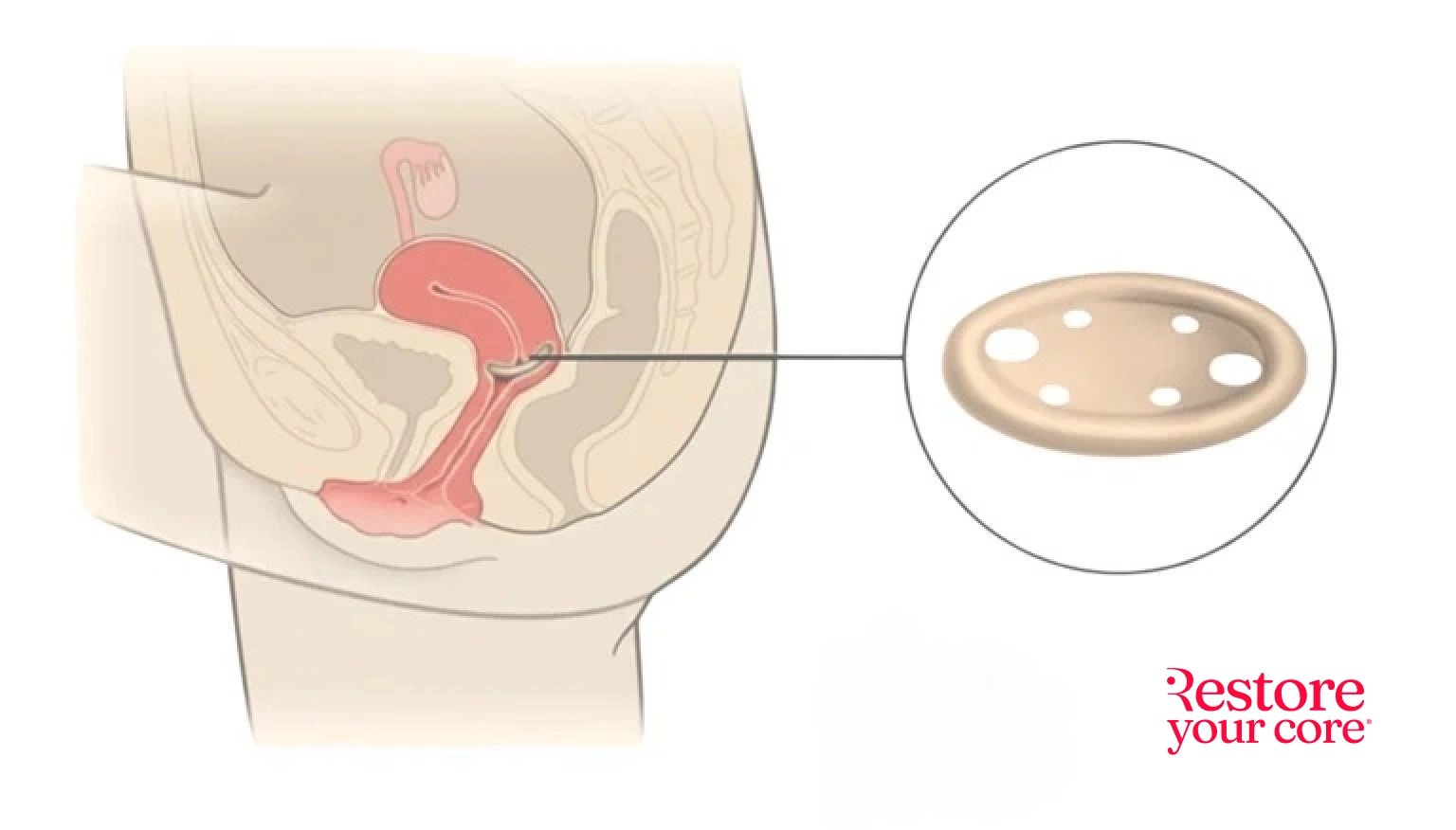
A pessary is a flexible, removable device (usually made of silicone, rubber or PVC plastic) that your healthcare provider fits inside your vagina. It acts like a support cushion, holding up your bladder, uterus, or bowel so they don’t press downward and cause pelvic organ prolapse symptoms. It can be self-managed or managed by your medical practitioner for removal and cleaning.
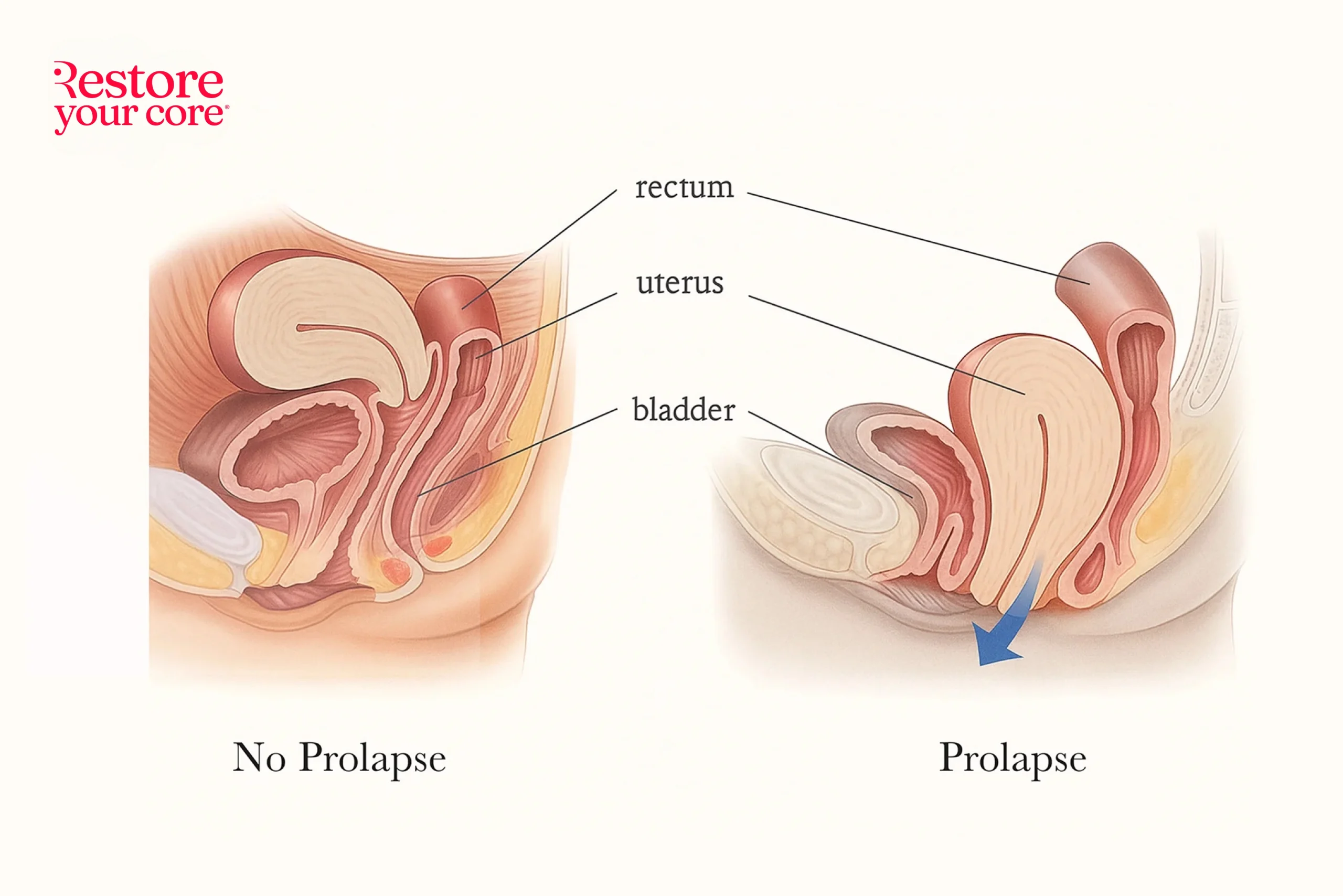
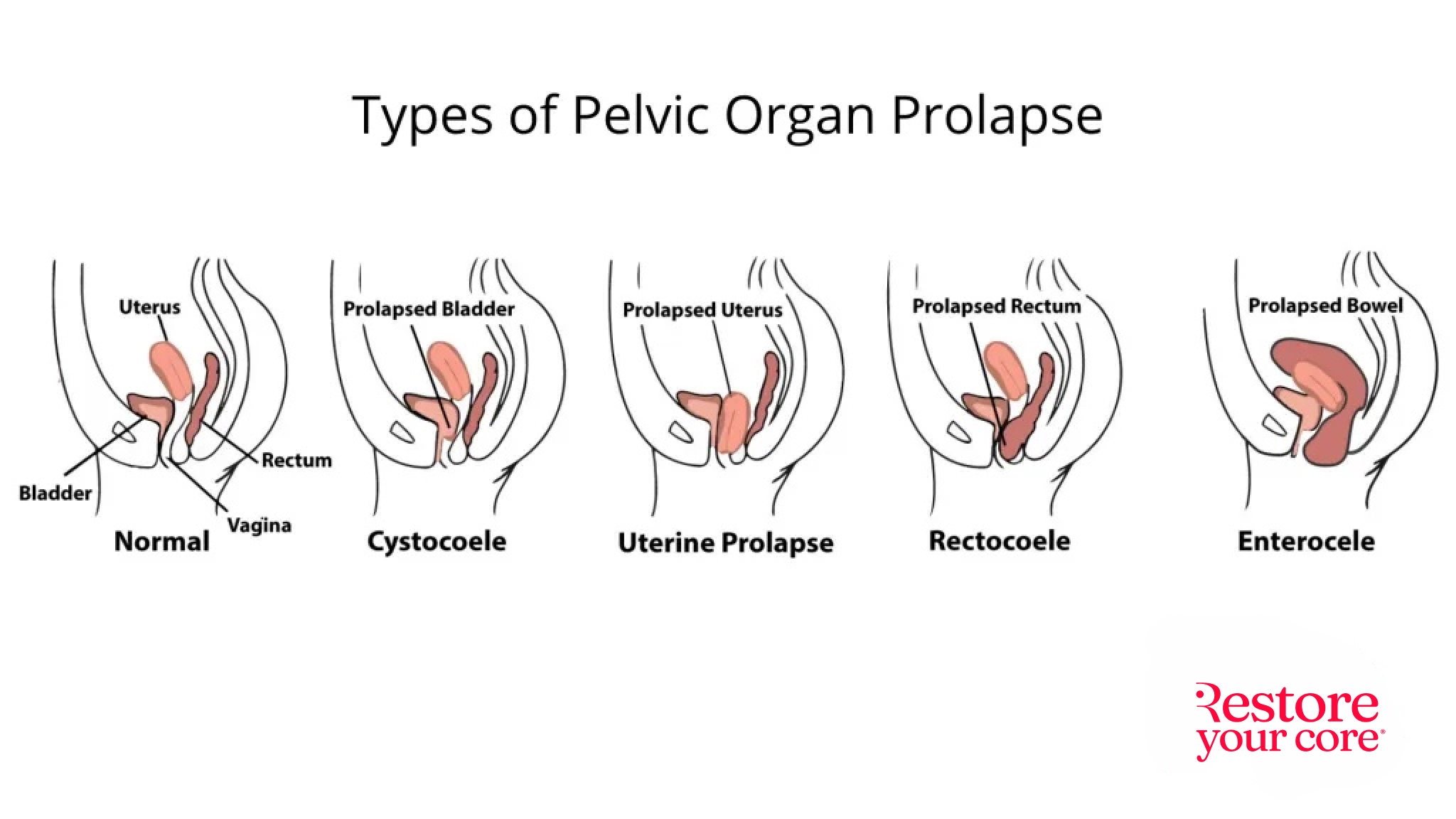
“Pelvic organs, such as the uterus, bladder or bowel, may protrude into the vagina because of weakness in the tissues that normally support them. This protrusion is known as pelvic organ prolapse. Women who experience prolapse report a wide variety of symptoms that affect their quality of life. The choice of treatment options for pelvic organ prolapse symptoms is dictated largely by patient choice, as the interventions of lifestyle changes, pelvic floor muscle training (PFMT), pessary and surgery are very different with different complication risks. Vaginal pessaries are one treatment option for prolapse that are commonly used to restore the prolapsed organs to their normal position and hence relieve symptoms. A vaginal pessary can be used to treat all four prolapse stages [1].”
A pessary is inserted into the vagina, where it sits comfortably to support the bladder, uterus, or rectum, depending on your needs. Placement and positioning vary with the type of pessary – for example, a ring pessary sits horizontally behind the pubic bone. In contrast, cube or Gellhorn pessaries rely on gentle suction or pressure to stay in place. Once fitted properly, you shouldn’t feel it at all.
Every body is unique, and finding the right pessary can take a little trial and error. Comfort, proper fit, and regular check-ins with your provider make all the difference between a frustrating experience and one that feels supportive and empowering.
While a pessary may not be suitable for everyone due to individual needs and medical considerations, many women experience a significantly improved quality of life once they find one that fits well and feels comfortable.
Fitting success: Clinical studies vary in percentages, but we can average them out to 41% – 86% success rates [2-5].
Symptom relief: A well-fitted pessary often provides noticeable relief – decreased pressure or bulge sensation, less leaking, less back pain, and greater comfort, confidence, and overall quality of life.
Pessary for urinary incontinence: A pessary for urinary incontinence supports the urethra. It has been demonstrated in many trials that the episodes of leaking reduce significantly, and also being totally dry with the pessary.
Ease of Use: Most pessaries are easy to manage independently. However, regular check-ups are still essential to ensure your vaginal tissues remain healthy. Follow your healthcare provider’s advice on how often to be examined.

With proper cleaning and maintenance, most silicone pessaries have a lifespan of approximately five years. Devices made from other materials are typically less durable and will need to be replaced more frequently. Always follow manufacturer recommendations for specific care and replacement intervals.
Take simple steps toward regaining your ability to do the things you love
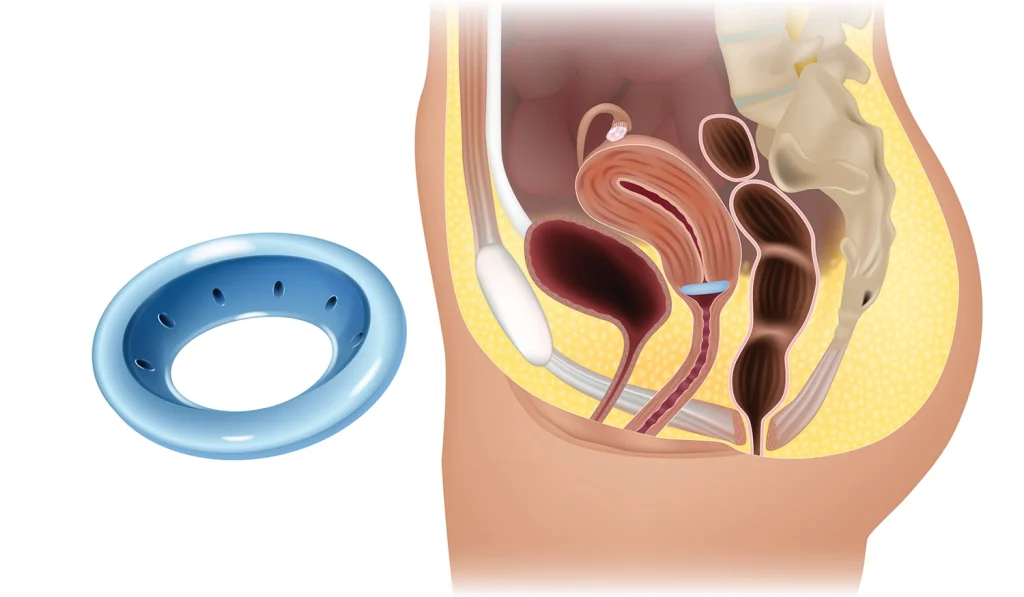
Pessaries are generally categorized into 3 main groups. The following pessaries are suitable for self-management:
Pessaries are primarily used for support, but categorizing them can help clarify their purposes. One of the key questions a clinician should ask is whether the patient is sexually active, as this will influence the choice of pessary. It’s important not to assume that women over a certain age stop being sexually active – many women well into their 80s continue to enjoy an active and fulfilling sex life!
Additionally, if a patient plans to use a vaginal toning device, vaginal dilator or vibrator, this should be discussed with the clinician, as it will also impact the type of pessary recommended. The clinician will need to ensure that the patient is taught how to properly insert, remove, and care for the pessary.
A space-filling pessary is also referred to as an occult pessary. These pessaries take up significant vaginal space and fit deeply into the vagina to offer support to more severe prolapses or multiple prolapses. These pessaries need to be removed prior to any kind of penetration: intercourse, dilator use, or vibrator use. It’s important you let your healthcare provider know if you are sexually active or using any vaginal penetration aids so they can help you choose a pessary that suits both your lifestyle and pelvic health needs.
Some support pessaries, such as the ring without support, the oval without support, and the dish without support, can be left in during sexual activity.
A lever pessary is a type of vaginal device that can help manage certain conditions, such as stress incontinence or a tilted (retroverted) uterus, or in some cases, it is used during pregnancy.
Lever pessaries contain a small amount of metal inside, so it’s important to let your healthcare provider know if you’re having a scan, like an MRI or ultrasound. The pessary will usually need to be removed before the scan to make sure the images are clear and accurate.
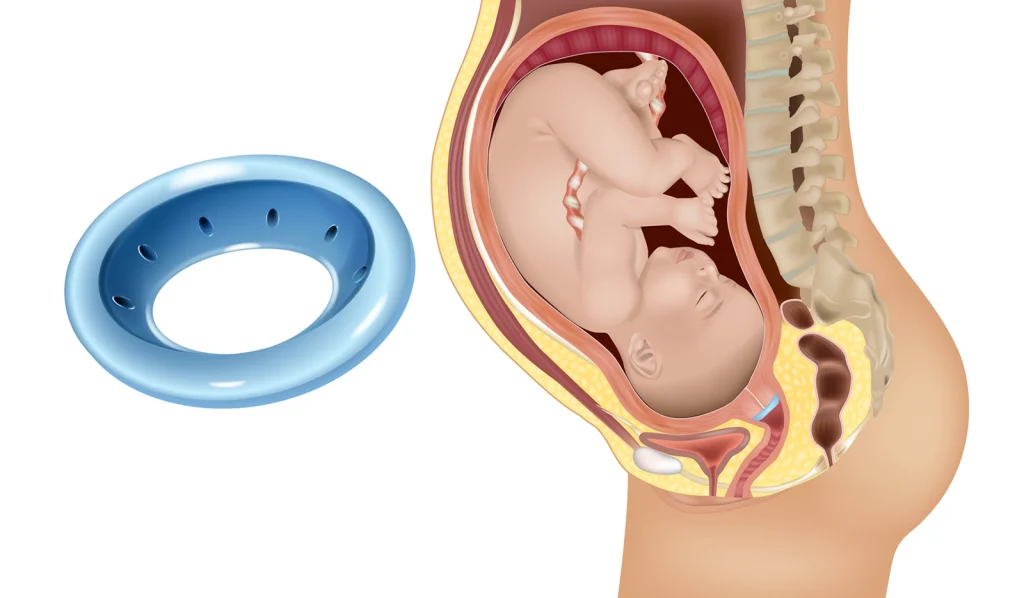
The cerclage pessary is not included in the three general categories, as it is specifically designed for use during pregnancy. The cerclage pessary is a silicone device specifically designed for use during pregnancy as an alternative to a cervical cerclage suture. It is used to help reduce the risk of preterm birth by supporting the cervix and maintaining its closure. The insertion and removal of a cerclage pessary must be performed exclusively by a certified obstetrician-gynecologist, given the need for careful assessment and proper placement during an ongoing pregnancy.
| Pessary Type | Best For | Self Managed | Intercourse Possible | Highlights |
|---|---|---|---|---|
| Ring With knob | Everyday support, mild pressure Stress incontinence | Yes | Yes, without support membrane | Lightweight, flexible *Not always suitable for rectocele |
| Gellhorn | Stronger support needed | Difficult | No | Holds shape well |
| Shaatz | Stronger support needed | Yes | No | Holds shape well. Good alternative to the ring |
| Pre-Inflated Donut Self-Inflatable Donut | Full support for significant pressure Full support | No Yes (Daily care | No No | Non-self-managing. Fills space comfortably Self managing |
| Cube | Deep suction for dynamic support | Yes (Daily Care) | No | Strong hold |
| T Pessary | Stress incontinence and mild anterior and posterior pressure | Yes (Daily care) | No | Supports stress incontinence well |
| Hodge/Risser/Smith | Stress incontinence, retroverted uterus, pregnancy | No | Yes | Contains metal and needs removal before a scan |
| Marland | Mild-Moderate prolapses | Yes | Yes, without support membrane | Can support multiple prolapses |
| Gehrung | Mild-Moderate prolapses | Yes but difficult | Yes | Can support multiple prolapses. Contains metal and must be removed before a scan |
| Dish | Mild – moderate support | Yes | Yes, without support membrane | Good option for rectocele |
| Cerclage | Pregnancy | No must be managed by a doctor | This must be discussed with the doctor | For an incompetent cervix and prevention of preterm birth |
| Oval | Mild-Moderate prolapses | Yes | Yes, without support membrane | Good for scar tissue issues |
| Reia | Mild-severe prolapses | Yes | No | For all types and multiple prolapses |
A pessary can be a game-changer for pelvic organ support – but only if it fits you. Don’t give up on pessaries just because the first one feels uncomfortable or doesn’t stay in place.

Our bodies naturally adopt “shortcut” patterns – muscles and fascia learn the easiest way to move. Over time, these habits can pull you out of optimal alignment and undermine pelvic floor support. The good news? Fascia and muscle “memory” work both ways. Through guided retraining with Restore Your Core®, you can repattern your body for better pelvic health.
| Pessary for Prolapse | Uterine Prolapse | Cystocele (Bladder Prolapse) | Rectocele | Combined Support | Stress Incontinence |
|---|---|---|---|---|---|
| Ring | ✔️ | ✔️ | ✔️ | ||
| Ring with Knob | ✔️ | ✔️ | ✔️ | ||
| Oval | ✔️ | ✔️ | ✔️ | ||
| SomaFlex | ✔️ | ✔️ | ✔️ | ✔️ | ✔️ |
| Hodge-Levers | ✔️ | ✔️ | |||
| Hodge-Levers with Knob | ✔️ | ✔️ | |||
| Inflatable | ✔️ | ✔️ | ✔️ | ✔️ | |
| Gehrung | ✔️ | ✔️ | ✔️ | ✔️ | |
| Donut | ✔️ | ✔️ | ✔️ | ✔️ | |
| Cube | ✔️ | ✔️ | ✔️ | ✔️ | ✔️ |
| Gelllhorn | ✔️ | ✔️ | |||
| Shelf | ✔️ | ||||
| Cup | ✔️ | ✔️ | ✔️ | ||
| Dish | ✔️ | ✔️ | ✔️ | ✔️ | |
| Dish with Knob | ✔️ | ✔️ | ✔️ | ✔️ | ✔️ |
| Marland | ✔️ | ✔️ | ✔️ | ✔️ | ✔️ |
| Shaatz | ✔️ | ||||
| T Pessary | ✔️ | ✔️ | ✔️ | ||
| Contam | ✔️ | ✔️ | ✔️ | ✔️ | |
| Reia | ✔️ | ✔️ | ✔️ | ✔️ | ✔️ |
| Dr. Arabin Hybrid | ✔️ | ✔️ | |||
| Provate | ✔️ | ✔️ | |||
| Uresta | ✔️ | ✔️ | |||
| Poise Impressa | ✔️ | ||||
| Contrelle | ✔️ | ||||
| Efemia | ✔️ | ||||
| Revive | ✔️ | ||||
| Urethral Ring | ✔️ | ✔️ | ✔️ | ||
| Restifem | ✔️ | ✔️ | ✔️ | ✔️ |
Note: This chart reflects the most current information available as of November 2025, but pessary technology and clinical guidance continue to evolve. As new research emerges and additional designs become available, recommendations may change. Always consult your healthcare provider or refer to the manufacturer’s guidelines for the most up-to-date information.
Disclaimer:
This chart is intended for general information and does not constitute medical advice. Pessary suitability depends on individual anatomy, symptoms, and manufacturer guidelines. Always discuss options with a qualified provider.
Some pessaries may be used beyond the manufacturer’s labeled indications. This is common in clinical practice and should involve informed consent and close follow-up.
Key Points:
Discover the top steps toward managing your prolapse with confidence
Not at all! Research indicates that stress incontinence affects up to 75.6% of athletes in high-impact sports such as volleyball [6]. Pessaries aren’t only for those with diagnosed prolapse or incontinence – they can also provide temporary pelvic floor support during activities that increase pressure, like running and jumping. Think of it as giving your pelvic floor an extra layer of support when it needs it the most!

Absolutely!
In fact, the right pessary can:
Whether you’re walking, practicing the Restore Your Core® online program, or returning to higher-impact fitness, a well-fitted pessary can support your pelvic floor and help you focus on your workout – not your symptoms.
Restore Your Core® is a proven movement program designed to retrain your body’s foundation for better pelvic and core support. The program helps you:
When used alongside a pessary, RYC® helps create the alignment, coordination, and pressure management needed for the pessary to stay comfortably in place and do its job effectively. Many participants find that integrating these principles transforms a past “failed” pessary experience into one of comfort and renewed confidence.
Don’t settle for a pessary that doesn’t feel right. Comfort is key – your pessary should never cause pain, pressure, or irritation. If you experience discomfort, notice it slipping out of place, or find that it no longer provides the same level of support, it’s time to check in with your healthcare provider.
A re-fit may be needed if you’ve experienced:
Pessary fit isn’t always a one-and-done – it’s a process that evolves with your body. Regular follow-ups help ensure your device continues to feel comfortable and offer effective support. With the right fit, guidance, and supportive movement practice, you can restore pelvic floor balance and move through life with confidence and freedom.
Get free, evidence-based support for your prolapse healing journey
A pessary is a safe, removable device inserted into the vagina to support the pelvic floor and organs, helping to manage mild to advanced pelvic organ prolapse and relieve associated symptoms such as pelvic pressure and urinary incontinence.
A healthcare professional determines the correct size and type after a pelvic examination. In many cases, the patient can then be taught to manage and care for it independently.
Yes, in fact, using a pessary can make pelvic floor muscle training (PFMT) more effective for people with pelvic organ prolapse (POP). With the pessary in place, the pelvic organs are lifted, reducing pressure on the pelvic floor muscles and allowing them to work from their optimal position. This can help the muscles contract more efficiently and strengthen properly.
A pessary also creates space for the muscles to move through their full range, and over time, it may help the nervous system adapt to the organs being in the correct position, supporting long-term improvement.
Yes, a pessary should feel comfortable when correctly fitted. It’s normal to be aware of the pessary at first as your body adjusts to it, but this sensation usually fades. Most people do not feel the pessary at all during daily activities. If you experience ongoing discomfort, pain, or pressure, the pessary may be the wrong size or type; in this case, you should consult your healthcare provider.
Occasionally, tension in one area of the pelvic floor can cause discomfort in another, which may also make the pessary feel uncomfortable. In such cases, pelvic floor assessment and relaxation techniques, and exercises can be beneficial.
Every time the pessary is removed.
With certain types of pessaries, full penetration is indeed achievable. With space-filling pessaries or occult pessaries, there is no space for penetration, but clitoral stimulation can be achieved when wearing any type of pessary. Please check the chart of pessaries.
It depends on the type of pessary and your provider’s guidance. Some can stay in place for several months, while others should be removed and cleaned daily.
If your pessary feels uncomfortable or falls out, it may not be the right size, shape, or fit for your body. This is a common issue, especially in the early stages of finding the correct pessary.
Changes in body weight, pelvic floor muscle tone, or hormone levels can also affect how well the pessary fits over time. Contact your healthcare professional if you experience these issues – they can help find a better fit to ensure the pessary remains effective and comfortable.
[1] Bugge, C., Adams, E. J., Gopinath, D., Stewart, F., Dembinsky, M., Sobiesuo, P., & Kearney, R. (2020). Pessaries (mechanical devices) for managing pelvic organ prolapse in women. Cochrane Database of Systematic Reviews, 2020(11), Article CD004010.
[2] Donnelly, M. J., Powell-Morgan, S., Olsen, A. L., & Nygaard, I. E. (2004). Vaginal pessaries for the management of stress and mixed urinary incontinence. International Urogynecology Journal and Pelvic Floor Dysfunction, 15(5), 302–307.
[3] Clemons, J. L., Aguilar, V. C., Tillinghast, T. A., Jackson, N. D., & Myers, D. L. (2004). Patient satisfaction and changes in prolapse and urinary symptoms in women who were fitted successfully with a pessary for pelvic organ prolapse. American Journal of Obstetrics and Gynecology, 190(4), 1025–1029.
[4] Fernando, R. J., Thakar, R., Sultan, A. H., Shah, S. M., & Jones, P. W. (2006). Effect of vaginal pessaries on symptoms associated with pelvic organ prolapse. Obstetrics & Gynecology, 108(1), 93–99.
[5] Al-Shaikh, G., Syed, S., Osman, S., Bogis, A., & Al-Badr, A. (2018). Pessary use in stress urinary incontinence: A review of advantages, complications, patient satisfaction, and quality of life. International Journal of Women’s Health, 10, 195–201.
[6] Pires, T., Pires, P., Moreira, H., & Viana, R. (2020). Prevalence of urinary incontinence in high-impact sport athletes: A systematic review and meta-analysis. Journal of Human Kinetics, 73, 279–288.
[7] Farrell, S. A., Baydock, S., Amir, B., & Fanning, C. (2007). Effectiveness of a new self-positioning pessary for the management of urinary incontinence in women. American Journal of Obstetrics and Gynecology, 196(5), 474.e1–474.e8.
“There is no thank you big enough for Lauren Ohayon existing and thinking and helping so many of us. Every time I do something I never thought I’d do again she is part of the reason why.”
Laura Gregg
Get this FREE video and start healing today
*Regain strength and confidence

Please check your email inbox in a few minutes.

If you’ve recently been diagnosed with pelvic organ prolapse, it’s natural to be overwhelmed by a mix of shock, confusion, fear and even devastation. This article shares...

If you’ve recently noticed changes in your pelvic floor health, you’re not alone. Pelvic organ prolapse (POP) affects about 50% of women at some point in their...

Are you contemplating hysterectomy? Recently recovering from a hysterectomy? If your doctor hasn’t yet spoken with you about pelvic organ prolapse after hysterectomy, read on to learn...

One thing that many of my clients with pelvic organ prolapse ask is, “Can you have intercourse with a prolapsed uterus?” The answer is usually yes, but...
Childbirth is the primary risk factor for pelvic organ prolapse. While it is impossible to prolapse-proof your birth process, having a better understanding of prolapse can help...

For athletes, especially weightlifters, managing pelvic organ prolapse can be challenging. There are risks to consider before participating in your sport, including the possibility of making your...

The hips and pelvic floor are intimately interconnected muscle systems. A clear understanding of how hip mobility affects the pelvic floor will help you work with clients...

Looking for comprehensive guidance on safe and effective exercises designed for the relief and recovery of a prolapsed uterus? Look no further. Learn about what is safe...

What is Rectal Prolapse? Rectal prolapse is another form of pelvic organ prolapse. Rectal prolapse occurs as a result of the rectum (the last part of the...
Discover the top steps toward managing your prolapse with confidence
*No spam, just quality content and support

Please check your inbox soon.

Get this FREE video and start healing today
*Regain strength and confidence
Please check your email inbox in a few minutes.