
Lauren Ohayon is the creator of Restore Your Core® (RYC®), a comprehensive and sustainable whole-body fitness program that empowers women to achieve ideal pelvic floor / core function and be strong, long, mobile and functional.

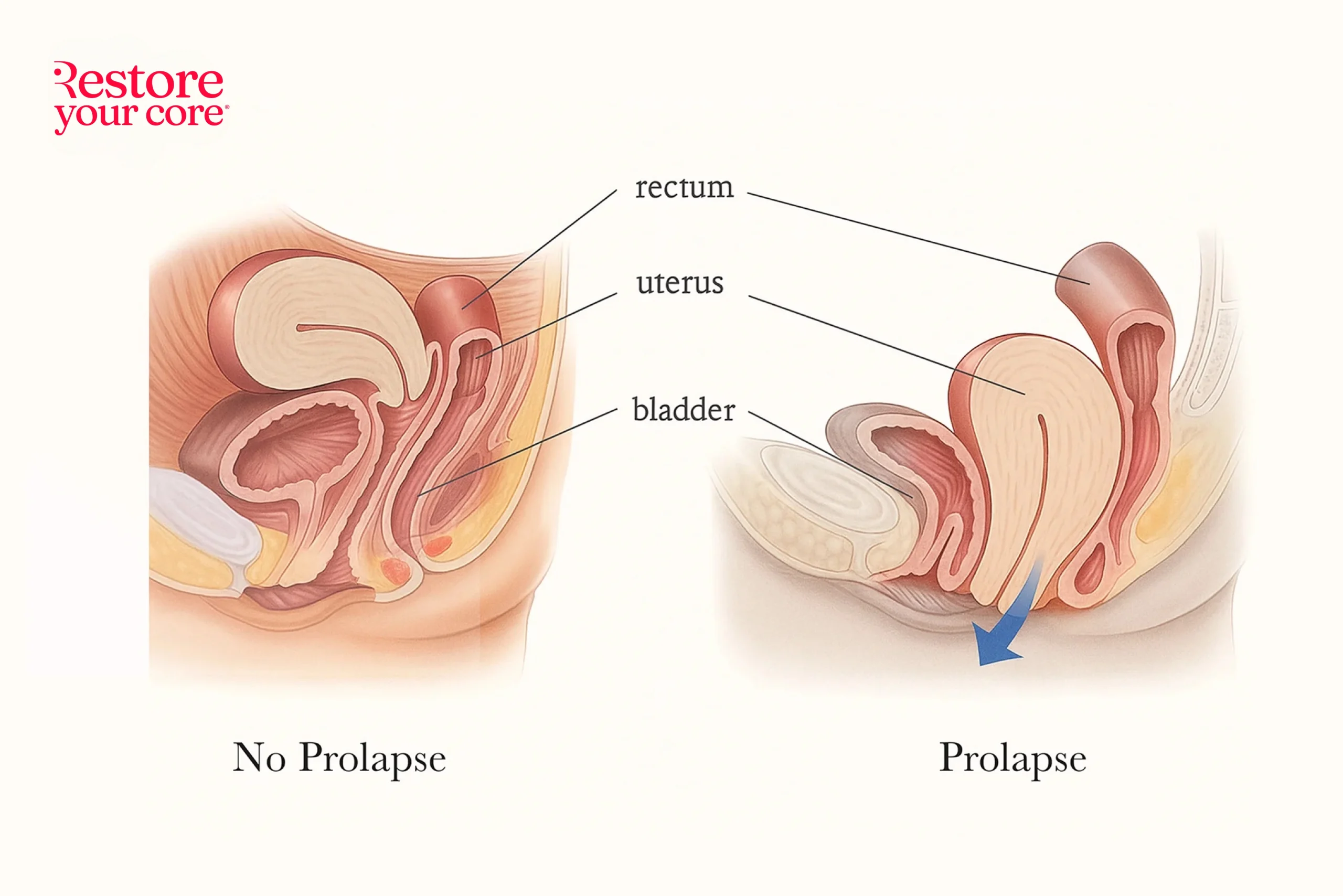
Five weeks postpartum. Just when you’re starting to find your rhythm again – there it is. A strange pressure, maybe after a sneeze or lifting your toddler. Maybe you stood up after a rest and felt a heaviness you didn’t expect. Something is different. Off. You reach down and feel a bulge.
This moment – one that’s happened to many – is often the first sign of pelvic organ prolapse (POP). It’s disorienting. Frightening. But also: incredibly common. And there’s good news here. Because the postpartum body is still healing, many people find that their symptoms significantly improve — and often completely resolve — with the right approach, even if some structural changes remain.
Get free expert advice and start your prolapse healing journey today
Table of Contents
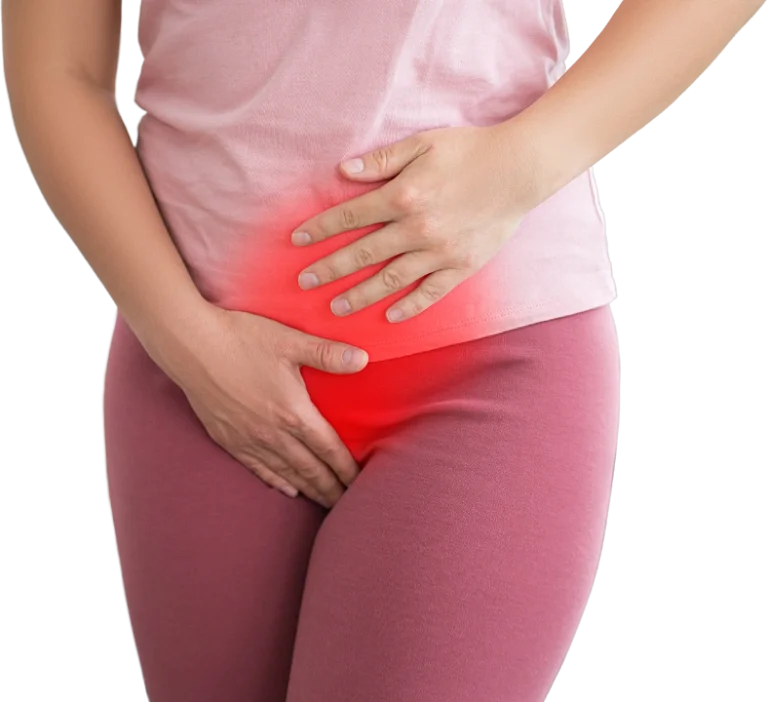
Pelvic organ prolapse (POP) occurs when the muscles and connective tissues that support your pelvic organs – like the bladder, uterus, or rectum – become weakened or stretched. This can allow them to drop and press into the vaginal canal.
It’s a condition rooted in pressure dynamics, tissue resilience, and life experiences (like pregnancy, labor, and daily movement). And understanding it is the first step in changing how we support our bodies.
It’s estimated that up to 50% of people who’ve been pregnant will experience some level of prolapse [1]. It’s more common than you think – and far more manageable than you may have been told.
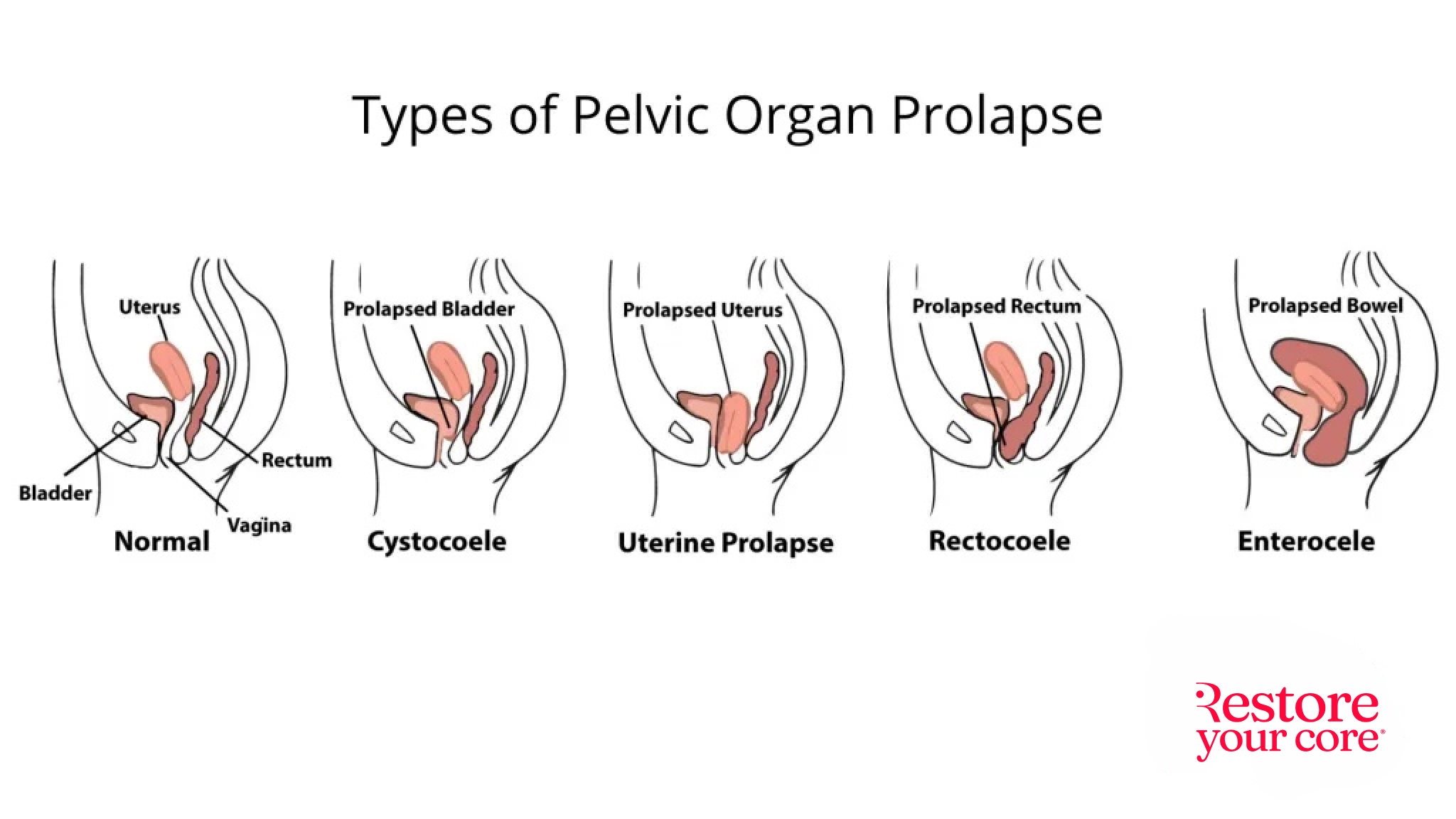
There are several kinds of pelvic organ prolapse, depending on which organ has shifted from its normal position. The three most common types are:
Among these, the most common type after childbirth is bladder prolapse (cystocele), since the front vaginal wall often bears the most pressure and load during pregnancy and delivery.
Sometimes, more than one organ is affected – called multi-compartment prolapse – and this is also quite common postpartum.
Regardless of the type of prolapse, the path to healing is guided by the same principles: managing intra-abdominal pressure and engaging in movements that help restore the optimal function of the core and pelvic floor, so your body feels strong and supported again.
Symptoms of prolapse vary in intensity and may include:
Symptoms often worsen as the day goes on or after activity, and ease with rest.
Severity is staged from 1 (mild) to 4 (severe). However, symptoms don’t always align with the stage. Diagnosis offers insight, but what truly matters is symptom management, which depends on several factors – including strength, movement habits, and breathing mechanics.
Take simple steps toward regaining your ability to do the things you love
Research shows that even one vaginal birth can greatly increase the likelihood of developing pelvic organ prolapse compared with a cesarean birth without labor. One long-term study found that most of the risk happens with that very first vaginal delivery – additional births didn’t seem to raise the risk much further [2].
These changes don’t define your future – with proper guidance, mindful movement, and time, your body can regain strength and restore function.
Pelvic organ prolapse doesn’t automatically mean surgery. In fact, many people find meaningful symptom relief and functional improvement through non-surgical strategies – especially when addressed early. Healing is about more than fixing; it’s about restoring function, trust, and support.
Your first step is an assessment with a physical therapist specializing in pelvic health. They’ll evaluate pelvic muscle strength and function, prolapse stage, and look at how you move and manage intra-abdominal pressure. An accurate diagnosis creates a roadmap for targeted, safe treatment.
Pelvic floor physical therapy (PFPT) is a powerful tool – but not all practitioners are created equal. A well-informed pelvic floor therapist can help you:
A skilled therapist goes beyond isolated exercises, such as Kegels, to help you understand how your core, breath, and daily movement patterns impact your pelvic health.
Download our guide, Questions to Ask Your Pelvic Health Provider, for extra support as you prepare for your first appointment.
Programs like Restore Your Core® (RYC®) complement physical therapy by offering a structured, whole-body approach to pressure management, core re-patterning, and nervous system regulation.
Rather than targeting symptoms in isolation, RYC® helps you:
Whether used between PT sessions or as ongoing care, RYC® can guide you to integrate healing into your everyday life.
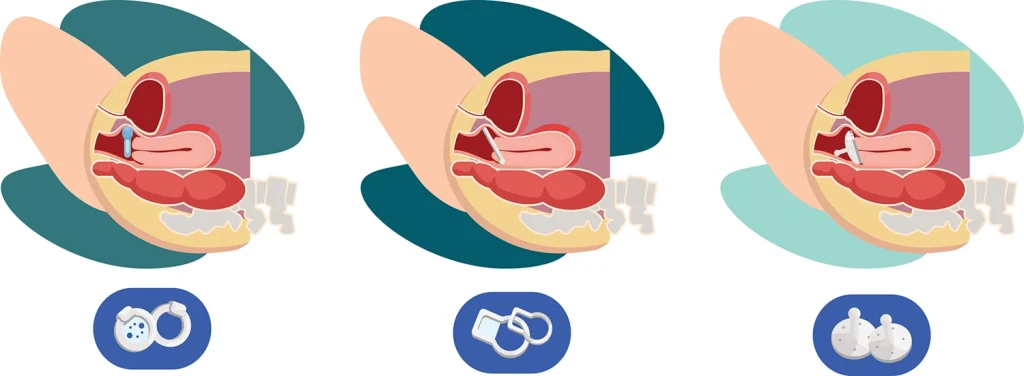
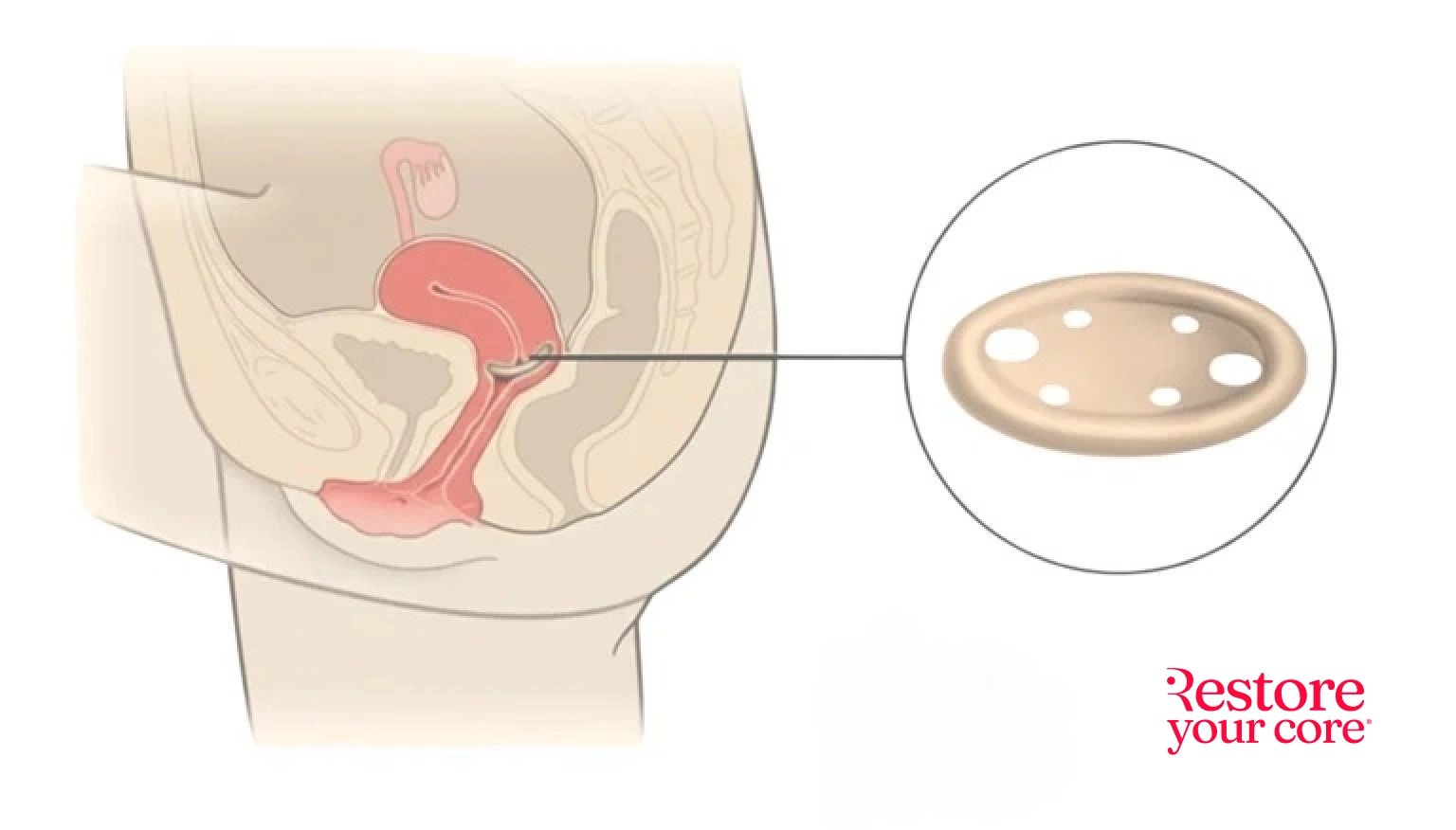
A pessary is a silicone or plastic device fitted by your provider and placed in the vagina to support the prolapsed organs. It acts like a structural assist – lifting and stabilizing without surgery.
Some people use a pessary short-term (during heavier activity days or workouts), while others benefit from regular use. A good fit matters – don’t hesitate to ask for adjustments.
Your pelvic floor doesn’t act alone. Learning to manage intra-abdominal pressure (IAP) in everyday movement and activities helps to reduce symptoms and support healing:
All of these strategies can be learned and practiced in Restore Your Core® or with your PT to create daily movement patterns that protect and support your pelvic floor.
Discover the top steps toward managing your prolapse with confidence

Some people avoid sex for a while – feeling unsure about safety, symptoms, or how their partner will respond. What can help?
Many people safely return to hiking, lifting, and even running after birth. The key is to progress thoughtfully and recognize the signs that your body needs rest or more recovery time:
And if you want a movement practice that honors your symptoms while rebuilding function, the RYC® 12-Week Program is a safe, intelligent place to begin.
Give yourself grace. You’re not broken. Your organs are not falling out. Your body is adapting – and you’re listening. That’s healing.
Surgery isn’t usually the first step for prolapse care, and many people find meaningful relief through conservative options like pelvic floor therapy, pessaries, and whole-body programs such as Restore Your Core® (RYC®).
That said, surgery can be helpful for more advanced prolapse (Stage 3 or 4) or when symptoms persist despite other treatments. The goal is to restore support by lifting and repairing the affected tissues [2].
Mesh repairs are rarely performed now – most surgeries use your own tissue or sutures to strengthen and support the vaginal walls or uterus. If you’re considering surgery, it’s important to see a urogynecologist or pelvic reconstructive specialist who can explain your specific options, expected outcomes, and recovery process.
If you plan to become pregnant again, most providers recommend waiting on surgery until after you’ve finished having children, since pregnancy and birth can stretch or strain repaired tissues.
Get free, evidence-based support for your prolapse healing journey
POP occurs when one or more pelvic organs (such as the bladder, rectum, or uterus) drop down from their normal position and bulge into the vagina. This happens due to the weakening, tearing, or stretching of the pelvic floor muscles and supportive tissues/ligaments.
Research indicates that up to around 30 % to 50 % of women who have given birth experience some degree of pelvic organ prolapse (POP) in the postpartum period, although the vast majority of these cases are mild and asymptomatic [3].
Symptoms of prolapse can appear immediately after childbirth, but it’s also very common for them to become noticeable weeks to months later, especially as postpartum swelling decreases and normal activity levels increase. Some women don’t notice symptoms until they resume exercise, lift heavier loads, or return to work. In some cases, a prolapse that began with childbirth doesn’t become symptomatic until perimenopause, when decreasing hormone levels affect the pelvic floor’s ability to support the organs.
The most common symptoms are related to sensation and function:
Vaginal birth is strongly associated with an increased risk of POP compared to cesarean delivery without labor. The highest risk is linked to operative vaginal birth (using forceps or vacuum extraction), which can increase the odds of prolapse (to or beyond the hymen) by almost 8-fold compared to cesarean before labor. Longer labors and extended periods of pushing can place additional strain on the pelvic floor, potentially affecting its ability to provide optimal support.
The first-line approach for managing POP is typically conservative:
The Restore Your Core® program is an excellent complement to this approach, especially if you’re looking for a structured, body-literate way to retrain your core and movement patterns.
[1] Bugge, C., Adams, E. J., Gopinath, D., Stewart, F., Dembinsky, M., Sobiesuo, P., & Kearney, R. (2020). Pessaries (mechanical devices) for managing pelvic organ prolapse in women. Cochrane Database of Systematic Reviews, 2020(11), Article CD004010.
[2] Donnelly, M. J., Powell-Morgan, S., Olsen, A. L., & Nygaard, I. E. (2004). Vaginal pessaries for the management of stress and mixed urinary incontinence. International Urogynecology Journal and Pelvic Floor Dysfunction, 15(5), 302–307.
[3] Clemons, J. L., Aguilar, V. C., Tillinghast, T. A., Jackson, N. D., & Myers, D. L. (2004). Patient satisfaction and changes in prolapse and urinary symptoms in women who were fitted successfully with a pessary for pelvic organ prolapse. American Journal of Obstetrics and Gynecology, 190(4), 1025–1029.
[4] Fernando, R. J., Thakar, R., Sultan, A. H., Shah, S. M., & Jones, P. W. (2006). Effect of vaginal pessaries on symptoms associated with pelvic organ prolapse. Obstetrics & Gynecology, 108(1), 93–99.
[5] Al-Shaikh, G., Syed, S., Osman, S., Bogis, A., & Al-Badr, A. (2018). Pessary use in stress urinary incontinence: A review of advantages, complications, patient satisfaction, and quality of life. International Journal of Women’s Health, 10, 195–201.
[6] Pires, T., Pires, P., Moreira, H., & Viana, R. (2020). Prevalence of urinary incontinence in high-impact sport athletes: A systematic review and meta-analysis. Journal of Human Kinetics, 73, 279–288.
[7] Farrell, S. A., Baydock, S., Amir, B., & Fanning, C. (2007). Effectiveness of a new self-positioning pessary for the management of urinary incontinence in women. American Journal of Obstetrics and Gynecology, 196(5), 474.e1–474.e8.
“There is no thank you big enough for Lauren Ohayon existing and thinking and helping so many of us. Every time I do something I never thought I’d do again she is part of the reason why.”
Laura Gregg
Get this FREE video and start healing today
*Regain strength and confidence

Please check your email inbox in a few minutes.

If you’ve recently been diagnosed with pelvic organ prolapse, it’s natural to be overwhelmed by a mix of shock, confusion, fear and even devastation. This article shares...

If you’ve recently noticed changes in your pelvic floor health, you’re not alone. Pelvic organ prolapse (POP) affects about 50% of women at some point in their...
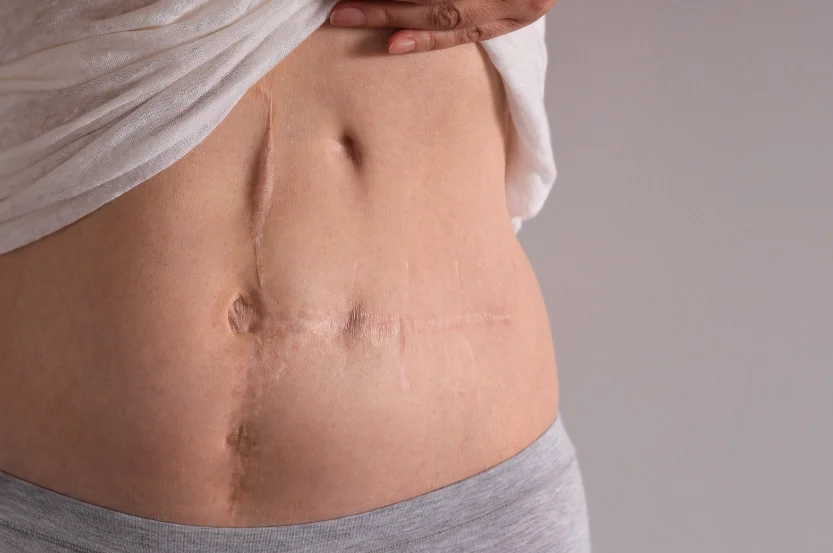
Are you contemplating hysterectomy? Recently recovering from a hysterectomy? If your doctor hasn’t yet spoken with you about pelvic organ prolapse after hysterectomy, read on to learn...

One thing that many of my clients with pelvic organ prolapse ask is, “Can you have intercourse with a prolapsed uterus?” The answer is usually yes, but...
Childbirth is the primary risk factor for pelvic organ prolapse. While it is impossible to prolapse-proof your birth process, having a better understanding of prolapse can help...

For athletes, especially weightlifters, managing pelvic organ prolapse can be challenging. There are risks to consider before participating in your sport, including the possibility of making your...

The hips and pelvic floor are intimately interconnected muscle systems. A clear understanding of how hip mobility affects the pelvic floor will help you work with clients...

Looking for comprehensive guidance on safe and effective exercises designed for the relief and recovery of a prolapsed uterus? Look no further. Learn about what is safe...

What is Rectal Prolapse? Rectal prolapse is another form of pelvic organ prolapse. Rectal prolapse occurs as a result of the rectum (the last part of the...
Discover the top steps toward managing your prolapse with confidence
*No spam, just quality content and support

Please check your inbox soon.

Get this FREE video and start healing today
*Regain strength and confidence
Please check your email inbox in a few minutes.