Lauren Ohayon is the creator of Restore Your Core® (RYC®), a comprehensive and sustainable whole-body fitness program that empowers women to achieve ideal pelvic floor / core function and be strong, long, mobile and functional.
Table of Contents
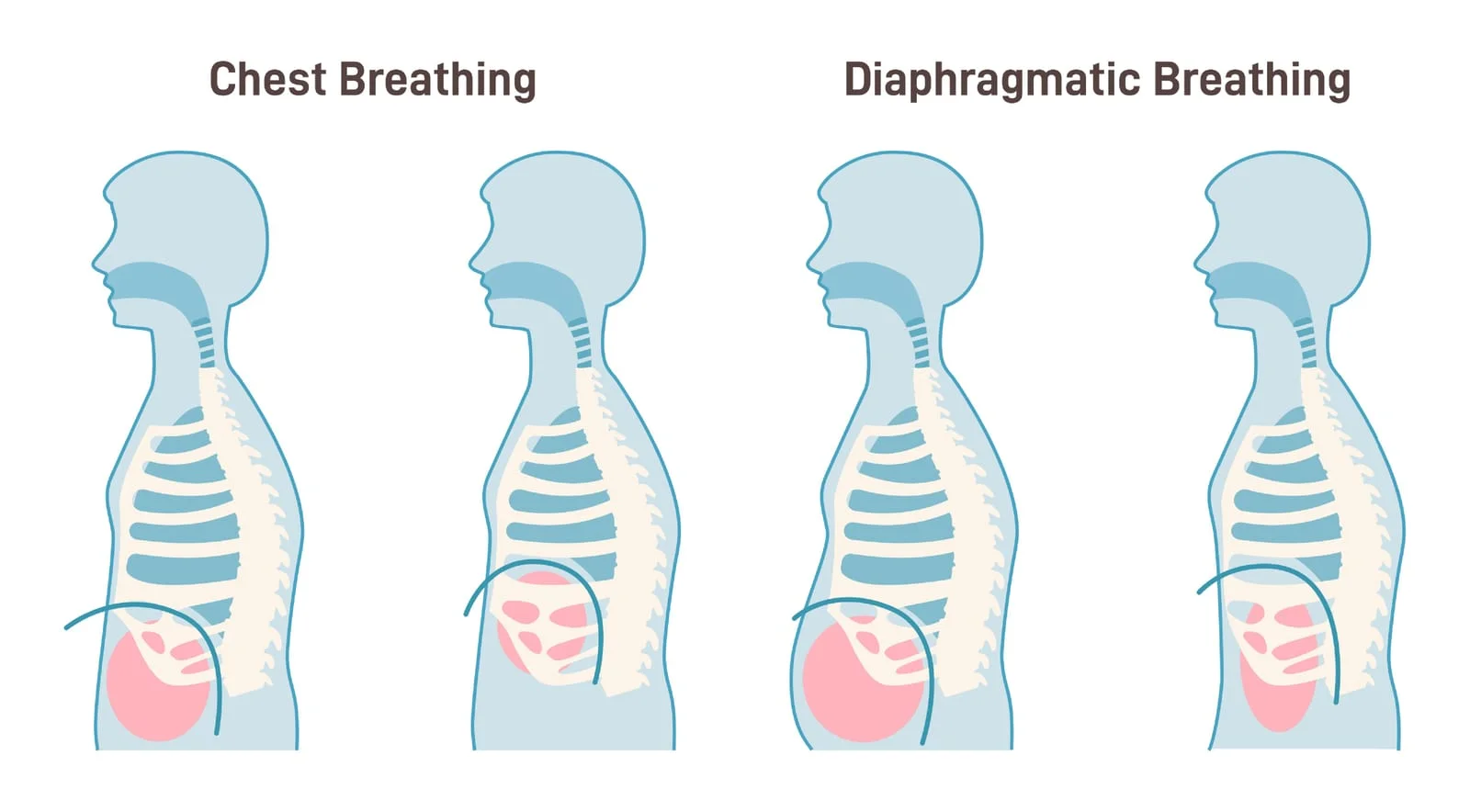
If you have diastasis recti (DR), you may notice a change in your breathing patterns or even experience shortness of breath. The connection between breathing and diastasis recti is significant – the lack of tension in the abdominal wall can alter breathing mechanics, and suboptimal breathing patterns can potentially increase your abdominal separation. Let’s explore why and what you can do about it.
Get free expert advice and start your Diastasis Recti healing journey today
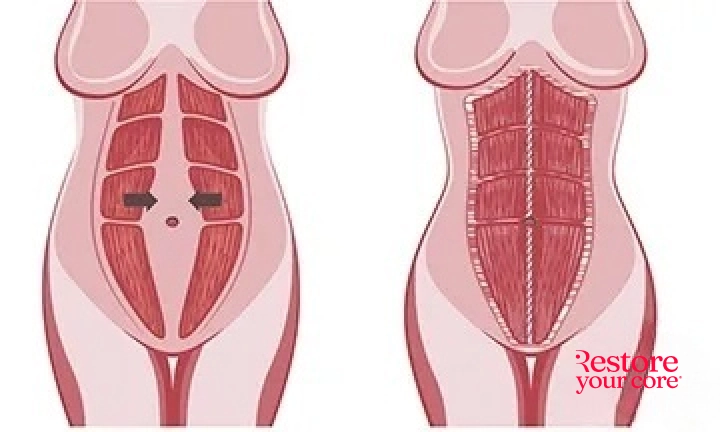
Diastasis recti is the stretching or separation of the rectus abdominis (6 pack) muscles caused by the thinning of the linea alba (midline connective tissue). Diastasis recti separation leaves your abdominal organs unsupported, and if severe, can expose your digestive organs creating a stomach bulge.
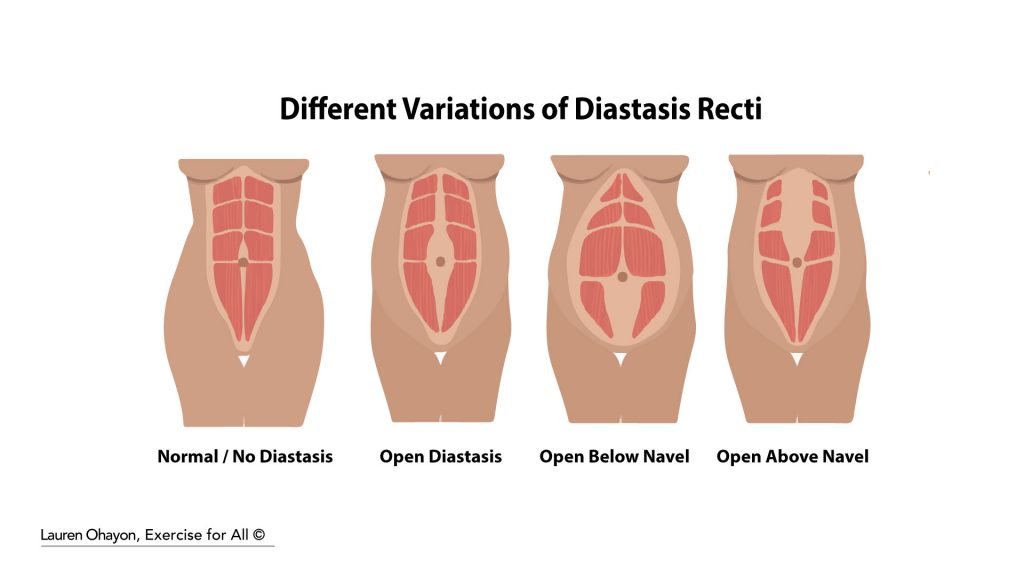
This separation can range from being isolated above the belly button, within the belly button, and below the belly button sitting above the pubic bone. In some cases, the separation emcompasses the entire mid section of the core.
In both men and women, this gap can be created in the midline of your belly anywhere from the pubic bone to the base of your ribcage. During a crunch or sit-up, where one would normally feel tension and closure, there is a space in between.
Diastasis recti looks different from person to person. Although in some cases the symptoms can be painful and more present, in some people they aren’t noticeable at all. Below I address the most common and present symptoms you should be aware of in determining whether or not you may have a diastasis recti.
An abdominal bulge is not always an indication of a diastasis recti, yet, it can be a symptom.
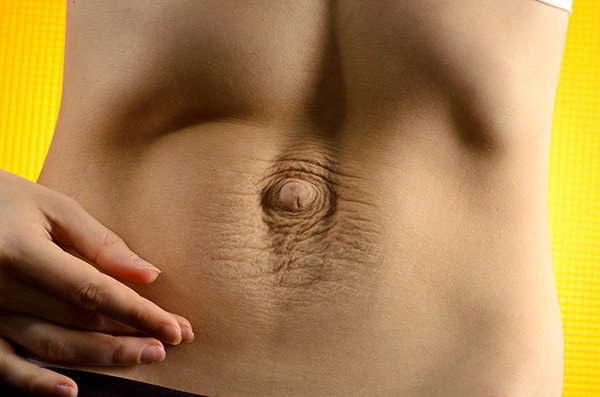
This bulge, or stomach “pooch,” occurs when the abdominal organs become unsupported by the rectus abdominis muscles. This can appear as a cone shape or ridge above and within the area located close to the belly button. However, depending on where the diastasis recti has become isolated, the bulge can range from above the belly button, on the belly button (causing the belly button to flatten), or below the belly button just above the pubic bone.
This is the most noticeable and common symptom of diastasis recti (whether you have significant body fat or no body fat at all). A minor separation (one of 1-2 finger widths) is not a significant injury,, but I advised considering rehab or core building exercises to prevent the gap from widening.
In more severe cases, the separation can be that of 5-10 finger widths. This effect is much more noticeable and can be seen as a crevice or significant gap within the abdominal core. Diastasis recti is also measured by shallowness or deepness. Someone could potentially have a 10 finger width separation but it’s shallow. In this case, exercise and safe core strengthening routines can help restore the core to its natural state.
Discover the top 3 steps to heal your Diastasis Recti and get back to what you love
Rectus abdominis separation can lead to a stomach bulge (aka stomach pooch), pelvic floor issues, unnatural posture, and stomach and back pain. The symptoms of diastasis recti include but are not limited to:
Discover the top 3 steps to heal your Diastasis Recti and get back to what you love
Unless you have a low body fat percentage or have an overly toned core with a visible 6-pack, it is very hard to diagnose a diastasis recti on appearance alone. The linea alba lies beneath the fat layer of your abdomen, so it cannot be seen. Many people have a diastasis recti for years before learning they have it.
Abdominal coning is most commonly a sign of diastasis recti. Diastasis recti during pregnancy can be a cause of the core doming or coning. This is a result of the expanding uterus as it makes room for your child. Although the separation of the muscles and the stretching of the connective tissues is normal, coning may present its own problems. If your belly is changing its shape from being round and reverting to a coning shape, this could be an indication that diastasis recti is present and will extend into the postpartum period.
Similarly to the above, mild diastasis recti can show signs of an abdominal bulge or look like the midline of your abdomen is “coning.” During a self-assessment or if you have a physical therapist assess you, diastasis recti looks like a separation in your core. In mild cases, this gap can be 1-2 finger lengths wide, yet present little to no symptoms. It is best to consider core strengthening programs even if the gap is not severe in order to prevent the gap from widening.
One of the best things you can do during pregnancy is prehab. I have many long term clients who were able to prevent their diastasis recti from returning with subsequent pregnancies by working their core in a smart, functional way the entirety of their pregnancy. Many report that their core felt stronger than ever with the prehab work that they did. Pregnancy is not an illness, there is no need to halt all exercise. We do, however, want to make good exercise choices. It is very important to exercise your core during pregnancy but not to increase intra ab pressure as you do so.
Our online prehab program, Bump & Birth, is designed to prepare your body for the unique demands of pregnancy, birth, and recovery. Everything you need to prepare your body can be found in this program which combines functional exercise, strength training, posture and alignment instruction, and even key educational tools so that you are given a chance to enjoy your pregnancy without stressing over it.
Diastasis recti is often more apparent postpartum. I usually recommend waiting at least 6 to 12 weeks before checking for a diastasis recti. Here are a few tips that can help prevent and/or heal a diastasis recti.
If I could have a dollar for every mom who wished she had rested more in order to spare herself injury. Rest is so important for healing your body postpartum and ensuring that you do not damage your core and your pelvic floor. We recommend getting back into exercise at least 6 weeks postpartum, but even then, easing into it is key. The “I want to get my body back” sentiment can be very harmful to a recovering body.
Once you are cleared for exercise by your medical professional, you want to focus on core building exercises which properly strengthen your core without aiding in diastasis recti development. My program Restore Your Core is designed for any woman with weak core issues such as: postpartum issues, diastasis recti, incontinence, and constant back pain.
Restore Your Core is designed so that you can use helpful and intelligent core building strategies not only during exercise, but in everyday motion. I help you approach healing and restoring your body in a personal way. I challenge you to train your whole body to move correctly in order to get you stronger and heal properly.

Join our community and connect with over 30,000 women dedicated to healing their pelvic floor issues. The RYC® Facebook group offers an intimate space for women to openly discuss and learn more about issues such as diastasis recti, leaky pee, prolapses, etc. You don’t have to be alone in your journey for a stronger self, join us today!
“There is no thank you big enough for Lauren Ohayon existing and thinking and helping so many of us. Every time I do something I never thought I’d do again she is part of the reason why.”
Laura Gregg
in this FREE video and get the support you deserve
*10K+ women healed and healing
Please check your email inbox in a few minutes.
What does Diastasis Recti look like? Well, Diastasis Recti symptoms and what it looks like can differ from person to person, making it difficult to diagnose. For some individuals, Diastasis...
If you have diastasis recti (DR), you may notice a change in your breathing patterns or even experience shortness of breath. The connection between breathing and diastasis recti is significant...
While it’s relatively easy to assess yourself for diastasis recti, what do you do about it? PT is great; pressing play on a video at home is even easier. Read...
What does Diastasis Recti mean? Diastasis recti, or abdominal separation, is essentially a gradual stretching and separation of the abdominal muscles in your belly. The connective tissue (linea alba) that...
Healthcare professionals–including doctors, coaches, and doulas–have you been confused about how to help your patients and clients with diastasis recti? Is surgery the best and only option? Not necessarily. Read...
If you’ve recently discovered that you have a diastasis recti, you might be wondering whether you can keep up your regular workout routine. With the right information, you can safely...
If you’ve been diagnosed with diastasis recti (DR), figuring out how to keep moving without making things worse is a challenge. Thankfully, DR is very responsive to targeted exercise. When...
Discover the top 3 steps to heal your Diastasis Recti and get back to what you love
*No spam, just quality content and support
in this FREE video and get the support you deserve
*10K+ women healed and healing
Please check your email inbox in a few minutes.