Resources
- Can You Have a Flat Stomach with Diastasis Recti?
- Ab Exercises for Diastasis Recti That Heal, Not Harm
- Can Diastasis Recti Be Fixed Without Surgery? A Pro’s Guide to Non-Surgical Solutions
- How to Choose the Best Diastasis Recti Program?
- Working Out with Diastasis Recti
- How to Fix Diastasis Recti Years Later: A Comprehensive Guide for Long-Term Healing
- Is Diastasis Recti Preventable? | 5 Ways To Prevent Rectus Diastasis
- Before and After: Diastasis Recti
- Can Diastasis Recti Be Fixed Without Surgery?
- Diastasis Recti During Pregnancy
- Can You Fix Diastasis Recti? Exercise Or Surgery
- What Does Diastasis Recti Look Like?
- Self Testing Diastasis Recti | 4 Simple Ways to Test Yourself
- 5 Exercises for Diastasis Recti to Support Core Healing
- Diastasis Recti Exercises For Men
- Diastasis Recti Surgery | Procedure Overview | Will You Need It?
- Diastasis Recti Symptoms | Stomach, Back Pain, Pelvic Floor Issues
in this FREE video and get the support you deserve
*No spam, just quality
content and support
Resources
- Can You Have a Flat Stomach with Diastasis Recti?
- Ab Exercises for Diastasis Recti That Heal, Not Harm
- Can Diastasis Recti Be Fixed Without Surgery? A Pro’s Guide to Non-Surgical Solutions
- How to Choose the Best Diastasis Recti Program?
- Working Out with Diastasis Recti
- How to Fix Diastasis Recti Years Later: A Comprehensive Guide for Long-Term Healing
- Is Diastasis Recti Preventable? | 5 Ways To Prevent Rectus Diastasis
- Before and After: Diastasis Recti
- Can Diastasis Recti Be Fixed Without Surgery?
- Diastasis Recti During Pregnancy
- Can You Fix Diastasis Recti? Exercise Or Surgery
- What Does Diastasis Recti Look Like?
- Self Testing Diastasis Recti | 4 Simple Ways to Test Yourself
- 5 Exercises for Diastasis Recti to Support Core Healing
- Diastasis Recti Exercises For Men
- Diastasis Recti Surgery | Procedure Overview | Will You Need It?
- Diastasis Recti Symptoms | Stomach, Back Pain, Pelvic Floor Issues
Breathing and Diastasis Recti: Understanding the Connection and Finding Relief
By Lauren Ohayon 11/26/2024
6 Min Read
If you have diastasis recti (DR), you may notice a change in your breathing patterns or even experience shortness of breath. The connection between breathing and diastasis recti is significant – the lack of tension in the abdominal wall can alter breathing mechanics, and suboptimal breathing patterns can potentially increase your abdominal separation. Let’s explore why and what you can do about it.
Table of Contents
How Breathing Affects Diastasis Recti
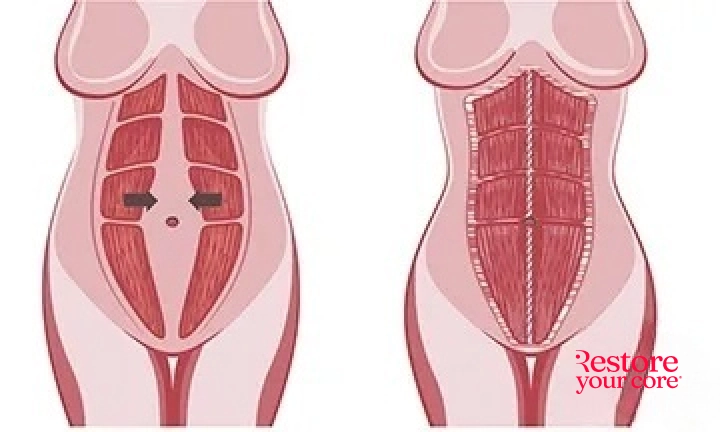
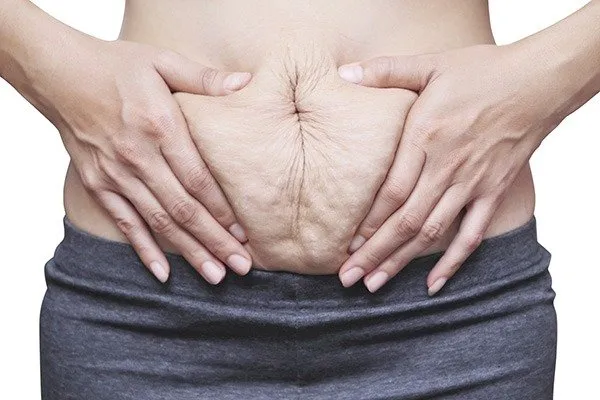
Diastasis recti is fundamentally a pressure management issue in your abdominal cavity. When there’s too much intra-abdominal pressure, the connective tissue running from your ribs to your pubic bone (the linea alba) becomes overstretched and thins out. This causes the two sides of your rectus abdominis muscles (your “six-pack” muscles) to separate from the midline.
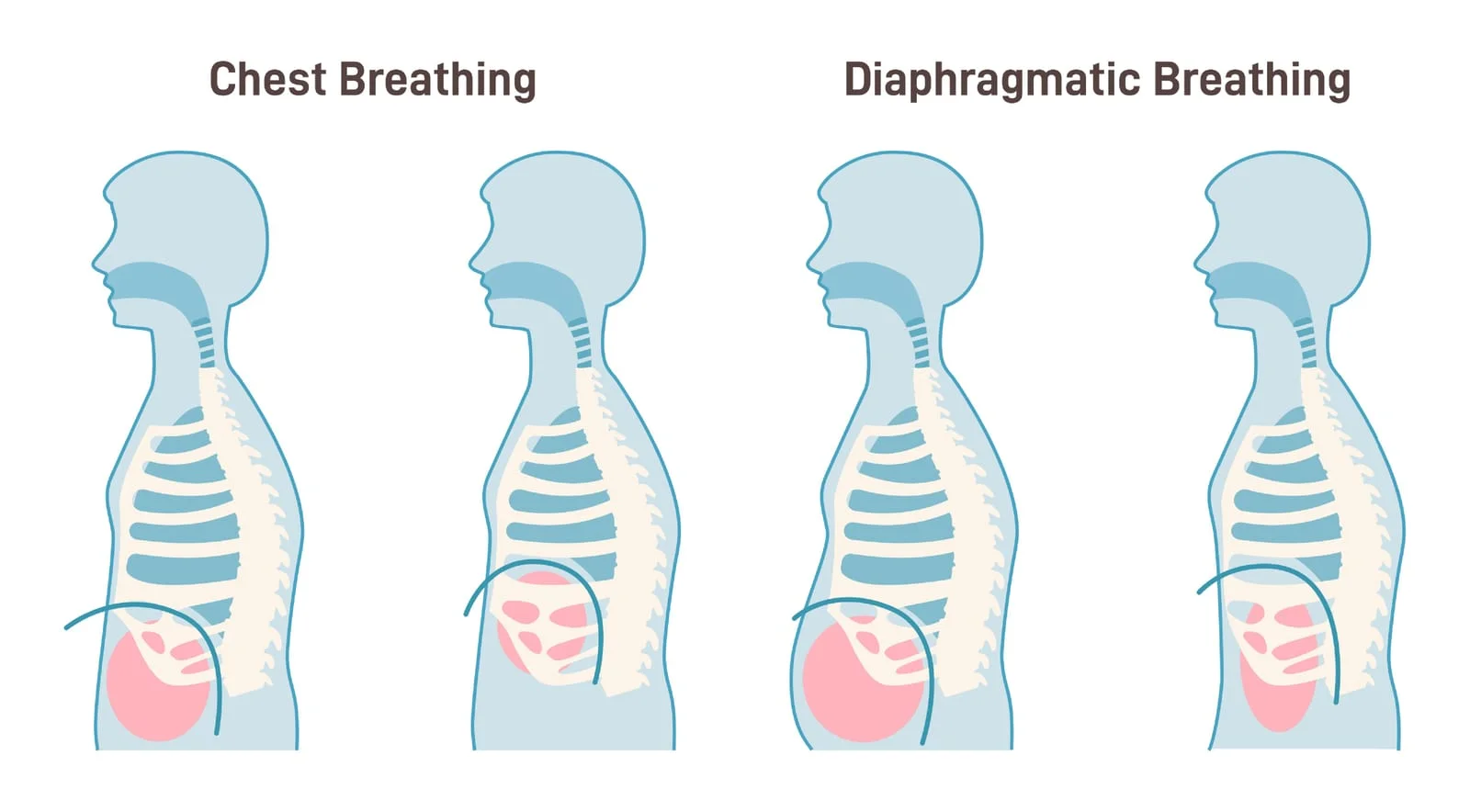
Many people with diastasis recti develop breathing patterns that can contribute to this pressure problem. The most common issue I see is chronic belly breathing, where all breath movement happens in the abdomen with minimal rib cage involvement.
Why Belly Breathing Can Make Diastasis Recti Worse
When you breathe primarily into your belly, each breath places extra pressure on your abdominal contents and the connective tissue that’s already compromised. Over time, this consistent pressure can:
- Further stretching the linea alba, increasing the separation
- Slow down or delay the healing process
- Create compensatory patterns in other areas of your body
- Contribute to additional dysfunction in the core and pelvic floor
The Role of the Diaphragm and Core in Breathing
Your diaphragm, core muscles, and pelvic floor work together as part of an integrated system. When you inhale, your diaphragm contracts and moves downward, creating space in your chest cavity for your lungs to expand. This movement should be accompanied by a gentle expansion of your rib cage in all directions – front, back, and sides.
In optimal breathing:
- Your rib cage expands three-dimensionally
- Your pelvic floor responds reflexively
- Your deep core muscles engage appropriately
- Intra-abdominal pressure is managed effectively
Understanding the Biomechanics of Breathing and Core Function
Think of your core as a cylinder or canister, with the diaphragm at the top, pelvic floor at the bottom, and abdominal muscles wrapping around the sides. When functioning optimally, these components work together to manage pressure within your body.
During healthy breathing:
- Your diaphragm contracts and descends like a piston
- Your rib cage expands three-dimensionally
- Your pelvic floor responds reflexively, moving slightly down and then up
- Your deep core muscles engage appropriately to maintain stability
- Pressure is distributed evenly throughout the cylinder
With diastasis recti, this coordinated system often becomes disrupted. Common compensations include:
- Excessive belly expansion with each breath
- Minimal rib cage movement
- Chronic tension in the upper chest and neck
- Overactive pelvic floor muscles
- Pressure bulging through the compromised linea alba
Common Breathing Pattern Disorders with Diastasis Recti
Many people develop problematic breathing patterns that can maintain or worsen their diastasis recti:
Upper Chest Breathing
- Rapid, shallow breaths, primarily in the upper chest
- Often accompanied by shoulder tension and neck strain
- Creates a pressure buildup that pushes down and out against the weakened abdominal wall
Forceful Belly Breathing
- Aggressive expansion of the abdomen with each breath
- Often taught in some yoga and meditation practices
- Creates excessive pressure against the compromised linea alba
Breath Holding
- Frequently occurs during daily activities or exercise
- Creates significant pressure spikes in the abdominal cavity
- Often accompanied by bearing down or straining
Learning to Breathe Better with Diastasis Recti
The goal isn’t to completely eliminate belly breathing – some abdominal movement with breath is natural and healthy. Instead, we want to restore a more balanced breathing pattern that primarily engages the rib cage while allowing the belly to move gently at the end of the inhale.
Three-Dimensional Breathing Technique
Here’s how to practice more optimal breathing for diastasis recti:
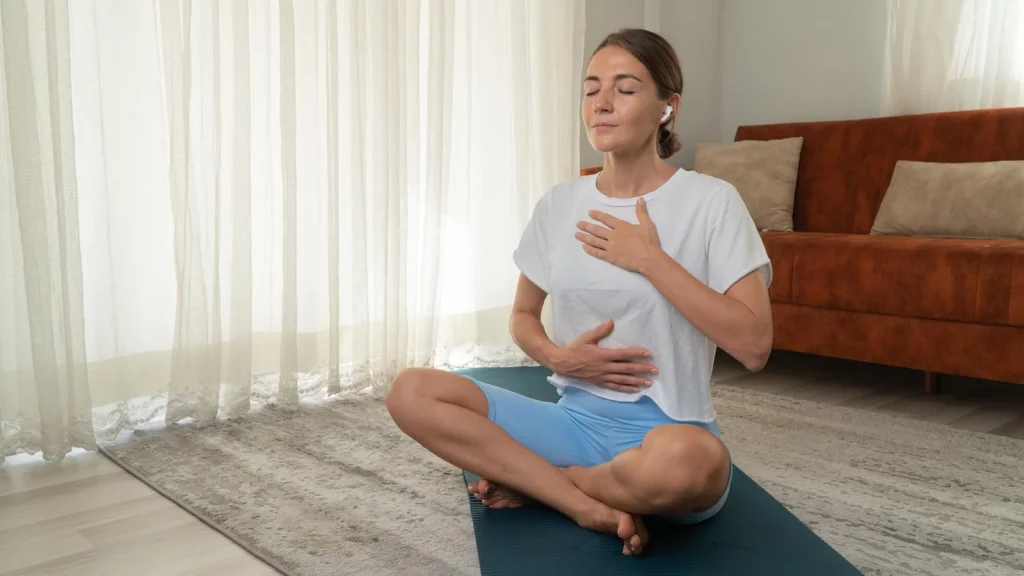
1. Lie comfortably on your back or sit with your spine in neutral
2. Place your hands on the sides of your lower ribcage
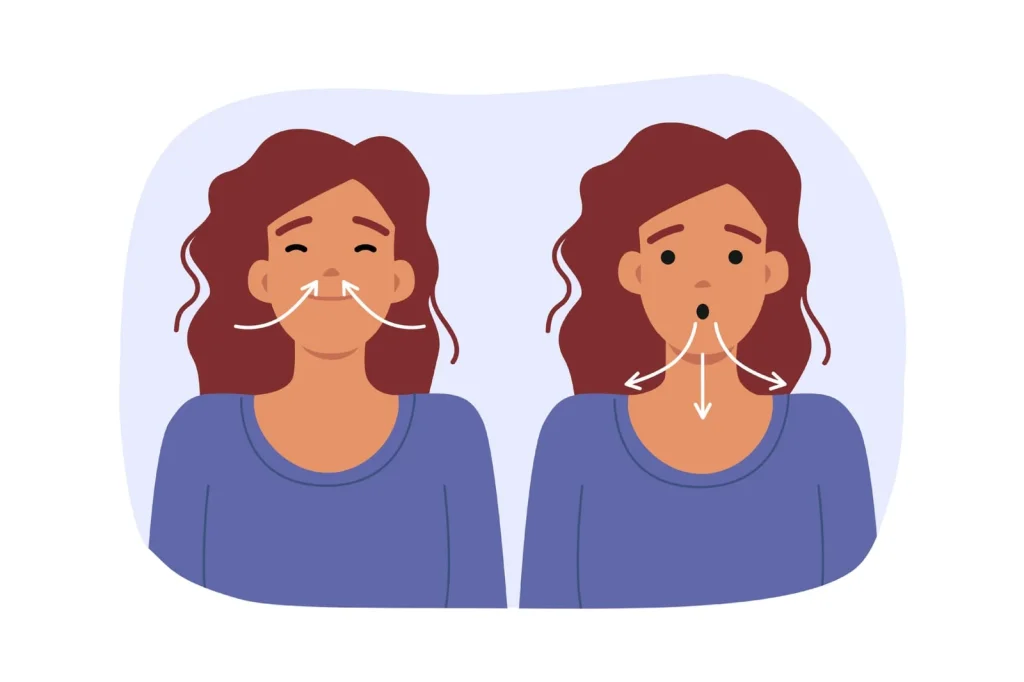
3. Inhale gently through your nose, focusing on expanding your rib cage:
- Feel the ribs move outward to the sides
- Notice the subtle lift of the front and back of the ribs
- Allow a small amount of belly movement at the end of the inhale
4. Exhale slowly through your mouth as if blowing out candles on a birthday cake
5. Feel your rib cage gently narrow, and your core engage slightly
Practice this for 3-4 breaths at a time, several times throughout your day.
Progressive Steps for Better Breathing
Let’s break down the process of developing better breathing patterns into manageable stages:
Stage 1: Awareness (Days 1-7)
- Notice your current breathing pattern throughout the day
- Observe when you hold your breath during activities
- Pay attention to tension patterns in your body
- Start practicing the basic three-dimensional breath for 2-3 breaths at a time
Stage 2: Foundation Building (Weeks 2-3)
1. Practice three-dimensional breathing in various positions:
- Lying on your back
- Side-lying
- Seated
- Standing
2. Begin coordinating breath with gentle movements
3. Focus on maintaining breathing awareness during simple daily tasks
Stage 3: Integration (Weeks 4+)
- Incorporate breathing awareness into more challenging activities
- Practice maintaining optimal breathing during exercise
- Use breath as a tool to manage daily stress and tension
Real-World Application: Breathing in Daily Life
Understanding how to apply better breathing patterns in everyday situations is crucial for long-term success:
Lifting and Carrying
When picking up your child, groceries, or other objects:
- Inhale to prepare
- Begin your exhale as you initiate the lift
- Maintain steady breathing throughout the movement
- Avoid holding your breath or bearing down
Household Tasks
During activities like cleaning, gardening, or making beds:
- Stay aware of your breathing pattern
- Avoid holding your breath during exertion
- Use exhales during moments of effort
- Take breaks to reset your breathing if needed
Exercise and Movement
Whether you’re walking, doing yoga, or strength training:
- Start with proper breathing before adding movement
- Scale activities based on your ability to maintain good breathing
- Stop if you notice excessive pressure or bulging in your abdomen
- Build up gradually as your coordination improves
Common Challenges and Solutions
Challenge 1: "I can't feel my ribs moving"
Solution: Try this exercise:
- Lie on your back with knees bent
- Place your hands on your lower ribs
- Breathe into the back and sides of your rib cage
- Imagine your ribs expanding like an umbrella opening
Challenge 2: "I get dizzy when focusing on my breath"
Solution:
- Start with shorter practice sessions
- Focus on gentle, natural breathing rather than forcing deep breaths
- Practice in a supported position, like lying down
- If dizziness persists, consult your healthcare provider
Challenge 3: "I keep reverting to old breathing patterns"
Solution:
- Set reminders throughout the day
- Practice in shorter, more frequent sessions
- Use daily activities as cues (e.g., every time you wash your hands)
- Be patient – new patterns take time to establish
Supporting Your Breathing Practice
Creating an environment that supports better breathing can make a significant difference:
Physical Environment
- Set up your workspace to promote good posture
- Use props like pillows or bolsters for comfort during practice
- Consider using a breathing app or timer for structured practice
Stress Management
- High stress often leads to compromised breathing patterns
- Include stress-reduction techniques in your daily routine
- Practice gentle movement to release tension
- Take regular breaks during demanding activities
Signs Your Breathing Pattern Needs Attention
You might need to work on your breathing pattern if you:
- Notice your belly pushes strongly outward with every breath
- Feel like you can’t get a full breath
- Experience increased diastasis symptoms during exercises
- Find yourself holding your breath during daily activities
- Have minimal rib cage movement when breathing
Beyond Breathing: A Comprehensive Approach
While improving your breathing pattern is crucial, healing diastasis recti requires a comprehensive approach that includes:
- Understanding and managing intra-abdominal pressure
- Addressing postural patterns and alignment
- Learning appropriate core engagement strategies
- Working with your whole body, not just your abs
For a complete system to heal your diastasis recti that incorporates proper breathing techniques and progressive core rehabilitation, check out my 12- week Restore Your Core® program.
Additional Resources
To learn more about healing diastasis recti, explore these related articles:
FAQ
1. How does breathing impact diastasis recti?
Breathing patterns directly affect intra-abdominal pressure, which influences diastasis recti. Optimal breathing helps manage this pressure effectively, while poor breathing patterns can create excessive pressure that may maintain or worsen abdominal separation. Your breathing pattern is one of the most frequent activities affecting your core – you breathe thousands of times per day.
2. What is belly breathing, and why can it worsen diastasis recti?
Belly breathing is a pattern where most breath movement happens in the abdomen with minimal rib cage involvement. This creates repeated outward and downward pressure on your abdominal wall. While some belly movement with breath is normal, excessive belly breathing can place too much strain on the already compromised connective tissue in diastasis recti.
3. Can diastasis recti cause breathing problems?
Yes, diastasis recti can affect your breathing patterns because it changes how your core system manages pressure. When your abdominal muscles are separated, it becomes harder for your core to coordinate effectively with your diaphragm, which may lead to breathing difficulties or changes in your natural breathing pattern.
4. How do I know if I am breathing incorrectly for diastasis recti?
Signs of problematic breathing patterns include excessive belly protrusion with each breath, minimal rib cage movement, frequent breath holding during activities, feeling short of breath during normal tasks, and visible doming or coning of your abdomen during exertion.

5. How long does it take to see improvement in diastasis recti with breathing exercises?
While everyone’s healing journey is different, many people begin to notice changes in their breathing patterns within 2-3 weeks of consistent practice. However, lasting change and integration into daily activities typically takes 6-8 weeks of regular practice. Remember that breathing is just one component of healing diastasis recti.
6. Can diastasis recti cause shortness of breath?
Yes, some people with diastasis recti experience shortness of breath because their compromised core muscles affect their ability to breathe efficiently. This often improves as they learn better breathing patterns and strengthen their core system.
7. Are there specific breathing exercises for diastasis recti?
Yes, three-dimensional breathing exercises that focus on rib cage expansion while managing abdominal pressure are particularly beneficial for diastasis recti. However, these exercises should be part of a comprehensive approach that includes proper core engagement strategies and overall body awareness. The breathing techniques taught in the Restore Your Core® program are specifically designed to support diastasis recti healing.