
Resources
- Breathing and Diastasis Recti: Understanding the Connection and Finding Relief
- Can You Have a Flat Stomach with Diastasis Recti?
- Ab Exercises for Diastasis Recti That Heal, Not Harm
- Can Diastasis Recti Be Fixed Without Surgery? A Pro’s Guide to Non-Surgical Solutions
- How to Choose the Best Diastasis Recti Program?
- How to Fix Diastasis Recti Years Later: A Comprehensive Guide for Long-Term Healing
- Is Diastasis Recti Preventable? | 5 Ways To Prevent Rectus Diastasis
- Before and After: Diastasis Recti
- Can Diastasis Recti Be Fixed Without Surgery?
- Diastasis Recti During Pregnancy
- Can You Fix Diastasis Recti? Exercise Or Surgery
- What Does Diastasis Recti Look Like?
- Self Testing Diastasis Recti | 4 Simple Ways to Test Yourself
- 5 Exercises for Diastasis Recti to Support Core Healing
- Diastasis Recti Exercises For Men
- Diastasis Recti Surgery | Procedure Overview | Will You Need It?
- Diastasis Recti Symptoms | Stomach, Back Pain, Pelvic Floor Issues

Resources
- Breathing and Diastasis Recti: Understanding the Connection and Finding Relief
- Can You Have a Flat Stomach with Diastasis Recti?
- Ab Exercises for Diastasis Recti That Heal, Not Harm
- Can Diastasis Recti Be Fixed Without Surgery? A Pro’s Guide to Non-Surgical Solutions
- How to Choose the Best Diastasis Recti Program?
- How to Fix Diastasis Recti Years Later: A Comprehensive Guide for Long-Term Healing
- Is Diastasis Recti Preventable? | 5 Ways To Prevent Rectus Diastasis
- Before and After: Diastasis Recti
- Can Diastasis Recti Be Fixed Without Surgery?
- Diastasis Recti During Pregnancy
- Can You Fix Diastasis Recti? Exercise Or Surgery
- What Does Diastasis Recti Look Like?
- Self Testing Diastasis Recti | 4 Simple Ways to Test Yourself
- 5 Exercises for Diastasis Recti to Support Core Healing
- Diastasis Recti Exercises For Men
- Diastasis Recti Surgery | Procedure Overview | Will You Need It?
- Diastasis Recti Symptoms | Stomach, Back Pain, Pelvic Floor Issues
Working Out with Diastasis Recti
6 Min Read
If you’ve recently discovered that you have a diastasis recti, you might be wondering whether you can keep up your regular workout routine. With the right information, you can safely modify your workouts so that you can keep doing what you love, even while you rehabilitate your core.
Table of Contents
Can I Exercise with Diastasis Recti?
Diastasis recti (frequently abbreviated as DR or DRA) is the thinning and weakening of the linea alba, which is the connective tissue between the two sides of the rectus abdominis muscles (six-pack muscles). This weakening often creates the appearance of a “gap” or separation of the abs. Not all DR looks the same: Depending on how wide and deep the separation is, your body fat level, and whether you have stretched skin on your belly, you might notice a deep groove in the abdominal wall, a “pooch” above or below the belly button, or a “pregnant” appearance.
Yes, you can exercise with diastasis recti! But you need to be mindful of how you do it. If you’re generally active and have DR, you might notice that your core feels weak when you exercise, or you might see coning or doming of your abdomen when you’re doing core loaded exercises. Learning better core engagement techniques can help you heal your diastasis recti and avoid exacerbating it.
The Impact of Exercise on Diastasis Recti
Not all exercises are suitable for people with diastasis recti, particularly during the recovery phase. Exercises like sit-ups, v-ups, plank, dead bug are contraindicated when you have DR, unless you can demonstrate that you can perform them with a minimum of compensatory bulging, bracing, or bearing down. When you bulge, brace, bear down, or breath hold, you’re compromising the integrity and function of the core. If you continually do so over months or years of exercising, you run the risk of not healing, or even making your DR worse.
https://www.youtube.com/watch?v=OkKYI_NIn_c
While the causes of diastasis recti are varied, most folks with DR will find they have some or all of these movement patterns:
- Faulty breathing mechanics (belly breathing can compromise the core)
- A tight rib cage (e.g., the inability to easily side bend and twist without compromising the core)
- Tight and tense abdominals (like sucking in your belly all day long)
- Alignment and postural patterns that affect the ability to engage the core muscles (like a tucked under pelvis or lifted and thrusted ribs)
- A poor core engagement strategy (pulling in and tightening your core is not a great approach)
https://www.youtube.com/watch?v=VvBTnnNS_g4
If some or all of this sounds familiar, you’re not alone. And the good news is that you can learn better movement strategies so that you can go back to doing the things you love. The kinds of exercises that will aid in your recovery are easily integrated into most conventional workout routines. If you’re an athlete in a specialized sport, your first move might be to see a PT who knows your sport and knows how to treat diastasis recti.
Assessing Your Condition
It’s relatively easy to assess yourself for diastasis recti, although it is also often helpful to seek a professional opinion as well. Here’s a guide to assessing yourself for diastasis recti.
The severity of your DR is not just a matter of measuring the width and depth; the crucial factor is the tension your linea alba is able to maintain. Additionally, the range and intensity of symptoms are another important indicator. What seems like an isolated issue can actually be responsible for a variety of symptoms:
- Abdominal bloating
- Urinary or fecal incontinence
- Constipation
- Back pain
- Pelvic or hip pain
- Lack of core strength and function–feeling like you have a “weak core”
- Pain when walking or performing everyday tasks
If you’re not experiencing a great deal of discomfort or pain, and the connective tissue is able to maintain tension, your diastasis is less severe. If, on the other hand, you have the disconcerting experience of watching your internal organs move due to the width and thinning of the connective tissue, you have a more severe diastasis recti.
While there’s plenty you can do at home to recover from diastasis recti, you should seek professional advice if your symptoms are debilitating and keep you from engaging in regular activity. Your diastasis-friendly workout plan needs to be tailored to your individual needs. I recommend starting with a physical therapist or a movement teacher specializing in core and pelvic floor health to help you understand the compensation patterns that might be contributing to the DR or stopping you from healing.

General Guidelines for Working Out with Diastasis Recti:
While the specifics of how to modify any possible exercise are out of the scope of this article, you can use the following general principles to help you safely engage in physical activity with diastasis recti.
- Notice your patterns and preferences as you move–how do you tend to engage your core when you’re exercising? Imagine blowing out 99 candles as you exhale on exertion
- Check your alignment–when you’re standing and lying on your back, try to keep a more neutral pelvic/ribcage position
https://www.youtube.com/watch?v=AU0RN-oXLaY
- Avoid bulging, bracing, bearing down, and holding your breath
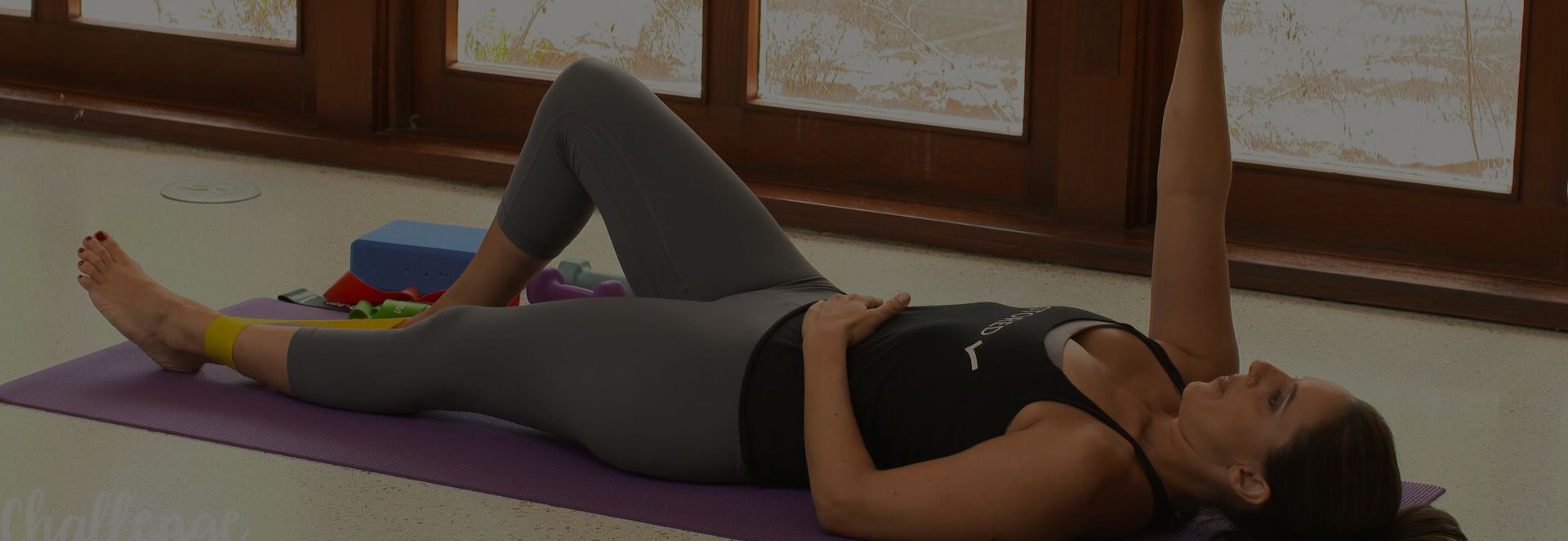
- In general, any exercise that moves your legs or arms away from your core will be harder. Modify exercises like dead bug or leg levers by keeping your knees bent or keeping one or both feet on the floor
- Use a bolster like a rolled-up towel or yoga block for your head when performing exercises lying on your back
- Slow down: notice whether you’re using momentum to push past the limits of your current abilities. Can you still breathe and engage your core mindfully?
What Not to Do
These exercises are not ideal if you have any sort of core or pelvic floor issue, but especially diastasis recti:
- Supine double leg lower
- Flutter Kicks – either propped on arms or supine
- Supine double straight leg twist side to side
- Sit ups / V-ups
- Deep extension – yoga backbends such as upward bow, camel etc
- Using the ab roller – hands and knees holding the roller and moving in and out of plank
- Very loaded lifts and squats
https://www.youtube.com/watch?v=0TnFmWUlZVk
Safe Modifications for Common Exercises
- Instead of double leg lowers, try reverse marching: Begin with both knees bent and feet flat on the floor, exhale and bring one knee over your hip, then lower the foot back to the floor
- Single leg raises: keep the opposite foot flat on the floor to perform this move
- Instead of bird-dog, break it down into the component parts: Raise one hand at a time, alternating hands. Then raise one knee at a time, alternating legs. As you get stronger, you can progress to opposite hand and knee raises
- Change traditional core exercises like plank to use a bench or wall to reduce the demand on the core
- Instead of high-impact exercise, get your heart rate up by walking uphill
- It is important to load your rectus abdominis muscles safely. A modified crunch can be helpful–only lift your head and shoulders as far as you can go without bulging
Designing Your Diastasis Recti-Friendly Workout Routine
A workout routine that supports your healing diastasis recti should help you learn to access your deep core muscles, add mobility and strength to your rib cage and abdominals, help you undo postural compensation patterns, and ultimately help you learn how to safety tone and strengthen more superficial ab muscles. The guidelines above can be helpful, but if you’re having difficulty figuring it out on your own, you may want to connect with a trainer or instructor who is well-versed in core and pelvic floor dysfunction. It’s totally possible to maintain an active lifestyle with diastasis recti by making smart choices about how to modify exercises. And as your healing journey continues, you can get back to doing more of what you love. Adjusting your workouts as your recovery progresses can be as simple as adding a little more load–taking your feet farther off the floor or holding a light weight in your hands. Above all, I encourage you to be patient and consistent on your recovery journey–it takes time to heal, but it’s absolutely worth slowing down to feel better.
FAQ section:
1. Can exercise make diastasis recti worse?
Not all exercise is good for diastasis recti: certain exercises done incorrectly can exacerbate diastasis recti by increasing intra-abdominal pressure and reinforcing faulty core engagement patterns. On the other hand, you can improve your diastasis recti with exercises that help change those patterns.
2. How can I tell if my workout is safe for diastasis recti?
Ensure your workout focuses on proper alignment and avoids excessive intra-abdominal pressure–anything that makes your abdomen dome or cone during exercise is a no. You may wish to consult with a movement professional to assess your form in the exercises you’re performing.
3. Are there any exercises I should completely avoid with diastasis recti?
Exercises like crunches, planks, and certain twists may worsen diastasis recti and should be avoided. That doesn’t mean you can never do them! You just need to heal the DR before you engage in them; you can also work up to many of these exercises as part of your healing journey.
4. How soon after childbirth can I start working out with diastasis recti?
Typically, you can start gentle exercises in and around bed as soon as you feel comfortable postpartum. However, depending on your birth experience, you’ll want to wait about 6-12 weeks to engage in more challenging exercises. Consult a healthcare professional for personalized advice.
5. Can weightlifting be safely incorporated into a diastasis recti workout plan?
Yes, weightlifting can be safely incorporated into a DR workout plan, but it’s crucial to use proper form, gradually increase weights, and avoid exercises that strain the abdominal wall excessively.
6. How often should I perform diastasis recti-safe workouts?
Aim for regular workouts, but listen to your body and avoid overexertion; 3 to 4 times a week is a common recommendation.