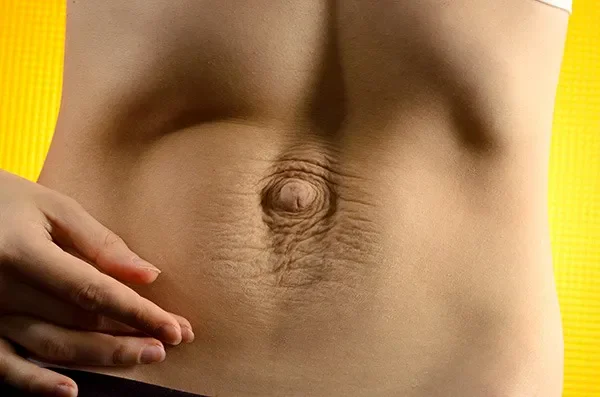
One of the biggest myths surrounding Diastasis Recti is that it only occurs in postpartum women. However, Diastasis Recti is a natural occurrence that affects the abdominal wall without gender specificity.
What is Diastasis Recti?
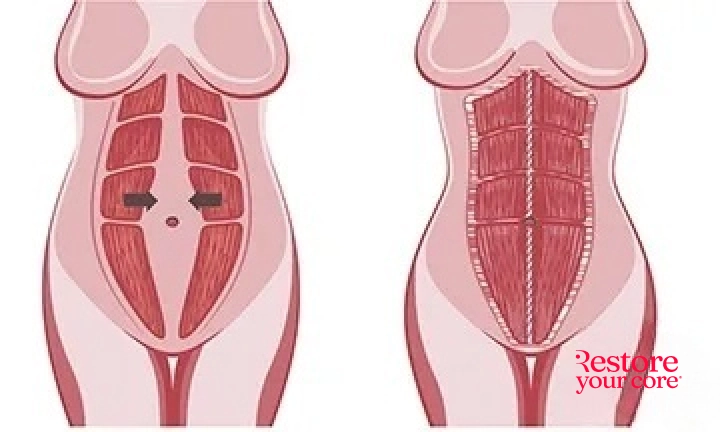
Diastasis Recti can occur when excess intra-abdominal pressure is exerted on the front wall of the abdomen. This excess pressure can cause stretching and thinning of the linea alba. This connective tissue binds the vertical muscles on each side of the belly button (the abdominis recti or 6-pack muscles). This will leave a gap between the vertical muscles and leave the contents of the abdomen unsupported, which can lead to a host of issues.
Common Diastasis Recti Symptoms in Men
- Poor posture
- Difficulty lifting objects
- Back pain
- SIJ pain
- Hip pain
- Pelvic pain
- Abdominal discomfort
- Digestive issues
- Constipation
- Urinary incontinence
How to Test for Diastasis Recti in Men
If you think you have a Diastasis Recti, you can visit our site Dudes with DR to test for Diastasis Recti yourself at home; another option is to have a physical therapist assess you.
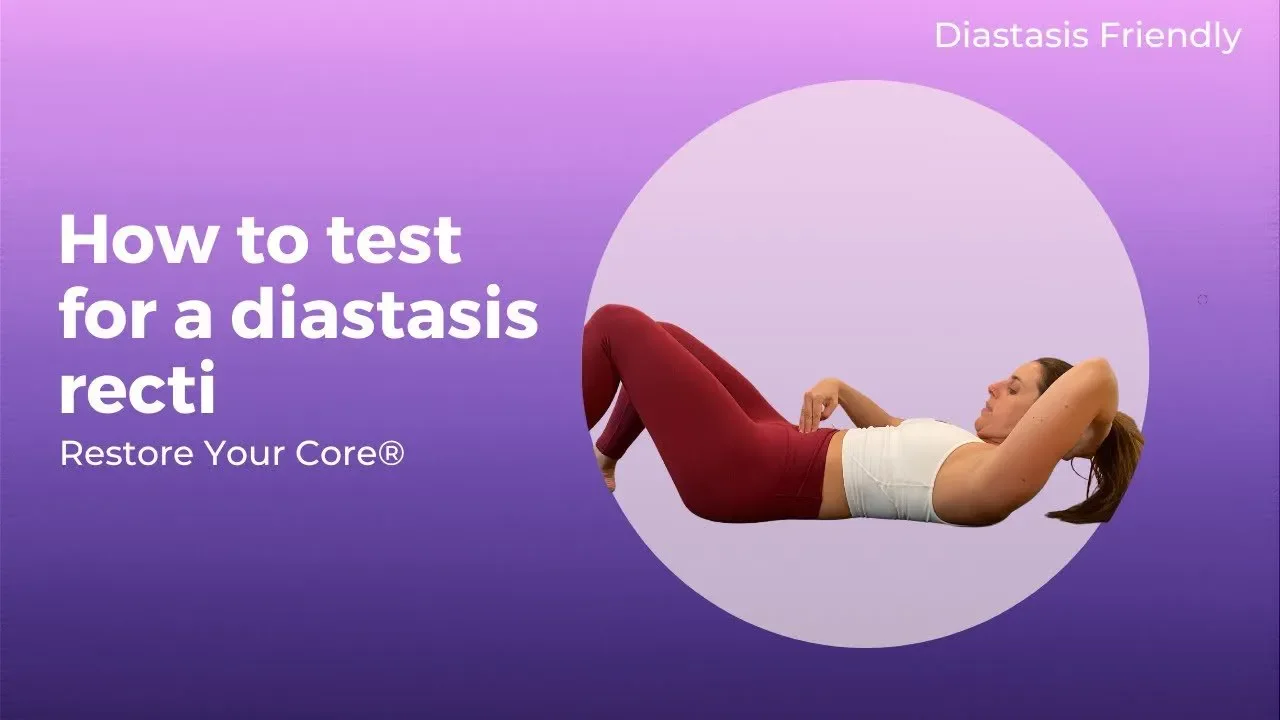
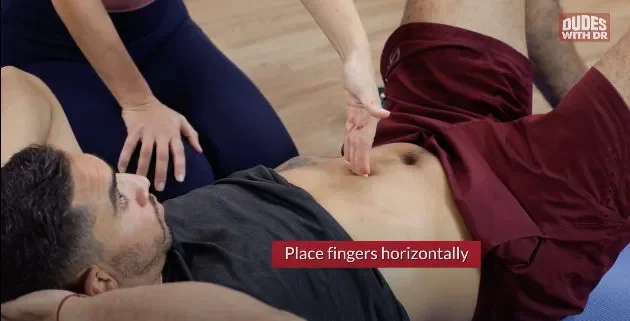
A self-assessment can be performed as follows:
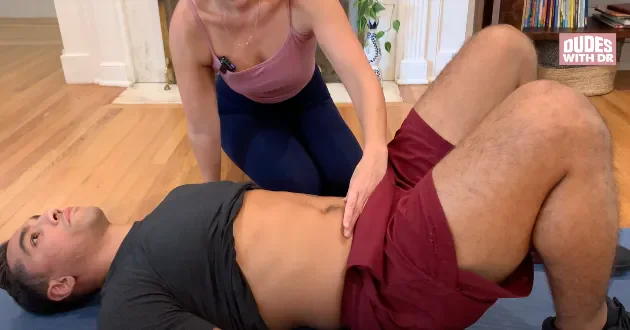
- Lie on your back in a comfortable position, bend your knees and place your feet flat on the floor.
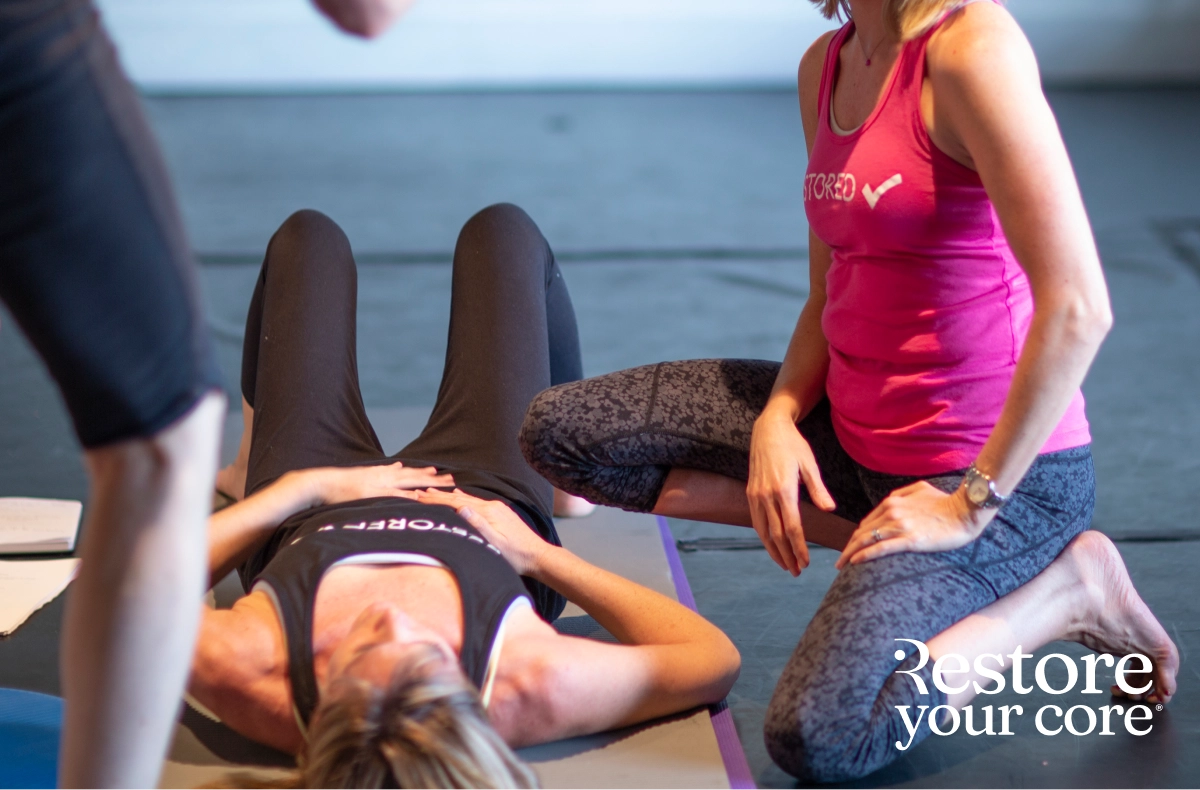
- Place one hand in the center of the abdomen with your fingers pointing straight down towards the spine.
- Place your other hand under your head and neck for support. Slowly lift your head and add minimal pressure to your fingers placed on your core. If you feel a gap or fingers sink into your core, you likely have Diastasis Recti. In pronounced cases, you can feel the sides of your core muscles on the left and right sides of the gap.
- Diastasis Recti is commonly found just above or below the belly button, but it can happen anywhere between the sternum and the pubic bone. Repeat the process from the sternum to the pubic bone.
After performing a self-assessment, there are a few things to remember. A gap only one or two finger widths wide (2cm wide) is not overly concerning, as long as it is shallow – but caution is recommended.
However, if you discover a gap ranging from 2.7 cm or more (2.5 fingers or larger), you should consult a PT or OT. Regardless of the size, if there is a gap, it is in your best interest to consider a core rehabilitation program. A focused rehab program will have corrective exercises to strengthen the deep core muscles, restore function and help close the gap and prevent it from widening further.
How Do Men Fix Their Diastasis Recti
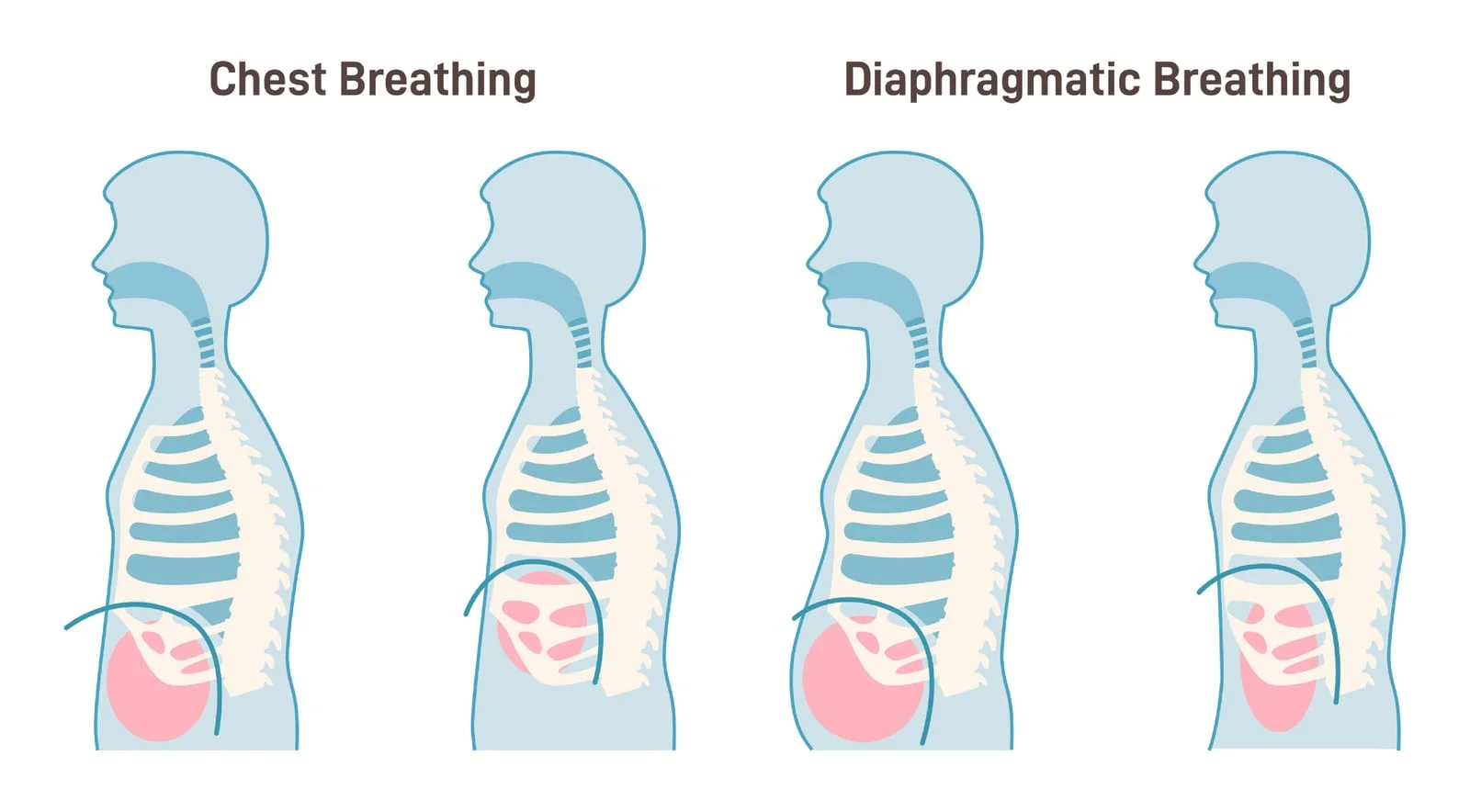
Diastasis Recti is often exacerbated by poor breathing habits and less than optimal core engagement strategies. Men can recover from a diastasis recti by addressing their breathing and reforming bad workout habits. Incorporating specific core exercises into their regular workout routines can effectively heal Diastasis Recti. Below are a few recommended Diastasis Recti exercises for men:
Good Exercises for Male Diastasis Recti
Candles/Core Engagement
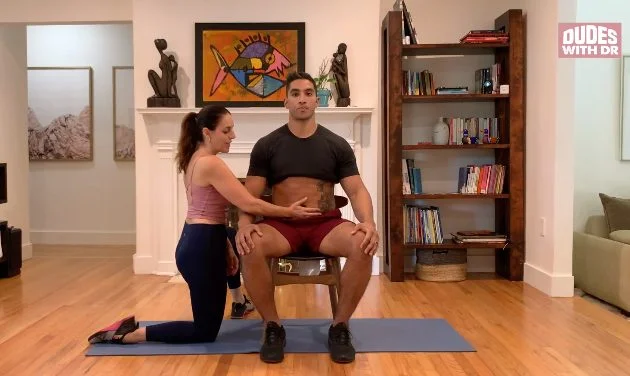
Come to sit tall or stand. Inhale, and imagine you are blowing out 100 candles on the exhale. You should feel your core tighten and draw inwards and up as you blow. Using the breath in this way automates the reflexive nature of the deep core. This can and should be practiced whenever working out, lifting weights or practicing a core loaded move. With practice, the deep core will become more integrated, functional and responsive to your movement demands.
Pelvic Clocks
Lying on your back, bend your knees and place your feet flat on the floor. If you imagine a clock is on your abdomen, 12 o’clock would sit on your belly button, and 6 o’clock would rest on your pubic bone. Your hips would represent 9 o’clock and 3 o’clock. To engage your ab muscles and strengthen your core, guide your pelvis slightly to each location. By doing this, you relax the upper half of your body while your hips allow for pelvic rotation without engaging the legs. This should be performed slowly, smoothly, and without engaging your back muscles. A pelvic clock helps educate you on positioning your abs, pelvis and spine. Repeat 7 to 10 rotations per workout.
Plank Position
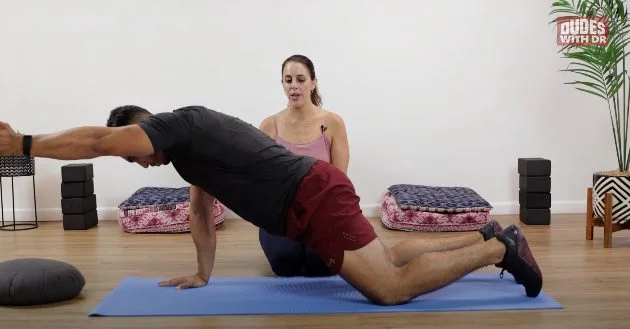
From your hands and knees, begin to exhale like you are blowing out candles on a birthday cake. Keep the rest of your body as still as possible, while exhaling, and straighten one leg at a time, so both legs are extended. Begin to pull the hands towards the feet, while keeping the spine, absolutely still. While in this position, use the candles breath detailed above. Continue to breathe and hold this position for 10-30 seconds and then relax. For best results, complete 2 – 3 sets of 10 planks per workout.
Quadruped Tilts
Begin on hands and knees; while slowly exhaling, draw your lower abdomen in and tuck your pelvis under, rounding your low back. Hold the pose for a few seconds before inhaling and returning to a neutral position. Repeat this exercise 5 to 10 times.
Exercises Men Should Avoid When Injured
Some key ground rules when working to strengthen your care via effective core training are:
DO NOT
- Bulge your abs when doing core exercises!
- Brace (do not overreact or compensate during core exercises).
- Bear down when doing core exercises. Bearing down is a movement similar to making a bowel movement. Do not add additional pressure to your abdomen.
- Hold your breath while doing core exercises, ever!
These common compensations can exacerbate Diastasis Recti. To learn more about effective core strength training, check out Dudes with DR, a doctor-approved gym companion program designed for men who want to heal through intelligent, effective, and practical Diastasis Recti exercises for men and education.
Surgery vs. Natural Healing
For both men and women, surgery for Diastasis Recti is considered a cosmetic procedure known as an abdominoplasty – suturing the linea alba together. Surgery will not address the underlying issue of excess intra-abdominal pressure. Surgery should only be considered after pursuing natural methods such as a constructive core restorative exercise program like Dudes with DR.
Dudes with DR is a doctor-approved online gym companion program specially designed for men with Diastasis Recti. The best way to heal Diastasis Recti naturally is to address less than optimal breathing and movement patterns and not compensate or “cheat” when performing exercises at the gym or while completing daily tasks and implementing exercises that focus on healing a Diastasis Recti. From the essential exercises to heal Diastasis Recti, breathing and core education, and a clear Yes/No guide on how to work with Diastasis Recti at the gym, Dudes with DR gives you everything you need.
How Long Does It Take Men To Heal
Healing from a diastasis recti changes per individual. There is no definite timeline or set schedule for closing a DR. Healing takes time, and lots of it. The best approach to healing a diastasis recti is core training versus a standard exercise routine. How we hold our bodies, how we stand, whether we have a tense, tight belly, our exercise regimens, and our breathing patterns all play part in core functionality or lead to a system fault. The biggest issue exercise is how often we compensate. Not because it’s a fault of ours, but because our body is intelligent enough to implement other bodily systems when another one fails.
Traditional core exercises like sit-ups, crunches, and planks will not fix a core system failure. We need to train our core, not just exercise our core. We teach our core to do its job and manage load (weights and movement) in training. Being good at exercise does not properly train your core to be resilient, reflexive, and responsive. With a Diastasis Recti, the body has lost the innate support system it once had. However, it is not gone forever, but clearing the fog surrounding exercise and health is the primary goal of healing. It is the ideology behind my Dudes with DR gym companion for men and what I work on daily in my Restore Your Core®️ Program.
Sign up for our Dudes with DR newsletter for a delivery of inspiration, exclusive offers, contests and the inside scoop on events.
I’m in!
FAQ
Diastasis Recti abdominis is a common and natural effect of pregnancy. When the connective tissue thins to allow the abdominal wall muscles to separate, creating space for the growing baby, in most cases, this will return to normal in the weeks and months postpartum. It doesn’t happen naturally for some women, and they may need physical therapy if they don't heal within 6 weeks to 3 months following delivery. Surgery is usually only considered in extreme cases if the gap does not close within a year of physical therapy.
A great way to prevent worsening your diastasis recti is avoiding exercises that can make it worse, such as crunches, planks and twists. It's also important not to jump quickly out of bed or do anything else that causes a visible doming in the ab muscles. Instead, focus on safe diastasis recti exercises like those in RYC®'s foundational stages.
Yes! There have been many women who have completed the RYC® 12 -Week program and seen their diastasis recti close considerably, if not all the way. It’s not only possible to heal diastasis recti without surgery – in many cases, you can also restore core strength and full-body function without the need for invasive procedures.
Connective tissue is slow to heal. Many men and women can use simple core-strengthening techniques to heal their Diastasis Recti. People working with a rehab program should only consider surgery if they have been working with a rehabilitation program or with a physical therapist to restore function for a minimum of 1 year. Surgery can fail or create other issues if one doesn’t address the underlying problem of excess intra-abdominal pressure. If the Diastasis Recti persists after one year of therapy, it would be appropriate to consult a surgeon.
The most common symptom of Diastasis Recti is a bulge in the center of the abdomen, especially when you strain or contract your abdominal muscles.
Medically speaking, a separation of 2 finger widths or more is considered Diastasis Recti.
Diastasis recti can lead to back pain, digestive issues, urine leaking and lots of general discomfort. It can also stop you from being able to workout efficiently and reach your goals safely. In some rare cases tissue tears can lead to hernias where organs begin to poke out of the openings in your tissues. The RYC® program targets full-body healing, not just cosmetic results, to address these long-term concerns.
Belly binding is thought to help close the Diastasis Recti gap by wrapping a binder around your torso. However, wearing a splint or binder won't strengthen or tighten the muscles - but it might provide support for lower back pain and other issues related to pregnancy (or postpartum) and be an appropriate tool in the later stages of pregnancy and early weeks postpartum.
Women often ask me if they should run with Diastasis Recti. They're hoping for a definitive answer, but in my professional opinion, the response is not so simple. If you are well past the eight weeks postpartum, adding in low intensity exercises can be a great way to regain strength. However, this may look different for each person.
If you feel a gap or softness with muscles on either side, you may have Diastasis Recti. If you can feel the tensed muscles underneath your belly, you're probably just dealing with some abdominal fat. The good news is that most cases of Diastasis Recti are temporary (and abdominal fat can be temporary too!).
Water is essential for optimal health. To give yourself the best chance at healing, you need to get into good habits and maintain hydration - and that means hydrating with water! It doesn't all have to be plain water; diluted juices or herbal teas are also encouraged for increased hydration levels.
Diastasis Recti, is not a Hernia. Clinically, a Diastasis can look like an Inguinal or Umbilical Hernia when flexing your abdomen; you may notice a bulge near the belly button.
Diastasis Recti is a condition that develops when too much pressure is put on the abdominal muscles. This can cause the connective tissue between the rectus abdominis muscles to thin and create a bulge or a dip in the center of the abdomen. Depending on the activity and core engagement strategy, you may present with a bulge or a dip.
Digestion issues are a common complaint among those that have Diastasis Recti. Speak to a registered dietician or nutritionist if this is an issue for you.