Learn

Hi! I'm Lauren.
Nice to meet you
Lauren Ohayon is the creator of Restore Your Core® (RYC®), a comprehensive and sustainable whole-body fitness program that empowers women to achieve ideal pelvic floor / core function and be strong, long, mobile and functional.
Hi! I'm Lauren.
Nice to meet you
Top articles


How Do You Relieve Pelvic Floor Tension? A Whole-Body Guide to What Actually Helps
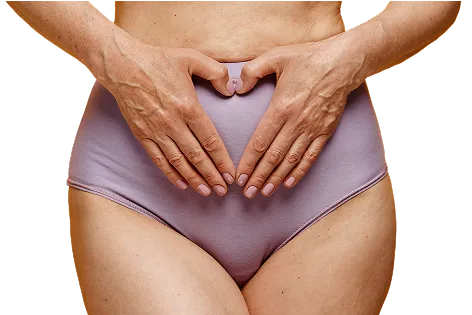
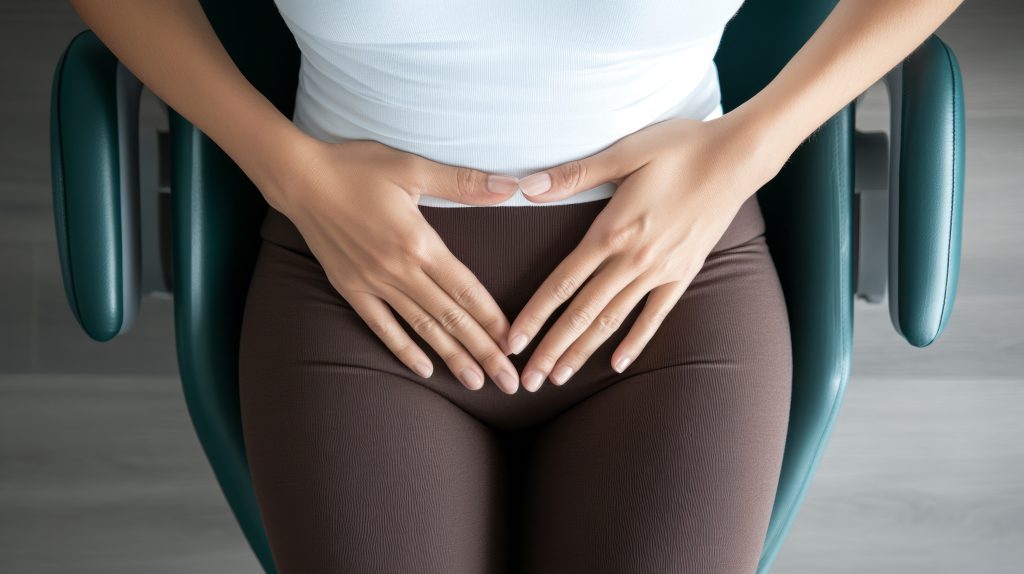
Pelvic floor tension is one of the most common, and most overlooked, sources of pelvic discomfort. It can show up as pelvic pain, pressure, painful sex, urinary urgency, incomplete emptying, constipation, tailbone soreness, or even lower back and hip ache. Many of the symptoms people assume come from a weak pelvic floor can actually trace back to a pelvic floor that has been holding on when it should be releasing, and gripping when it should be lengthening.
If you have been searching for ways to relieve pelvic floor tension at home, you have likely come across the standard advice: diaphragmatic breathing, child’s pose, happy baby, a few gentle stretches. These pieces are useful as starting points, and for many people they are only part of the picture. Pelvic floor tension tends to live inside a wider pattern in the body – how you breathe, how you carry pressure, how your nervous system holds and lets go – and lasting relief often comes from addressing that whole pattern rather than chasing the symptom in isolation.
What follows is a thorough look at what actually helps relieve pelvic floor tension, including the piece that most generic advice leaves out – how a healthy pelvic floor is supposed to behave in the first place, and what it takes to get there.
Start your healing today with this free workout
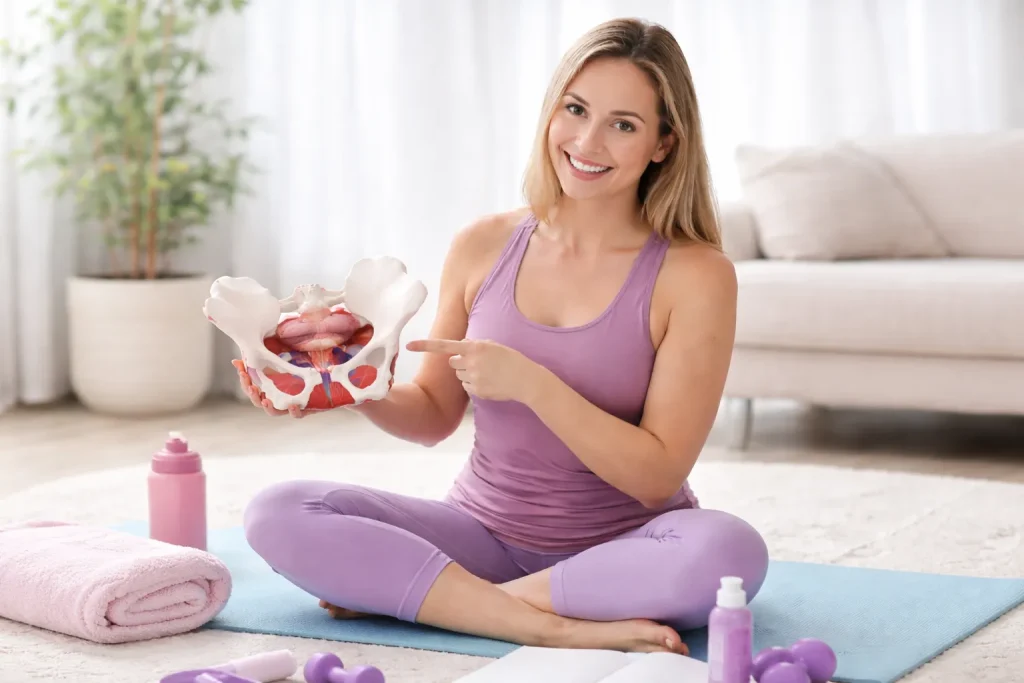
Table of Contents
What a Healthy Pelvic Floor Actually Does
Every muscle in the body needs to know how to do three things well. It needs to contract – to shorten and tighten on demand. It needs to release – to fully let go when the job is done. And it needs to lengthen under load – to stay engaged while it lengthens to handle whatever is being asked of it. Think of a bicep lowering a heavy weight: the muscle is still working, it is still engaged, and it is lengthening at the same time. If a bicep only ever shortened and never learned to lengthen under load, the arm would end up stuck in a flexed position, unable to extend comfortably.
The pelvic floor works the same way. Through every moment of the day, it modulates its tone according to what you are doing, regulating the input, the load, and the movement coming through your system. When you sneeze, run, jump, or laugh, the pelvic floor is meant to be lengthening to receive load, not just tightening. When the demand is over, it is meant to let go and return to baseline. This is the responsiveness that allows the pelvic floor to support continence, hold the pelvic organs, and move easily with intimacy and daily life.
When the system is in dysfunction, that modulation loses its sharpness. The pelvic floor can get stuck in one mode – usually some version of holding – and the ability to release and to lengthen under load both diminish. This is what is happening for many people who describe pelvic floor tension.
Why Tension Can Produce Symptoms That Look Like Weakness
One of the most misunderstood things about pelvic floor tension is that it can produce the same symptoms people associate with weakness. Leaking when you cough or sneeze, a sense of heaviness in the pelvis, prolapse symptoms feeling more pronounced after orgasm or exercise – these can all be amplified by a system that is already overworking.
The reason is mechanical. A muscle that has been gripping all day is a tired muscle, and it is also a muscle that has lost some of its ability to lengthen smoothly. When you sneeze, the pelvic floor needs to lengthen to receive the downward shift in pressure, and then return. A pelvic floor stuck in a tightening pattern struggles to do this, so the pressure ends up leaking through. The same gripping pattern explains why intimacy can feel worse for some people after orgasm – the muscles squeeze in a system that was already at its ceiling of tension, and the whole pelvis feels louder afterwards.
Common contributors to pelvic floor tension include chronic stress and nervous system load, sustained postural patterns (tucked pelvis, gripped glutes, held abdomen), shallow chest breathing, recovery from childbirth or surgery, a history of trauma, persistent over-Kegeling, hovering over toilet seats, straining during bowel movements, and high-output training without recovery. Often several of these are happening at once.
7 Ways to Relieve Pelvic Floor Tension at Home
These approaches are most effective when used together. Each one supports the others, and the combination is what helps the pelvic floor learn how to release reliably, and to lengthen under load when life asks it to.
1. Practice Three-Dimensional Breathing
Breath and the pelvic floor are mechanically linked, and most generic advice describes this as diaphragmatic breathing. In Restore Your Core®, we teach a fuller version called three-dimensional breathing, which is one of the most effective tools for easing pelvic floor tension. Working with mindful breath also helps the nervous system stay regulated, which makes everything else in this list more effective.
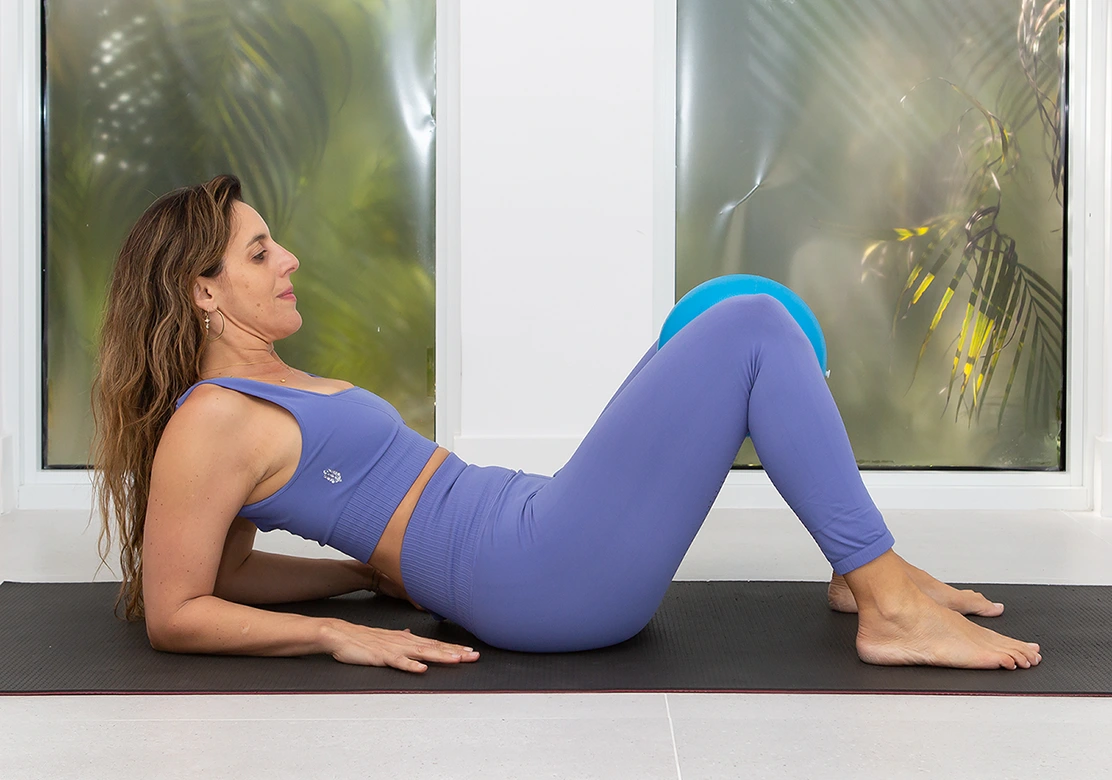
It can help to picture a balloon with one hand on top and one on the bottom. When you press down from the top, you can feel a gentle pressure on the bottom. This is how the diaphragm and pelvic floor work together to manage intra-abdominal pressure – the pressure within the abdominal cavity. As the diaphragm descends on the inhale, the contents of the abdomen move gently downward and the pelvic floor lengthens to receive that shift. On the exhale, everything returns. A hypertonic pelvic floor can inhibit this downward movement, which is part of why three-dimensional breathing is so useful for releasing tension.
How to practice it:
- Lie on the floor, or sit comfortably with your weight on your sit bones
- Place your hands around your ribs on each side and calmly explore your breath
- On the inhale, notice your ribs rising a little upwards
- Notice your ribs widening outwards at the same time
- At the very end of the inhale, notice your belly rising gently
- Exhale slowly and let everything return, without bracing the abdominals or squeezing the glutes
If your default is no rib movement, with only the belly moving, see whether you can begin switching the pattern. It might take time and feel awkward at first, and practising regularly in a relaxed position will help the body learn the new pattern. Three or four breaths before and after a stretching session can be enough to notice the difference a less-tense pelvic floor makes in your breathing.
2. Use Down-Training Positions and Releases
Down-training is the practice of giving the pelvic floor opportunities to fully let go. Certain positions create natural space in the pelvis and allow the muscles to release without you having to actively do anything.
Helpful positions include:
- Child’s pose with knees wide, hips heavy toward the heels
- Happy baby, with the lower back softening into the floor
- Deep supported squat (a yoga block or rolled blanket under the sit bones can make this more accessible)
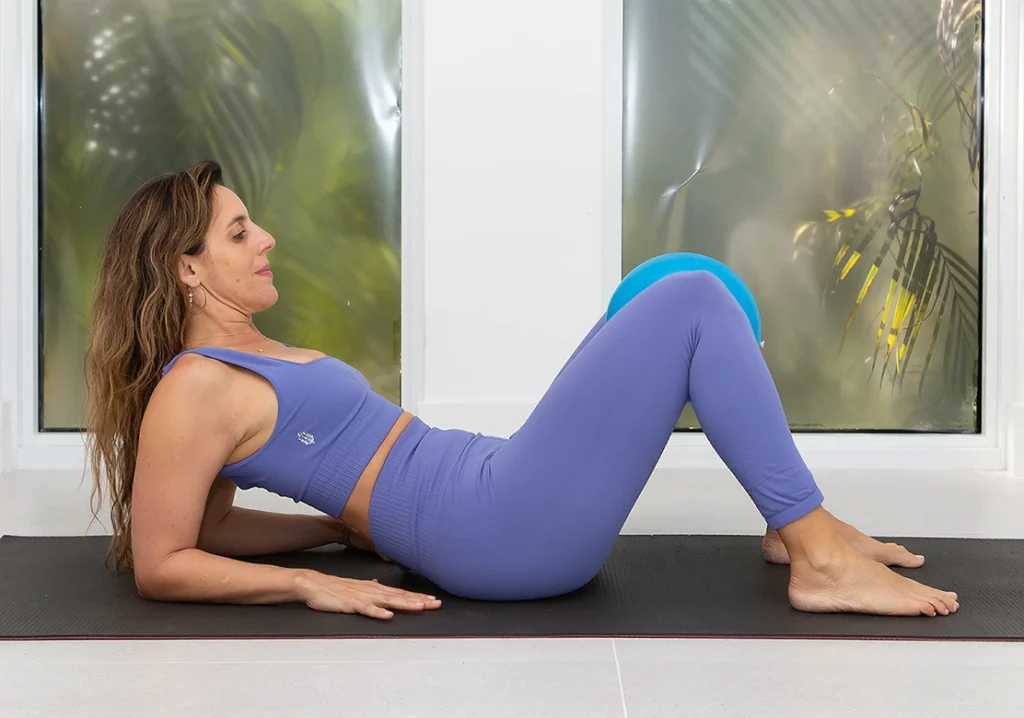
- Constructive rest – lying on your back with knees bent and feet hip-width apart, allowing the pelvis to settle
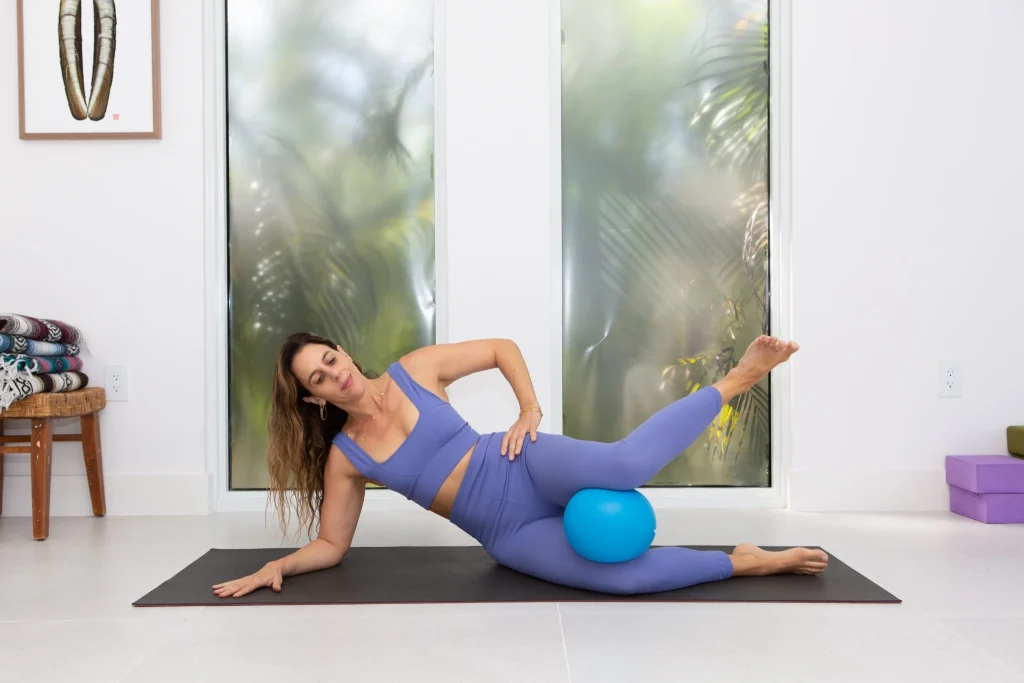
- Side-lying with a pillow between the knees, letting the inner thighs release
Spend a few minutes in each position, layering in slow diaphragmatic breathing. The combination of position and breath is what allows the pelvic floor to fully release, sometimes for the first time in years.
3. Follow a Whole-Body Program Like Restore Your Core®
Pelvic floor tension rarely sits in the pelvic floor alone. It tends to live in a web of patterns that include the jaw, the diaphragm, the ribcage, the hips, the inner thighs, and the nervous system. Single exercises and isolated stretches can offer real relief in the moment, and the tension often returns because the patterns producing it have not been addressed.
This is where structured, whole-body programs become powerful. They sequence release work, breath retraining, posture, mobility, and progressive coordination in a way that helps the whole system reorganise. Over time, the pelvic floor learns how to respond to daily life with less gripping, less leaking, and more responsiveness. It learns how to lengthen under load again, which is what allows symptoms to soften in the moments that matter – sneezing, lifting, running, intimacy.
The Restore Your Core® 12-Week Program is one example of this kind of approach. Developed by Lauren Ohayon, a movement specialist with over 25 years of experience, it has supported more than 10,000 women across 80+ countries since 2015 and has been informed by 500+ trained professionals across pelvic floor PT, urogynecology, and related fields. Programs like Restore Your Core® work because they teach the whole body how to manage pressure, how to breathe under load, and how to coordinate the pelvic floor through all three of its essential modes – contracting, releasing, and lengthening under load.
For women whose pelvic floor tension has not responded to scattered stretches or isolated Kegels, this kind of structured progression often provides the missing piece.
4. Step Back From Unnecessary Kegels
Kegels have a place when prescribed appropriately, by someone who has assessed whether the pelvic floor needs more strength, more release, or more coordination. The pelvic floor needs to know how to contract, how to release, and how to lengthen under load. Repeated squeezing on its own trains only one of those three. For a pelvic floor that is already gripping, more squeezing can deepen the tension and worsen symptoms like pelvic pain, urgency, painful sex, and heaviness.
There is a useful reframe here. When you sneeze, run, or jump, the pelvic floor is meant to be lengthening to handle the load, not just tightening. A program that only ever drills shortening leaves the system unprepared for the moments where lengthening is what is actually needed. Many people with hypertonic pelvic floors find real relief once the squeezing pauses and the focus shifts to breath, release, and coordinated whole-body work.
5. Notice and Reduce Daily Gripping Habits
Pelvic floor tension is often fed by small, unconscious habits running through the day. The body has learned to hold, and it holds without you noticing.
Patterns to gently soften:
- Tucking the pelvis under (chronic posterior tilt)
- Sucking in the belly to look slimmer
- Clenching the glutes when standing or walking
- Gripping the jaw or holding the breath under concentration
- Hovering over public toilets and straining to empty quickly
- Holding tension in the inner thighs while sitting
A few times a day, run a quick check – jaw, ribs, belly, glutes, pelvic floor. If you find a part of you that has been holding, let it soften with an exhale. This small practice, repeated over weeks, can change the baseline tone of the entire system.
6. Support Your Nervous System
The pelvic floor responds directly to nervous system state. When the body is in a sustained state of alert – from stress, lack of sleep, unprocessed emotional load, or overtraining – the pelvic floor tends to hold. This is part of why pelvic floor tension is often louder during high-stress seasons and softens during periods of rest and care.
Practices that help bring the nervous system down include slow nasal breathing, longer exhales, gentle walking, time outdoors, warm baths, body scans, restorative yoga, and any form of co-regulation that genuinely settles you (a conversation with someone safe, time with an animal, music that slows your breath). For some, structured nervous system work alongside movement is what finally unlocks long-held tension.
7. Work With a Pelvic Floor Physical Therapist When You Need One
A skilled pelvic floor PT can be enormously helpful, especially if you are dealing with persistent pain, painful sex, vaginismus, scar tissue, post-surgical recovery, or symptoms that have not shifted despite consistent home practice. A good PT can assess what is happening internally, offer manual release work, and tailor recommendations to your body.
Whole-body programs that you can follow at home complement pelvic floor physical therapy very well, particularly in the days and weeks between visits. A PT addresses what is local through hands-on assessment and manual work; a home program gives you a structured way to keep practising the breath, release, posture, and coordination work in between. Many RYC® members work with both, and find that each one supports and amplifies the other.
Why Structured Programs Make Such a Difference for Pelvic Floor Tension
Most advice on pelvic floor tension lives at the level of single tips – a stretch, a breath, a position. These tools matter, and they help in the moment. What they do not always do is build the underlying body literacy that lets the relief stick.
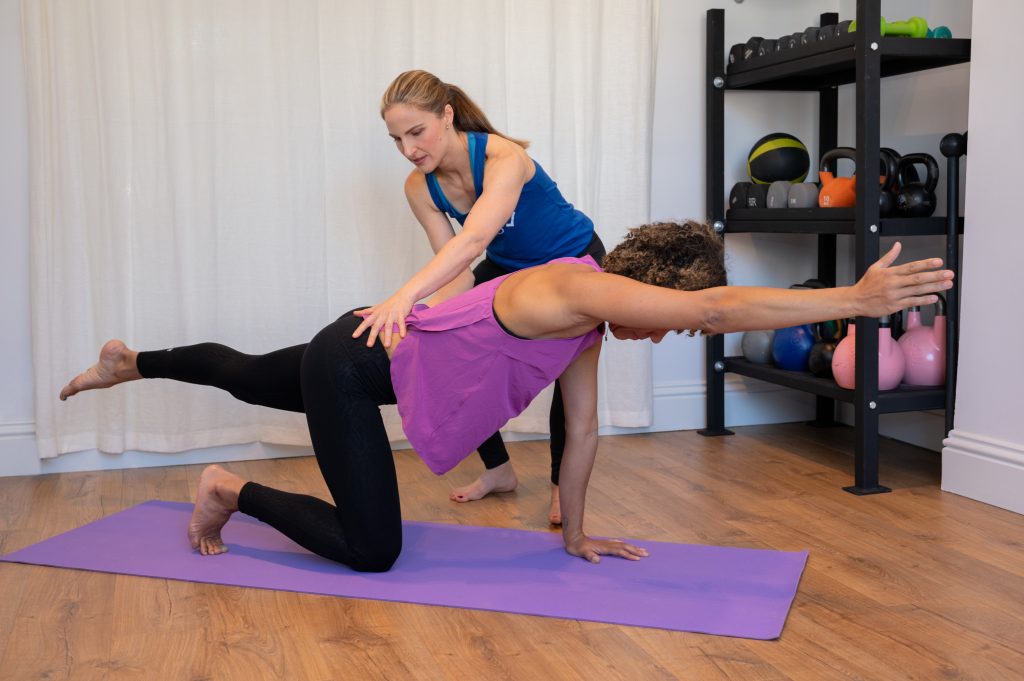
A well-designed program walks you through the progression in order. Release first, then breath, then coordination, then strength under load, then reflexive function in daily life. This sequencing is what allows a pelvic floor that has been gripping for years to slowly learn a different way of being. It is also why so many women describe finally finding relief through a structured approach after years of trying things on their own.
Restore Your Core® was built around this exact principle. It teaches your body how breath, posture, alignment, and core work together to support the pelvic floor – in everyday moments like getting out of bed, lifting a child, walking up stairs, and intimacy. The work happens at home, at your own pace, with lifetime access so you can return to any phase of the program as life changes.
Try 18 minutes of healing, nourishing movement – the RYC® way
What Women Say After Addressing Pelvic Floor Tension with RYC®
“My pelvic floor used to clench even when I didn’t mean to. I didn’t realise how much that affected my ability to feel anything, especially pleasure. RYC® taught me how to relax and move differently.”
“Intimacy used to be painful and I felt hopeless. RYC® gave me the tools to soften, release, and rebuild. Now I move without pain, and intimacy is no longer something I fear.”
“My prolapse symptoms are gone, my diastasis is closed, I can lift heavy again, I can jump without leaking, sex isn’t painful anymore, and I’m stronger – not only physically, but mentally. I know my body can heal.”
You can read more stories from members on the RYC® Success Stories page.

Enjoy a free, pelvic-floor & core healing whole-body workout today
Bringing It All Together: How to Relieve Pelvic Floor Tension for the Long Term
Relieving pelvic floor tension at home is genuinely possible, and the most reliable path tends to be a layered one. Begin with breath. Add down-training positions. Soften the daily gripping habits. Tend to the nervous system. Step back from squeezing-based exercises until you understand what your pelvic floor actually needs. Bring in professional support where it helps. And for many people, a structured whole-body program is what ties everything together into a method the body can follow over time.
This is the territory programs like Restore Your Core® are built for – teaching the whole system how to manage pressure, coordinate breath, and let the pelvic floor move through all three of its essential modes with ease.
If you are ready to move from scattered tips to a complete, structured approach, explore the RYC® 12-Week Program – a method trusted by more than 10,000 women worldwide and informed by 500+ trained professionals.
Access your free workout and start healing your core and pelvic floor today
FAQ
What does a tight pelvic floor actually feel like day to day?
A tight pelvic floor can feel like a constant sense of holding, a low hum of pressure or fullness in the pelvis, discomfort with tampons or penetration, an urge to urinate even shortly after going, difficulty fully emptying the bladder or bowel, tailbone soreness, and sometimes a deep ache that moves into the hips or lower back. Some people notice it most after long periods of sitting, intense exercise, or stressful days. The pattern often softens with breath and release work and grows louder with chronic gripping or over-Kegeling.
Can pelvic floor tension cause leaking, even though leaking is usually linked to weakness?
Yes, and this is one of the most misunderstood aspects of pelvic floor health. A muscle that has been gripping all day is a tired muscle, and it has also lost some of its ability to lengthen smoothly under load. When you sneeze or jump, the pelvic floor is supposed to lengthen to receive the pressure shift. A pelvic floor stuck in a tightening pattern struggles to do this, so the pressure leaks through. Whole-body programs like Restore Your Core® address this by retraining the system to release and lengthen on demand, so the pelvic floor has somewhere to go when load arrives.
How long does it usually take to feel relief from pelvic floor tension?
Most people notice early shifts in the first two to four weeks of consistent breath work and down-training, particularly in things like baseline pelvic heaviness, urgency, and quality of sleep. Deeper changes – painful sex easing, pressure resolving during exercise, full reflexive function returning – often unfold over three to six months, and sometimes longer. The timeline depends on how long the tension has been there, what is feeding it, and how comprehensive the approach is.
Are stretches alone enough to fix pelvic floor tension?
Stretches and down-training positions are valuable, and they often bring noticeable short-term relief. For long-term change, they tend to work best alongside breath retraining, posture work, nervous system support, and progressive whole-body coordination. A structured method like the RYC® 12-Week Program brings all of these layers together in a sequence that lets the body actually reorganise, rather than producing brief relief that fades by the next stressful day.
What habits make pelvic floor tension worse without people realising?
Several everyday patterns can quietly feed pelvic floor tension. These include chronically holding the stomach in, tucking the pelvis under while standing, clenching the glutes when walking, hovering over toilet seats, straining during bowel movements, holding the breath under concentration or effort, doing isolated Kegels without addressing the underlying gripping, and pushing through high-intensity training without recovery. Noticing and softening these patterns over time can shift the baseline tone of the entire system.
Can pelvic floor tension be addressed entirely at home, or does it need in-person care?
A great deal of progress is possible from home, particularly with structured guidance. Many women with chronic pelvic floor tension find significant relief through home programs like Restore Your Core®, which sequence release, breath, mobility, and coordination work in a way that the body can follow over weeks and months. In-person pelvic floor PT can be a meaningful addition when there is persistent pain, scar tissue, post-surgical recovery, or symptoms that need hands-on assessment.
Is pelvic floor tension related to stress and anxiety?
Closely. The pelvic floor responds directly to the nervous system, and a body that has been in a sustained state of alert tends to hold tension throughout – jaw, shoulders, breath, abdomen, and pelvic floor included. This is part of why pelvic floor symptoms can flare during high-stress seasons and quiet down during periods of rest. Practices that genuinely settle the nervous system, alongside breath and movement work, can shift pelvic floor tension at a level that stretching alone cannot reach.
Is it safe to follow a pelvic floor program if I already feel a lot of tension and discomfort?
A well-designed program for pelvic floor tension begins with release, breath, and nervous system work before introducing any strengthening. Restore Your Core® was built with this in mind and is widely used by women with hypertonic pelvic floor, painful sex, pelvic pain, and post-surgical sensitivity. Every exercise includes modifications, and the progression respects where the body is starting from. As with any new movement practice, checking in with a healthcare provider is a wise step if you have complex medical conditions or ongoing concerns.
Top articles

“There is no thank you big enough for Lauren Ohayon existing and thinking and helping so many of us. Every time I do something I never thought I’d do again she is part of the reason why.”
Laura Gregg
Strengthen, heal & nourish your pelvic floor & core
Try a FREE workout
with Lauren
*10K+ women healed and healing
Thank you!
Your FREE video is on the way
Please check your email inbox in a few minutes.
Related articles



Enjoy a free, pelvic-floor & core healing whole-body workout today
Get more actionable info, inspiration and exclusive offers delivered to your inbox.
*No spam, just quality content and support
Thanks for subscribing!

inbox soon.
Thanks for subscribing!
Please check your inbox soon.