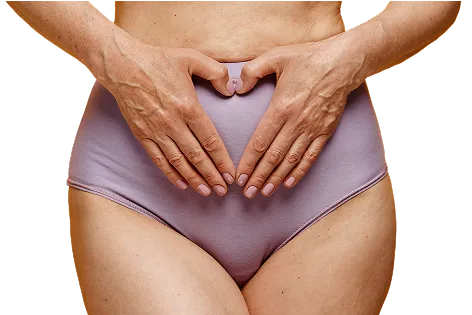
Learn

Hi! I'm Lauren.
Nice to meet you
Lauren Ohayon is the creator of Restore Your Core® (RYC®), a comprehensive and sustainable whole-body fitness program that empowers women to achieve ideal pelvic floor / core function and be strong, long, mobile and functional.

Hi! I'm Lauren.
Nice to meet you
Top articles

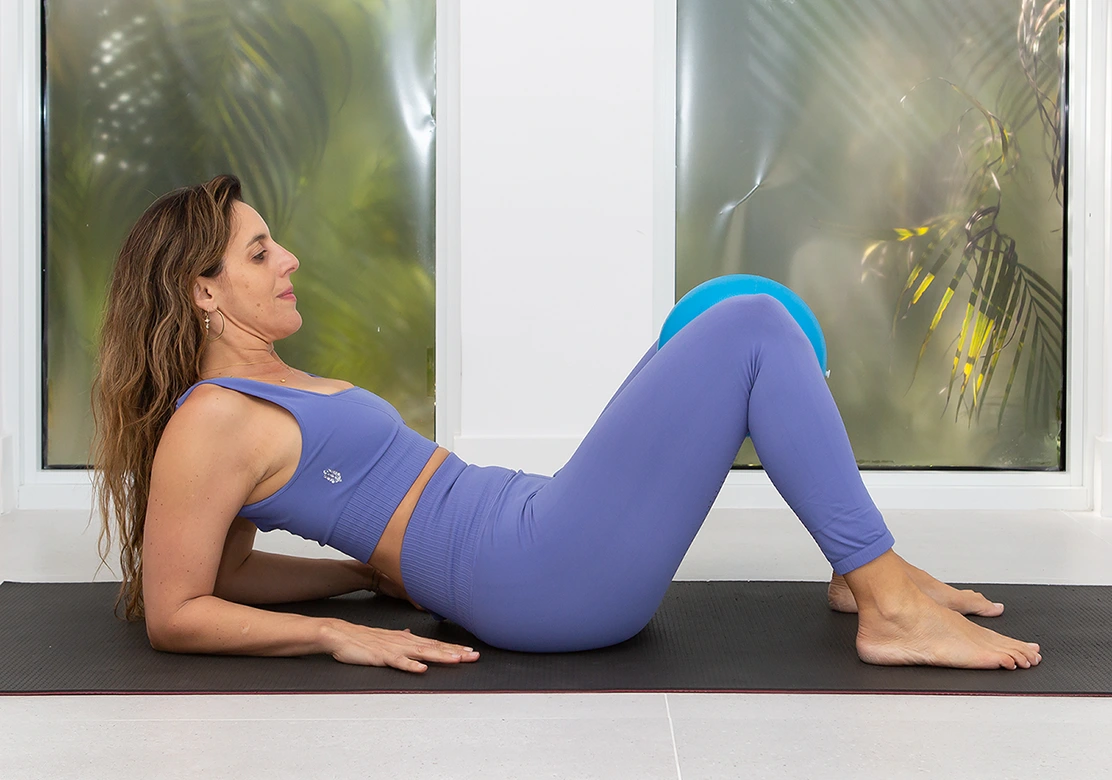

How Do I Stop Peeing When I Cough or Sneeze After Menopause? Why Women Trust Restore Your Core®
If you’ve started leaking when you cough, sneeze, or laugh since entering perimenopause or menopause, this is one of the most common changes of this life stage – and one of the least openly discussed. A 2024 systematic review of 8,547 postmenopausal women found a pooled prevalence of urinary incontinence of 63.1% – and for most of those women, leaking when coughing or sneezing was among the primary complaints. You’ve probably already encountered the standard advice: do Kegels.
Start your healing today with this free workout
Leaking after menopause is not something you have to accept as permanent. Understanding why it’s happening – and what actually addresses it – can change how you approach the problem entirely.
This is stress urinary incontinence, and while hormonal changes do play a real role, the mechanics of how your body manages pressure matter just as much. Women who address both tend to find their way through it.
The RYC® 12-Week Program has helped more than 10,000 women across 80+ countries address leaking through a whole-body approach to pelvic floor and core rehabilitation. If you’re ready to stop working around the leak and start healing it, this is where to begin.
Table of Contents
Why Does Leaking Get Worse After Menopause?
Estrogen plays a significant role in the health of the pelvic floor tissues. As levels decline through perimenopause and menopause, vaginal and urethral tissues can become thinner and less elastic, the urethral sphincter may lose some of its resting tone, and blood flow to the pelvic region decreases. This cluster of changes is part of what’s known as Genitourinary Syndrome of Menopause (GSM), which affects an estimated 27–84% of postmenopausal women depending on how it’s assessed and the age of the population studied.
But here’s what rarely gets mentioned: estrogen decline alone doesn’t explain the full picture. Many women had suboptimal pressure management patterns for years before menopause – breath-holding during effort, poor rib mechanics, chronic abdominal or pelvic floor gripping – and the hormonal shift simply exposes what was already working less than ideally. Others develop these patterns gradually in response to aging, a sedentary phase, or the aftermath of pregnancy decades earlier.
What this means in practice is that treating the hormonal piece without addressing how your body actually manages load and pressure often produces incomplete results. And treating the mechanics without acknowledging the tissue changes misses something vital. The women who tend to do best address both.
Try 18 minutes of healing, nourishing movement – the RYC® way
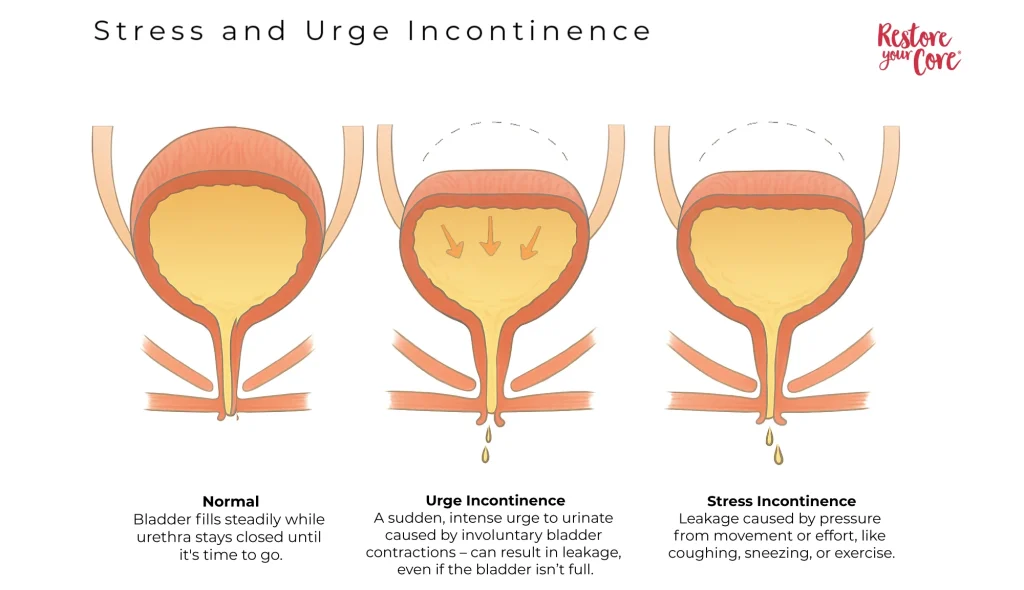
What Is Stress Urinary Incontinence?
Stress incontinence is the leaking of urine when physical “stress” is placed on the bladder – a cough, a sneeze, a laugh, a sudden movement. The pelvic floor’s job in these moments is to respond reflexively and quickly enough to maintain closure of the urethra. When it doesn’t, you leak.
Think of your trunk as a pressure canister. The diaphragm sits at the top, the pelvic floor at the base, the deep abdominals wrap around the sides, and the spinal stabilisers support the back. Every time you cough, that canister has a rapid pressure spike moving through it. A well-coordinated system distributes that spike efficiently. A system that hasn’t learned to properly coordinate drives it straight down through the pelvic floor, and if the floor can’t respond fast enough – or is already too tight to move at all – some urine escapes.
This is why “weak pelvic floor” is only part of the story. The floor also needs to be supple enough to respond reflexively. A chronically tight pelvic floor can leak just as readily as a weak one, because tissue that’s always gripping cannot generate a rapid closure response – it’s already at capacity.
Enjoy a free, pelvic-floor & core healing whole-body workout today
What Actually Helps With Leaking After Menopause
1. Addressing the Hormonal Environment
For women in perimenopause or postmenopause, low-dose vaginal estrogen can be a meaningful part of the picture. Applied locally as a cream, ring, or suppository, it supports tissue health in the vaginal and urethral walls without the systemic effects of oral HRT. Most gynaecologists consider it low-risk, and for women whose tissue thinning is contributing to symptoms, it can make other treatments significantly more effective.
That assessment has only strengthened recently – in November 2025, the FDA removed the black box cancer warning that had sat on vaginal estrogen products for over two decades, following a comprehensive review of the evidence that found the original warnings overstated the risk of local, low-dose preparations.
It’s worth discussing with your doctor or gynaecologist, particularly if you’re noticing vaginal dryness, changes in sensitivity, or a general feeling that things have “changed” in the pelvic region alongside the leaking. Hormonal support doesn’t resolve pressure management issues on its own, but it creates a better tissue environment for rehabilitation to work within.
2. Breath and Pressure Management
Breath rarely gets discussed as part of incontinence management, yet the diaphragm and pelvic floor move in coordination on every single breath – which means breathing patterns influence pelvic floor function continuously, not just during exercise.
On every inhale, the diaphragm descends, the ribcage expands three-dimensionally, and the pelvic floor softens in response. On every exhale, everything returns. When breathing becomes shallow and chest-dominant – ribs held rigid, belly braced – the diaphragm’s range narrows, and the pelvic floor loses the rhythmic cycling that keeps it supple and responsive. A floor that’s always holding tension rarely has the capacity for the fast reflexive closure that prevents leaking.
Retraining toward fuller, three-dimensional breath – ribs widening laterally, the back body participating, the belly free to move – is foundational in a good rehabilitation program because it shifts the pressure system before any specific strengthening work begins. Many women notice a meaningful change in symptoms within the first few weeks of paying attention to how they’re breathing.
3. Pelvic Floor Rehabilitation Programs Like Restore Your Core®
Pelvic floor rehabilitation, when it’s addressing the whole system, does something that voluntary Kegel training alone can’t fully deliver: it trains the reflexive response. The part of pelvic floor function that fails during a cough or sneeze is involuntary – it has to happen before you’ve had time to think about contracting anything. Voluntary Kegel practice develops voluntary contraction, and that has value, but the reflexive closure that actually prevents leaking in daily life is trained through movement, breath coordination, and load – through teaching the whole system how to respond automatically rather than on demand.
Effective rehabilitation works within real movement – teaching the pelvic floor to coordinate with breath, respond to load, and adapt to the demands of a full life rather than only practicing isolated contractions.
Structured programs that take this whole-body approach tend to produce more durable results than isolated exercise protocols, because they address the coordination that the pelvic floor actually relies on. The RYC® 12-Week Program by Restore Your Core® is one of the more widely used online programs for this kind of rehabilitation – particularly for women in perimenopause and menopause who are dealing with exactly this combination of hormonal tissue changes and pressure management breakdown. The method, developed by pelvic floor movement specialist Lauren Ohayon across 25+ years of working with women, teaches the body to coordinate breath, posture, and load in a progressive four-phase sequence that builds reflexive pelvic floor function rather than just strength in isolation.
4. Working With a Pelvic Floor Physiotherapist
An internal and external assessment from a pelvic floor physiotherapist can tell you things no amount of home practice can determine on its own: whether your pelvic floor is underactive, overactive, lacking coordination, or whether scar tissue, prolapse, or alignment factors are at play. This distinction matters because the approach for each differs – and treating an overactive, tight pelvic floor with more squeezing will generally make things worse.
Physiotherapy and a structured home program like RYC® work well in parallel. The assessment provides clarity about what your body specifically needs; the home program delivers the daily repetition that produces change over time. If access is available, it’s worth pursuing.
5. Load Management and Daily Habits
How you move through the day accumulates in ways that are easy to underestimate when you’re only thinking about dedicated exercise time. A few habit shifts that tend to reduce the cumulative load on the pelvic floor:
- Avoid straining on the toilet. A small footstool that raises your knees above hip level changes the anorectal angle and makes elimination easier without bearing down, which reduces repeated downward pressure on the pelvic floor.
- Reduce bladder irritants. Caffeine, carbonated drinks, citrus, and alcohol can all increase bladder urgency and frequency, which compounds stress incontinence symptoms.
- Resist “just in case” toilet trips. Going to the bathroom preemptively every time you leave the house trains the bladder to signal urgency at lower and lower volumes. Over time this pattern increases urgency rather than preventing leaks.
- Address constipation. Chronic straining generates significant downward pressure on the pelvic floor repeatedly over time. Adequate hydration, fibre, and bowel positioning all reduce this.
Real Stories From Restore Your Core® Members
A Runner Stops Leaking at 55
“I’m 55 in a few days’ time. I started the program over 3 years ago because of shoulder pain and generally feeling disconnected from my body after multiple surgeries. Since regularly doing RYC, I stopped leaking while running. It’s hugely improved my body confidence, and I feel so much stronger and more able to move well without pain or restriction.”
From Incontinence to Symptom-Free
“Update/success story: I just joined a gym and have done lots of ‘regular’ classes: yoga, strength, tabata, crossfit – even running on a treadmill since November. And guess what? I have really enjoyed it, and I have had no symptoms whatsoever! Backstory: I found RYC in 2019, at that time my POP symptoms were intense, I could not run or cycle and had lots of incontinence issues and cramps. It took me a slow and steady few years with RYC, then CYC, then RYC FIT and I have now been pretty much symptom free for a couple of years.”
Healing at 66
“It took me 20 years to find a program that actually worked. I am 66 years old and finally feel at home in my body again. Restore Your Core® gave me the courage to heal from the inside out. The program didn’t shame me, and the community provided a safe space where I could ask questions openly. My strength and mobility today are things I never thought I would have again. RYC® has given me a new lease on life.” – Kate
About the Restore Your Core® 12-Week Program
Created by Lauren Ohayon, the RYC® 12-Week Program works through four progressive phases that address breath mechanics, alignment, deep coordination, and functional strength in sequence. The program is available in three tracks – Essentials (self-paced), Guided (structured path), and Coached (with 1-on-1 coaching) – so participants can choose the level of support that fits their situation.
More than 500 healthcare and movement professionals, including OB/GYNs, pelvic floor physiotherapists, chiropractors, and occupational therapists, have trained in Lauren’s method, and many recommend the 12-Week Program directly to their patients as a home practice that complements hands-on treatment. The program is currently in its third full revision; all past purchasers receive updates at no extra cost.
Start the RYC® 12-Week Program – and begin rebuilding the reflexive pelvic floor function that actually prevents leaking.
Access your free workout and start healing your core and pelvic floor today
FAQ
Will the RYC® 12-Week Program work if I’ve had leaking for years?
Duration of symptoms doesn’t determine outcome. Many women in the RYC® community have resolved leaking that had been present for a decade or longer. The pelvic floor responds to appropriate input regardless of how long the dysfunction has been there, though longer-standing patterns can take more time to shift. Consistent work through the program’s four phases gives the body the progressive input it needs to build genuine coordination rather than just temporary symptom management.
Is the program suitable during perimenopause, or only after menopause?
The RYC® 12-Week Program is suited to both. Many women start during perimenopause, when symptoms first appear, and find the whole-body approach helps them navigate the transition more comfortably. Others come to it postmenopause, sometimes years after symptoms developed. The method addresses the coordination and pressure management issues that underlie stress incontinence regardless of where someone is in the hormonal transition.
How much time does the program require each week?
Workouts run approximately 25 minutes, four times per week, with shorter express options available when time is limited. The program also includes educational content integrated throughout, so the time investment goes toward both movement and understanding why things work – which tends to make the physical practice more effective.
Can I do RYC® alongside pelvic floor physiotherapy?
Yes, and many women find the two work well together. Physiotherapy provides hands-on assessment and targeted treatment; the RYC® program delivers the daily practice and education that builds on that. Some pelvic floor PTs specifically recommend Restore Your Core® as a home program to their patients, particularly those who want structured guidance between appointments or a program to continue with after PT ends.
Is bladder leakage after menopause permanent?
For many women, no. While hormonal changes during menopause do affect pelvic floor tissues, leaking is often also a coordination and pressure management issue – and those factors respond to rehabilitation. Women who address both the tissue environment (sometimes with vaginal estrogen) and the mechanics of how their body manages load tend to see meaningful improvement. A program like Restore Your Core®, which works through the whole pressure system progressively, has helped thousands of women reduce or fully resolve leaking well into their 50s, 60s, and beyond.
Why am I suddenly leaking after never having issues before menopause?
Estrogen decline reduces tissue elasticity and resting urethral tone, which lowers the threshold at which the pelvic floor fails under sudden pressure. This can make symptoms appear to come from nowhere, even in women who had no leaking after childbirth or during their 30s and 40s. In most cases, there were underlying pressure management patterns present for years – the hormonal shift just removes the buffer that was compensating for them. The encouraging part is that addressing those patterns, even at this stage, typically produces real results.
Can strengthening my pelvic floor stop leaking from coughing and sneezing?
Strength is one part of it, but reflexive coordination matters just as much. The pelvic floor needs to respond before a cough fully lands – which means the closure reflex has to be fast and automatic, not something you consciously activate. Voluntary Kegel training builds voluntary strength. What also needs to be trained is how the pelvic floor works within the breath and pressure system so that the reflexive response kicks in without thought. Programs that focus on this whole-system coordination, like the RYC® 12-Week Program, tend to produce better outcomes for stress incontinence than isolated strengthening alone.
Does low estrogen cause bladder leakage?
Estrogen decline is a contributing factor, and for some women it’s a significant one. Thinner, less elastic urethral and pelvic floor tissues have a reduced capacity to seal under pressure. But estrogen isn’t the only driver – how you breathe, how you manage intra-abdominal pressure, and the coordination of your whole trunk during effort all influence whether the pelvic floor can respond effectively in time. Many women find that addressing both sides – hormonal support from their doctor where appropriate, and whole-body rehabilitation for the mechanics – produces results that neither approach delivers on its own.
What exercises help with bladder leakage during menopause?
The most useful exercises are those that train coordination between the diaphragm, deep core, and pelvic floor – not just the pelvic floor in isolation. Breath work that restores full diaphragmatic movement is foundational. Hip and glute strengthening matters because the muscles that support pelvic positioning directly influence how load moves through the system. Functional movement patterns that teach the body to manage exertion while maintaining pressure coordination – rather than bracing or breath-holding – are what translate into real-world control. A structured program that sequences all of this progressively, like Restore Your Core®, gives the body the systematic training it needs rather than a collection of isolated exercises done in the hope they add up to something.
References
Allafi, A. H., Al-johani, A. S., Babukur, R. M., Fikri, J., Alanazi, R. R., Ali, S. D. M. H., Alkathiry, A., Alfozan, A. M., Mayoof, K. I. A. A. H., & Abualhamael, M. A. (2024). The link between menopause and urinary incontinence: A systematic review. Cureus, 16(10), e71260. https://doi.org/10.7759/cureus.71260
Russo, E., Caretto, M., Giannini, A., Bitzer, J., Cano, A., Ceausu, I., Chedraui, P., Durmusoglu, F., Erkkola, R., Goulis, D. G., Kiesel, L., Lambrinoudaki, I., Lindén Hirschberg, A., Lopes, P., Pines, A., Rees, M., van Trotsenburg, M., & Simoncini, T. (2021). Management of urinary incontinence in postmenopausal women: An EMAS clinical guide. Maturitas, 143, 223–230. https://doi.org/10.1016/j.maturitas.2020.09.005
Carlson, K., & Nguyen, H. (2024). Genitourinary syndrome of menopause. In StatPearls [Internet]. StatPearls Publishing. https://www.ncbi.nlm.nih.gov/books/NBK559297/
U.S. Food and Drug Administration. (2025, November 10). FDA requests labeling changes related to safety information to clarify the benefit/risk considerations for menopausal hormone therapies. https://www.fda.gov/drugs/drug-alerts-and-statements/fda-requests-labeling-changes-related-safety-information-clarify-benefitrisk-considerations
Top articles

“There is no thank you big enough for Lauren Ohayon existing and thinking and helping so many of us. Every time I do something I never thought I’d do again she is part of the reason why.”
Laura Gregg
Strengthen, heal & nourish your pelvic floor & core
Try a FREE workout
with Lauren
*10K+ women healed and healing
Thank you!
Your FREE video is on the way
Please check your email inbox in a few minutes.
Related articles





Enjoy a free, pelvic-floor & core healing whole-body workout today
Get more actionable info, inspiration and exclusive offers delivered to your inbox.
*No spam, just quality content and support
Thanks for subscribing!

inbox soon.
Thanks for subscribing!
Please check your inbox soon.