Learn
Hi! I'm Lauren.
Nice to meet you
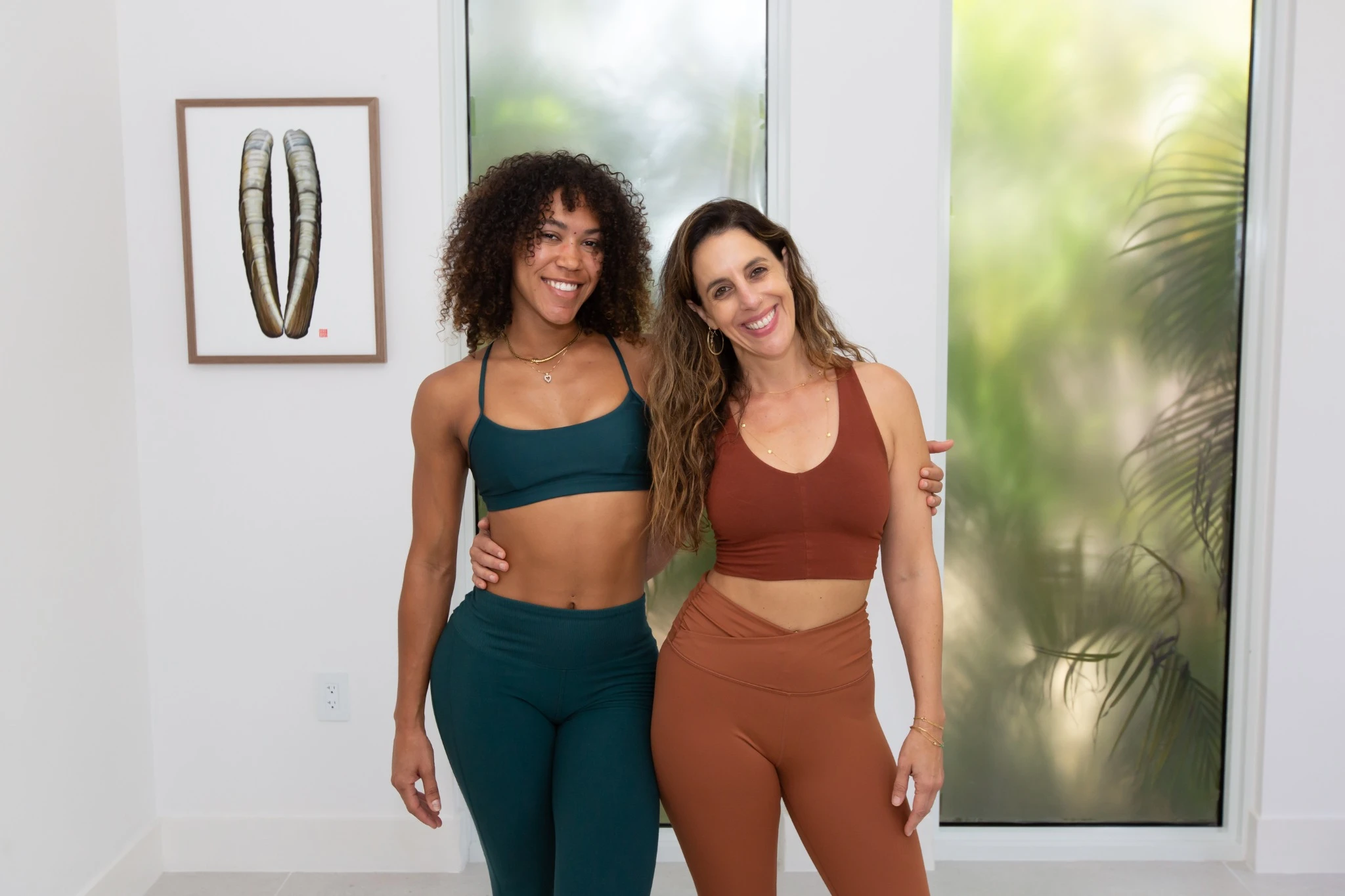
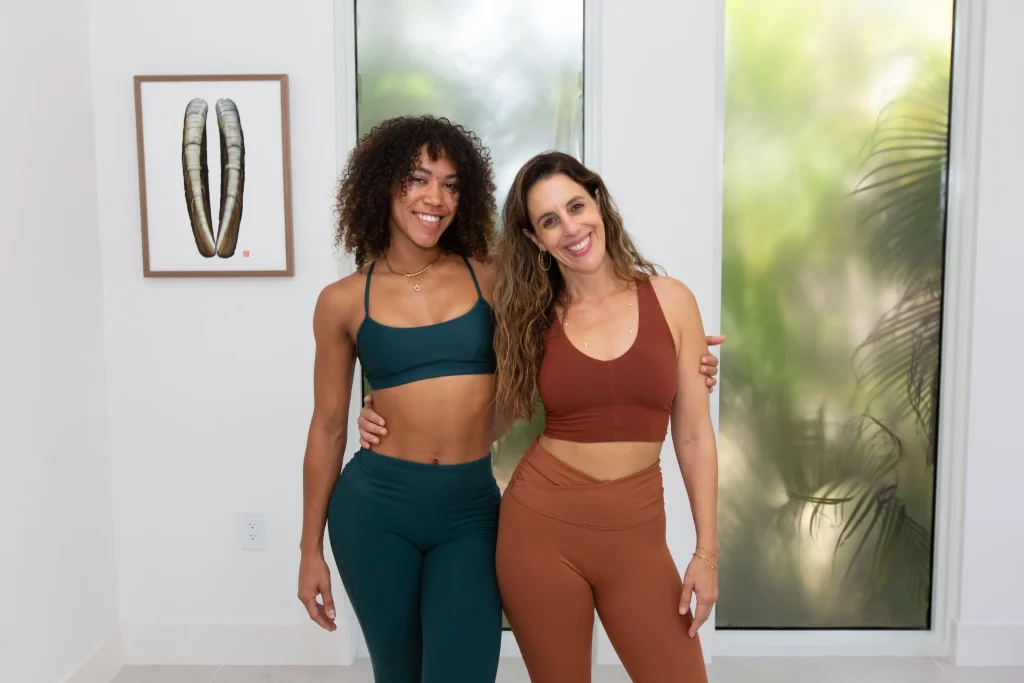
Lauren Ohayon is the creator of Restore Your Core® (RYC®), a comprehensive and sustainable whole-body fitness program that empowers women to achieve ideal pelvic floor / core function and be strong, long, mobile and functional.
Hi! I'm Lauren.
Nice to meet you
Top articles
RYC® Professional Training vs. Girls Gone Strong
A Comparison for Practitioners Ready to Go Deeper With Pelvic Floor and Core Work
You may have noticed a pattern. Clients arrive in your practice with pelvic floor and core symptoms that don’t resolve with the tools you were given in your training. Someone follows every cue, does the exercises as prescribed, and the leaking comes back. A body doesn’t respond the way the textbook says it should. Another client improves and then plateaus for reasons you can’t quite pinpoint.
If you’ve felt that gap – the space between what your existing education prepared you for and the complexity of what walks through your door – you’re likely exploring professional training that goes deeper. Two programs surface regularly in that search: the Restore Your Core® (RYC®) Professional Training, created by Lauren Ohayon, and the Girls Gone Strong (GGS) Pre- & Postnatal Coaching Certification.
Both are meaningful investments. Both care about raising the standard of care for women. They also prepare you for fundamentally different kinds of work, and understanding those differences clearly is worth the time before you commit your energy and your money.
Start your healing today with this free workout
Table of Contents
Who This Comparison Is For
This is written for practitioners who want to deepen their work with women’s bodies and are weighing up whether that looks like a pre- and postnatal coaching credential, a whole-body pelvic floor and core training, or both. You may come from physiotherapy, occupational therapy, yoga, Pilates, personal training, massage therapy, midwifery, or a background outside of movement and health entirely. You may have decades of clinical experience or none at all.
What you share is a sense that there’s more to understand about how the body works – and a willingness to invest in the training that matches the depth of what you’re observing in the bodies you work with, or in your own.
What the RYC® Professional Training Builds in You
Seven principles that run through everything
The RYC® Professional Training starts from the understanding that the pelvic floor and core are part of a living system – breath, pressure, alignment, the spine, and the nervous system all participate. Seven principles anchor the curriculum: breath coordinates the core canister; pressure management shapes how symptoms show up; the nervous system influences tone and healing; connection comes before control; function matters more than aesthetics; and no two bodies need the same approach. These aren’t concepts you learn once and move on from. They deepen with every module.
Developing a trained eye
Six modules – Foundations, Breathing, Core, Spine, Pelvic Floor, and Application – build on each other progressively. By the time you reach pelvic floor work in Module 5, you’re seeing alignment, breath, pressure, and spinal mobility as part of the same picture. Prenatal considerations are woven through Modules 1 through 5, and the framework extends to perimenopause, chronic pain, post-surgical bodies, and whatever else walks through your door.
You feel it in your own body first
This is where the training surprises people. It’s experiential – you work in your own body as you learn, attend live calls with Lauren, and receive personalized feedback on your hands-on skills from an RYC® Teacher each module. Along the way, many practitioners uncover their own breathing patterns, compensation habits, held tension they didn’t know was there. That personal discovery is what changes how you observe and respond to the bodies you work with.
Closing the gap between training and practice
Module 6 is new for 2026. Three wrap calls cover tough client presentations and case studies, condition-specific deep dives, and professional identity – how to talk about your work and position yourself now that you’ve completed the training.
What the GGS Pre- & Postnatal Coaching Certification Covers
The GGS Pre- & Postnatal Coaching Certification is designed to help fitness and health professionals feel prepared and confident coaching women during pregnancy and postpartum. It was developed by 21 experts across 12 fields of study – including pelvic health physiotherapists, OB/GYNs, psychologists, midwives, and registered dietitians – and includes a 518-page textbook with over 600 references.
The curriculum covers six units: pre- and postnatal-specific coaching and exercise, nutrition, the psychological dimensions of the motherhood transition (body image, behavior change, mental health), and the birth process. It includes forms, questionnaires, case studies, and assessment tools. The program qualifies for continuing education credits with NASM, ACE, NSCA, ACSM, and many other organizations worldwide.
GGS places meaningful emphasis on coaching psychology – behavior change, communication, body image, and the emotional complexity of working with pregnant and postpartum women. This layer is a genuine strength. Many fitness certifications skip this territory entirely, and GGS addresses it with care and rigor.
The training is entirely self-paced: printed textbook, workbook, and online learning platform with accompanying videos. There are no live calls, no cohort structure, and no hands-on practice sessions with personalized feedback. You study on your own schedule, take chapter exams, and earn your certification when you’re ready.
Training Comparison at a Glance
| RYC® Professional Training | GGS Pre- & Postnatal Cert | |
|---|---|---|
| Developed By | Lauren Ohayon, pelvic floor movement specialist, 25+ years working with bodies. Method informed by 10,000+ real healing outcomes and 500+ trained professionals | Molly Galbraith, CSCS, and 21 experts across 12 fields including PhDs, pelvic physios, OB/GYNs, psychologists, midwives, and RDs |
| Core Focus | Whole-body pelvic floor and core function across all life stages: breath, alignment, pressure dynamics, nervous system, spine, and pelvic floor as one connected system | Pre- and postnatal coaching: exercise programming, nutrition, psychology, and behavior change for pregnancy and postpartum |
| How You Learn | Experiential: 14 live Zoom calls with Lauren, hands-on practice sessions with personalized feedback per module, pre-recorded videos, workbook chapters, module quizzes | Self-paced: 518-page printed textbook, workbook, online video portal, chapter exams. No live component |
| Timeline | October 2026 – February 2027 (5 months, cohort-based) | Fully self-paced |
| Modules / Structure | Six progressive modules: Foundations, Breathing, Core, Spine, Pelvic Floor, Application. Each builds on the previous | Six units covering pre/postnatal coaching, exercise, nutrition, psychology, and the birth process |
| Assessment Toolkit | 30+ whole-body assessments for pelvic floor, core, alignment, and nervous system (no internal exams required) | Screening forms, questionnaires, and assessment tools for pre- and postnatal clients |
| Movement Library | 70+ corrective exercises you can regress, progress, and adapt to any individual body | Exercise programming templates and modifications for pregnancy and postpartum |
| Client Interaction | RYC® ICCP: a framework for creating genuine felt experiences and lasting change, refined across Lauren’s full career | Coaching psychology: behavior change, communication, body image, emotional support techniques |
| Nervous System | Woven through every module and every assessment. Pain science fundamentals taught in Module 1 | Referenced within coaching and psychology content |
| Prenatal Coverage | Prenatal and postpartum integrated through Modules 1–5 within a whole-body framework that extends across all life stages | Includes pregnancy-to-postpartum window: trimester-specific exercise, birth preparation, postpartum return to activity |
| Life Stage Scope | Postpartum, perimenopause, chronic pain, post-surgical recovery, athletic return, aging – the framework adapts across all phases | Primarily pregnancy and postpartum |
| Personal Transformation | Experiential model: you discover your own patterns, compensations, and held tension before learning to see them in clients | Knowledge-acquisition model: study the material, apply to client work |
| After Graduation | RYC® Pro Collective, website listing, pathway to RYC® Advanced Movement Training (planned 2027) and full branding eligibility | Free listing in GGS online professional directory, ongoing support from GGS Academy |
| CEU Credits | Certificate of Completion | CEUs from NASM, ACE, NSCA, ACSM, AFAA, and 17+ organizations |
| Investment | $1,899 USD (introductory; payment plans available). Includes full RYC® Essentials Program (Levels 1–6), 50% off a 1:1 assessment, and lifetime access to all materials | $1,500 USD (general) with lifetime access to materials |
How Each Training Shapes the Way You See Bodies
The Organizing Principle
GGS organizes knowledge around a life phase: pregnancy and postpartum. You learn what is happening in the body during this window, how to coach safely through each trimester, how to support nutrition and mindset, and how to guide postpartum return to activity. The organizing question is: what does this body need during this specific phase?
The RYC® Professional Training organizes knowledge around a framework for understanding the body as a living, connected system. The pelvic floor, core, breath, alignment, spine, and nervous system are taught as interrelated dimensions of one picture. The organizing question is: why is this body responding the way it is, and what does that tell you about where to begin?
Pregnancy and postpartum are covered within that framework. So are perimenopause, chronic pain presentations, post-surgical bodies, and every other complexity that arrives in a practitioner’s practice. The same assessment tools and principles apply, because the framework is built around how bodies function – and that doesn’t change with life stage.
The Learning Experience
GGS provides a thorough, evidence-based textbook education. You read carefully constructed chapters written by credentialed experts, study the material at your own pace, and demonstrate your knowledge through chapter exams. The format is flexible and fits around a busy schedule.
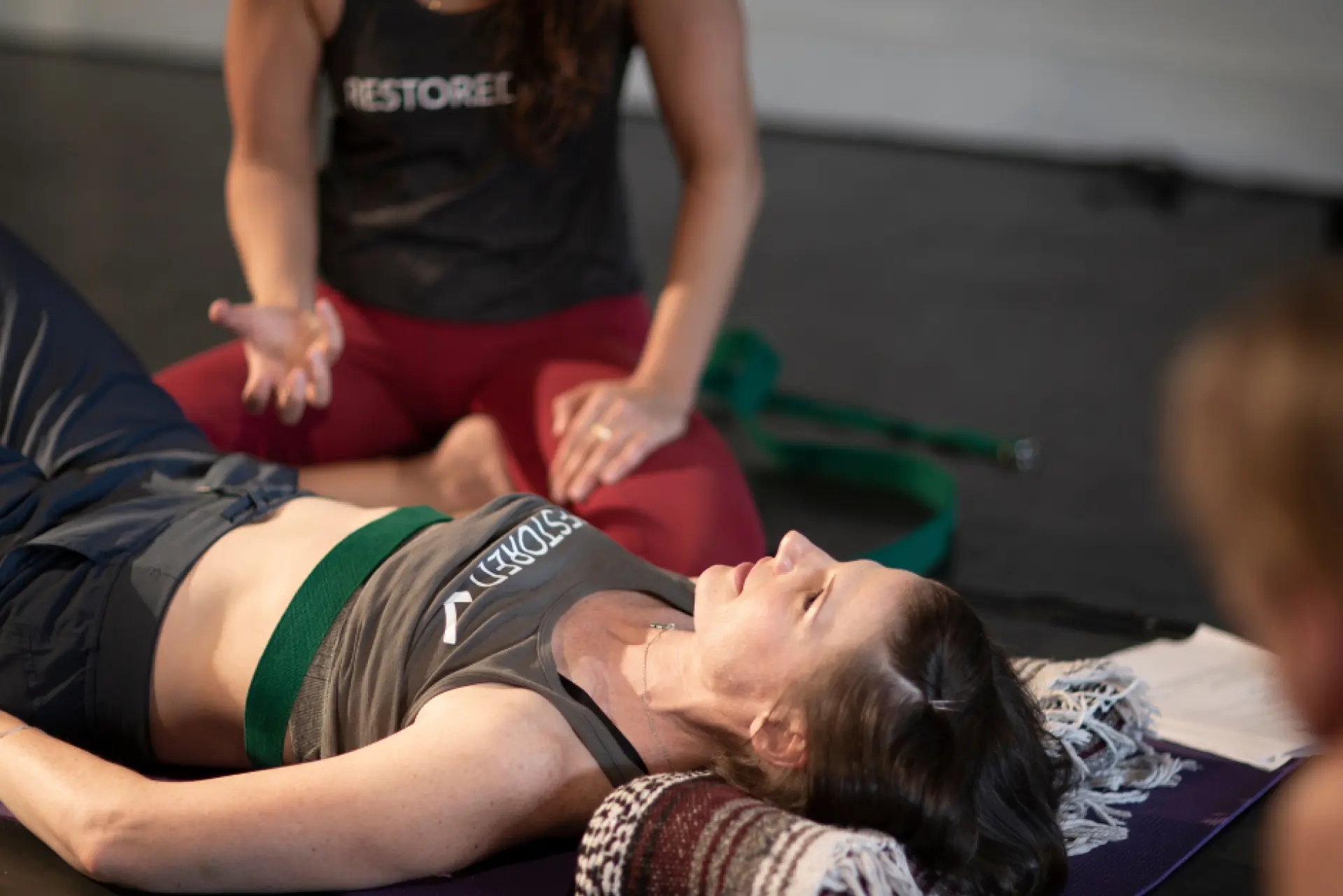
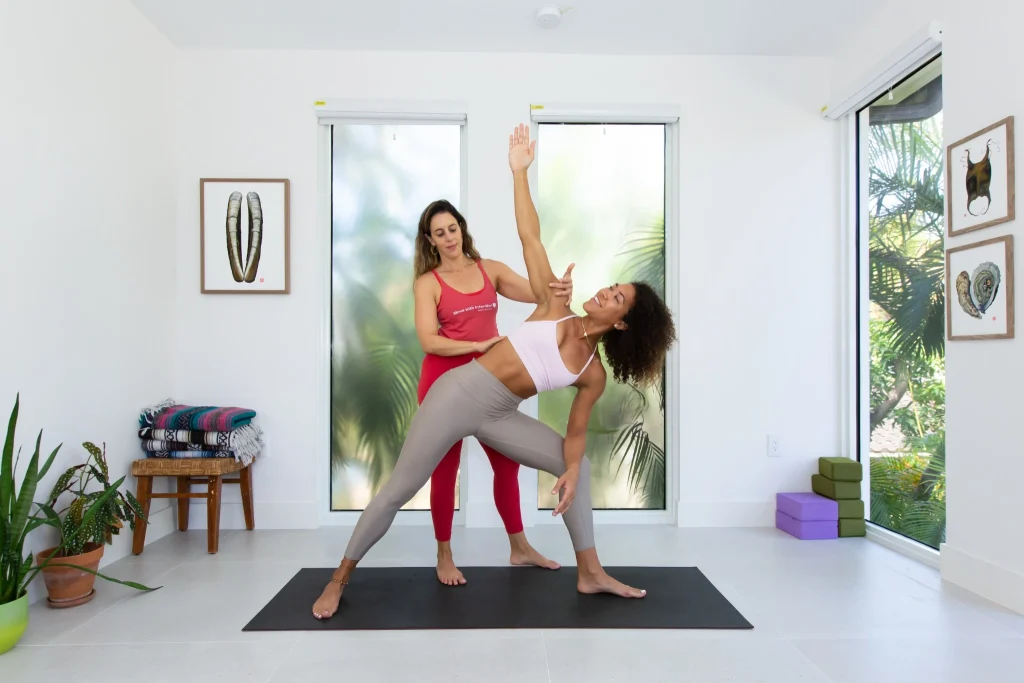
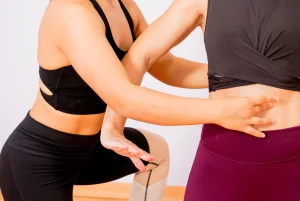
The RYC® Professional Training asks something different of you. It asks you to feel the concepts in your own body before learning to guide others. You attend live calls where you can ask Lauren questions in real time about what you’re observing. You practice assessment and movement skills with an RYC® Teacher who gives you personalized feedback on what you’re doing well and where to refine. You move through the material alongside a group of practitioners who are navigating the same territory.
Many participants describe this as the moment something shifted in their professional life. A yoga teacher and acupuncturist noted that the value of the RYC® training compared to the cost was remarkably high – especially compared to other professional trainings she’d completed. An osteopath described how half of her sessions became movement coaching, empowering her patients to realize they could support themselves rather than relying on passive treatment. A Pilates teacher said the training changed how she categorizes movement entirely – she stopped seeing exercises as belonging to disciplines and started seeing bodies doing movement.
What Happens With Complex Presentations
When a client walks in with layered symptoms – leaking, back pain, breath-holding patterns, a nervous system that won’t settle – the training you’ve invested in determines how you respond.
A GGS-trained practitioner has the knowledge to coach that client safely through pregnancy and postpartum fitness, modify exercises appropriately, and support her psychologically. This is valuable work, and the coaching psychology GGS teaches creates real confidence in that space.
An RYC®-trained practitioner can assess that client’s alignment, breathing patterns, pressure strategies, spinal mobility, nervous system tone, and pelvic floor function as one interconnected picture – and then draw from 70+ corrective exercises and the ICCP to help that client have a felt experience of her own body that opens the door to genuine, lasting change. The RYC® framework adapts to whatever that body needs, because it’s built around understanding why the body is doing what it’s doing.
What Practitioners Report After Completing Each Training
After the RYC® Professional Training
Practitioners describe the training as personally and professionally transformative. They report seeing bodies with more clarity, getting consistently better results (sometimes dramatic improvement in a single session), gaining new clients who specifically seek pelvic floor and core expertise, feeling confident charging appropriately for their services, and carrying a depth of understanding that no previous certification had given them.
Physical therapists say the movement assessments in RYC® are unlike anything in their clinical education and that the tools make everything they already have more effective. Occupational therapists describe feeling more confident working with core and pelvic floor presentations. Yoga teachers describe it as filling the gap that no other training addressed. Several practitioners say the training gave them an entirely new career direction.
The personal dimension is mentioned consistently: discovering held patterns in your own body, healing your own diastasis years after childbirth, understanding your own thoracic limitations for the first time, feeling empowered after years of living with pelvic floor symptoms.
After the GGS Pre- & Postnatal Coaching Certification
GGS graduates describe feeling more confident working with pregnant and postpartum clients, having the knowledge to keep those clients safe, and being able to stand out in their gym or community as the go-to professional for pre- and postnatal women.
Try 18 minutes of healing, nourishing movement – the RYC® way
What You’re Investing In
GGS Pre- & Postnatal Coaching Certification: $1,500 at general enrollment. You receive a printed textbook, workbook, online learning platform with videos, assessment tools, and lifetime access. No live instruction, no cohort, no personalized feedback. A strong value for a self-paced, text-based fitness certification.
RYC® Professional Training: $1,899 (introductory pricing for the first consolidated training cohort; payment plans available; price will increase in future cohorts). This includes:
- Six modules covering foundations, breathing, core, spine, pelvic floor, and real-world client application, with nervous system training throughout
- Prenatal considerations woven through Modules 1–5
- 30+ whole-body assessment tools and 70+ corrective exercises
- The RYC® ICCP for client interaction
- 14 live Zoom calls with Lauren and the teaching team
- Hands-on practice sessions with personalized feedback in each module
- Three new Module 6 wrap calls: tough client conditions, deep dives, and professional identity and branding
- The full RYC® Essentials Program (Levels 1–6) – the complete online pelvic floor and core rehabilitation program – provided upon registration
- 50% off a 1:1 assessment with an RYC® Certified Teacher
- Lifetime access to all training materials
- Certificate of Completion and eligibility for the RYC® Pro Collective
- Access to the pathway toward RYC® Advanced Movement Training (planned for 2027)
The investment reflects what you’re receiving: a training shaped by over 25 years of experience working with bodies, informed by genuine healing outcomes across 10,000+ people, supported by 500+ trained clinical professionals, and delivered through a live, experiential model with direct access to the creator of the method. For practitioners who are building or expanding a career around pelvic floor and core work, this investment creates a professional foundation that continues to compound over time.
Finding the Right Fit for Where You’re Headed
The GGS certification may suit you if:
- Your primary focus is coaching women safely through pregnancy and postpartum, and you want a recognized fitness industry credential for that specific life phase
- CEU/CEC eligibility across major organizations is a deciding factor for your career
- You prefer studying independently on your own schedule, with no fixed cohort or live calls
- Coaching psychology, nutrition guidance, and behavior change are the core skills you’re developing
- You’re building a foundational pre/postnatal layer and may pursue deeper specialization later
The RYC® Professional Training may suit you if:
- You’re ready to understand the body at a systems level – why something works in one body and doesn’t in another, and how to figure it out in real time
- You want CEU eligibility – RYC® provides a CEU application package so you can submit to your certifying organization
- You’re? want experiential learning that reveals their own patterns and changes how they observe the bodies they work with
- You value live access to the method’s creator and personalized feedback as their skills develop
- You serve women across multiple life stages – postpartum healing, perimenopause, chronic pain, post-surgical recovery – and need a framework that adapts to all of them
- You’ve completed other trainings and certifications and still feel something is missing in how they understand the pelvic floor, core, and body as a whole
- You’re building or expanding a career specifically around pelvic floor and core work, and want the depth that sets them apart
- You want to join a professional community with a clear pathway toward advanced certifications and branding eligibility
Enjoy a free, pelvic-floor & core healing whole-body workout today
The Depth You Carry Into Every Session
The GGS Pre- & Postnatal Coaching Certification provides a thorough, well-structured education in coaching women through pregnancy and postpartum. Its strengths in coaching psychology, CEU eligibility, and evidence-based rigor are real. For practitioners whose work centers on the pre- and postnatal window and who want a recognized fitness credential, it’s a respected choice.
The RYC® Professional Training prepares a different kind of practitioner. It builds the ability to look at a body and understand what’s happening across breath, alignment, pressure, the nervous system, the spine, and the pelvic floor as one connected picture. It develops that ability through direct experience in your own body, through live mentorship with the creator of the method, through 30+ assessment tools and 70+ corrective exercises, and through a progressive curriculum that each module deepens. The ICCP transforms how you interact with clients – creating the conditions for genuine felt experience and lasting change.
Over 500 professionals have completed training in the RYC® Method. Many arrived having already completed other certifications – in physiotherapy, yoga, Pilates, personal training, massage therapy, occupational therapy – and describe the RYC® training as the moment their professional understanding deepened in a way that nothing else had provided. They see bodies differently. They get better results. They carry a nuanced, whole-body toolkit that allows them to sit with any client, any complexity, and know what they’re looking at.
Every woman who walks through your door arrives carrying something she may have been told to live with. The depth of your training determines whether you have the tools to meet her where she is and help her body make the changes it’s capable of – across whatever life stage she’s in, for as long as she needs it.
The RYC® Professional Training runs October 2026 through February 2027. $1,899 USD with payment plans available. This is introductory pricing and will increase in future cohorts.
Access your free workout and start healing your core and pelvic floor today
FAQ
I already hold a GGS certification. Would the RYC® training still be valuable?
Many practitioners hold multiple credentials, and the two trainings serve distinct purposes. GGS provides a pre/postnatal coaching credential with strong CEU eligibility. RYC® builds a whole-body assessment and movement framework that applies across all life stages – and it’s experiential, meaning you develop skills through practice and personalized feedback that a text-based certification can’t replicate. Practitioners who already hold a GGS certification often describe the RYC® Professional Training as the layer that filled the gaps in how they understand and work with the pelvic floor and core.
Do I need clinical or movement experience to join the RYC® Professional Training?
No. The training is open to anyone drawn to this work, and many people join each year with no prior clinical or teaching background. You receive the full RYC® Essentials Program (Levels 1 through 6) upon registration and work through Levels 1 and 2 before the training begins. This gives you a felt experience of the method in your own body before Module 1 starts. The teaching team and fellow participants provide strong support, and the training is designed to meet you where you are.
How does the RYC® Professional Training handle prenatal and postpartum content?
Prenatal considerations are woven through Modules 1 through 5, covering how alignment, breathing, core, spine, and pelvic floor concepts apply when working with the pregnant body. The whole-system lens you develop through the training applies directly to pregnancy. The training also addresses postpartum healing at any stage after the first six weeks after birth, perimenopause, chronic pain, post-surgical recovery, and every other stage of life. A dedicated prenatal offering focused specifically on birth preparation is in development as part of the broader RYC® family.
What is the time commitment for the RYC® Professional Training?
Approximately 3 to 5 hours per week during the training (October 2026 through February 2027), plus 2 to 3 hours of personal RYC® practice before the training begins. Weekly live calls are held Wednesdays, 1:30 to 3:30 PM ET, and all sessions are recorded for replay. Each module spans approximately three weeks, with time between modules.
Does the GGS certification include live instruction or mentorship?
No. The GGS Pre- & Postnatal Coaching Certification is entirely self-paced with no live calls, no cohort model, and no hands-on practice sessions. You receive a printed textbook, workbook, and access to an online learning platform with videos. Support is available from the GGS client care team and curriculum advisors.
What makes a pelvic floor certification worth the investment for movement professionals?
The most valuable pelvic floor professional trainings develop your ability to assess and address the pelvic floor as part of a whole-body system – including breath mechanics, alignment, pressure dynamics, nervous system regulation, and spinal mobility. Trainings that include live mentorship, hands-on practice with feedback, and experiential learning (where you work in your own body first) tend to produce practitioners who can confidently work with complex presentations. The Restore Your Core® Professional Training includes 30+ assessment tools, 70+ corrective exercises, 14 live calls with the method’s creator, and a progressive six-module curriculum built across 25+ years of clinical practice with 10,000+ healing outcomes.
Can a physical therapist benefit from a pelvic floor professional training?
Many physical therapists describe specialized pelvic floor training as among the most impactful professional development they’ve completed. Standard clinical education covers anatomy and foundational interventions, and dedicated training in whole-body assessment, movement repatterning, pressure management, and nervous system integration adds a layer of depth that changes clinical outcomes. Physical therapists who have completed the Restore Your Core® Professional Training consistently report that the movement assessments are different from anything in their existing education and make their current clinical tools more effective.
What is the difference between a pelvic floor certification and a pre/postnatal coaching certification?
A pre/postnatal coaching certification typically teaches safe exercise, nutrition, and psychological support specifically for women during pregnancy and postpartum. A pelvic floor professional training teaches practitioners to assess and work with pelvic floor and core function across all life stages – including pregnancy and postpartum, perimenopause, chronic pain, post-surgical recovery, and beyond. The scope is broader, and the assessment tools tend to be more comprehensive. Some practitioners hold both types of credentials, using the pre/postnatal certification for specific coaching work and the pelvic floor training as a deeper clinical and movement framework.
How do RYC® Professional Training and Girls Gone Strong compare for career development?
These two trainings serve different professional trajectories. Girls Gone Strong prepares fitness and health professionals to coach women through pregnancy and postpartum with confidence, providing a recognized credential and CEU eligibility across major fitness organizations. The Restore Your Core® Professional Training develops practitioners who can assess and work with pelvic floor and core function across all life stages, using a whole-body, nervous-system-informed framework delivered through live mentorship and experiential learning. RYC® graduates also gain access to a professional community, website listing, and a pathway toward advanced certifications and branding eligibility planned for 2027.
Top articles
“There is no thank you big enough for Lauren Ohayon existing and thinking and helping so many of us. Every time I do something I never thought I’d do again she is part of the reason why.”
Laura Gregg
Strengthen, heal & nourish your pelvic floor & core
Try a FREE workout
with Lauren
*10K+ women healed and healing
Thank you!
Your FREE video is on the way
Please check your email inbox in a few minutes.
Related articles



Enjoy a free, pelvic-floor & core healing whole-body workout today
Get more actionable info, inspiration and exclusive offers delivered to your inbox.
*No spam, just quality content and support
Thanks for subscribing!

inbox soon.
Thanks for subscribing!
Please check your inbox soon.