Lauren Ohayon is the creator of Restore Your Core® (RYC®), a comprehensive and sustainable whole-body fitness program that empowers women to achieve ideal pelvic floor / core function and be strong, long, mobile and functional.
What does Diastasis Recti look like? Well, Diastasis Recti symptoms and what it looks like can differ from person to person, making it difficult to diagnose. For some individuals, Diastasis Recti can look like an obvious vertical gap in the abs, while others may have a pooch or what is described as a “mummy tummy”. Diastasis Recti symptoms for some can be mild and go unnoticed for years, even decades. For others, Diastasis Recti may create a host of debilitating symptoms.
Get free expert advice and start your Diastasis Recti healing journey today
Table of Contents
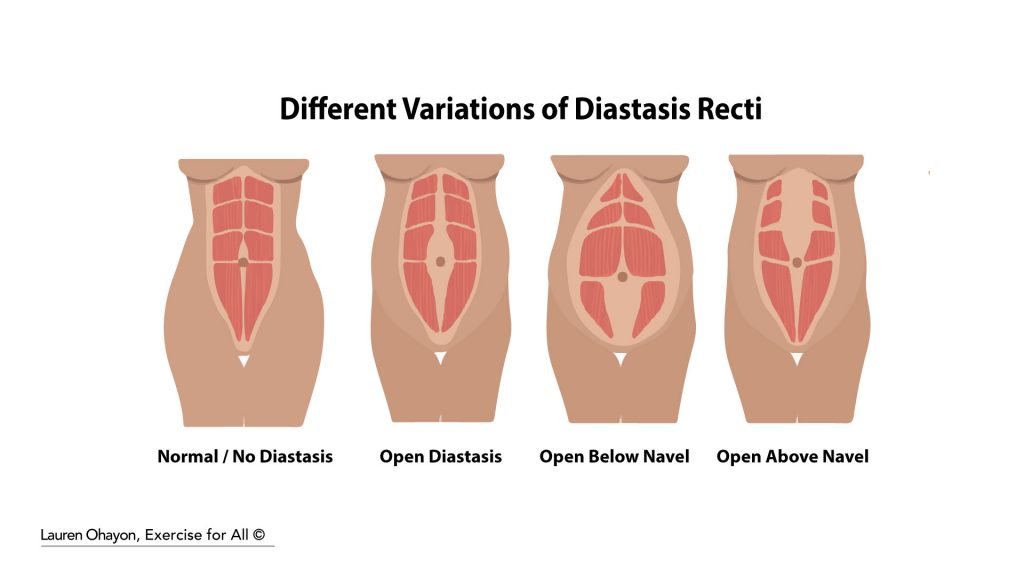
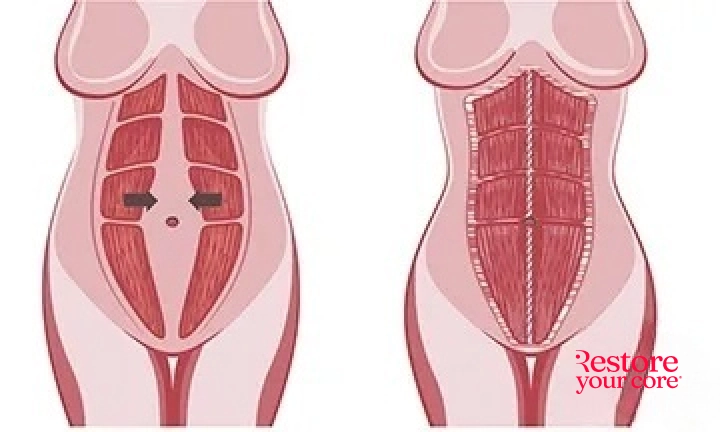
Diastasis Recti is one symptom of core and pelvic floor dysfunction. It is the stretching or separation of the rectus abdominis (6 pack) muscles due to the thinning of the linea alba (midline connective tissue). This separation can be isolated to the area above the belly button, centered around the belly button, or below the belly button. In some cases, the separation runs the entire length of the core.
A minor separation (1-2 finger widths) is not a significant injury. Still, I advise considering a core-focused rehab program to prevent the gap from widening. Many people report diastasis recti symptoms even with a narrow gap, which can inhibit optimal core function.
You may be wondering yourself, what does diastasis recti look like in more severe cases? In more severe cases, the separation can measure as wide as 5-10 fingers. This effect is much more noticeable and can be seen as a bulge of the abdomen. Diastasis recti is also measured by depth, someone could potentially have a 10-finger width separation but it’s relatively shallow and less symptomatic than someone with a narrow gap that is deeper.
Unless you have a low body fat percentage or an overly toned abdomen with a visible 6-pack, it is very hard to diagnose a diastasis recti on appearance alone. The linea alba lies beneath the fatty layer of the abdomen, so it is difficult to diagnose by appearance alone.
Diastasis Recti doesn’t look the same on everybody, so it often goes unnoticed, or worse, pointed out as some sort of personal failing for not “bouncing back” after 3 months postpartum.
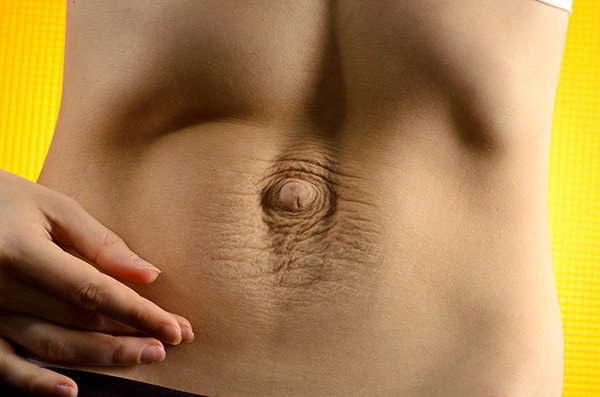
It’s important to note that there’s a difference between diastasis recti, bloating, and abdominal fat; however, all three can have similar appearances and be exacerbated by Diastasis Recti. Sometimes, Diastasis Recti can cause the skin to stretch too, so a lot of stretched skin–different from stretch marks–can indicate one.
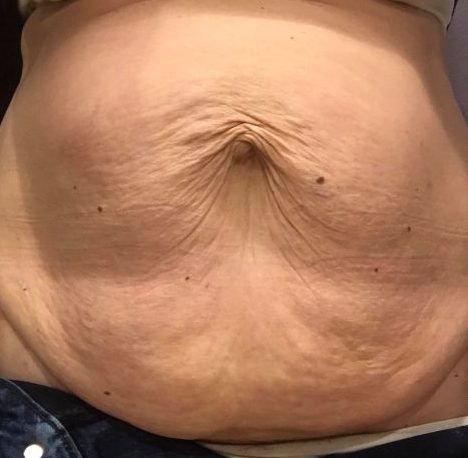
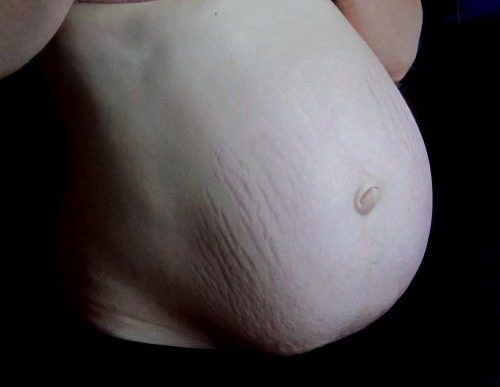
Let’s look at the difference between stretched skin and stretch marks.
This image is of stretched skin:
And these are stretch marks:
However, neither image in isolation tells me whether the person has a diastasis recti.
Discover the top 3 steps to heal your Diastasis Recti and get back to what you love
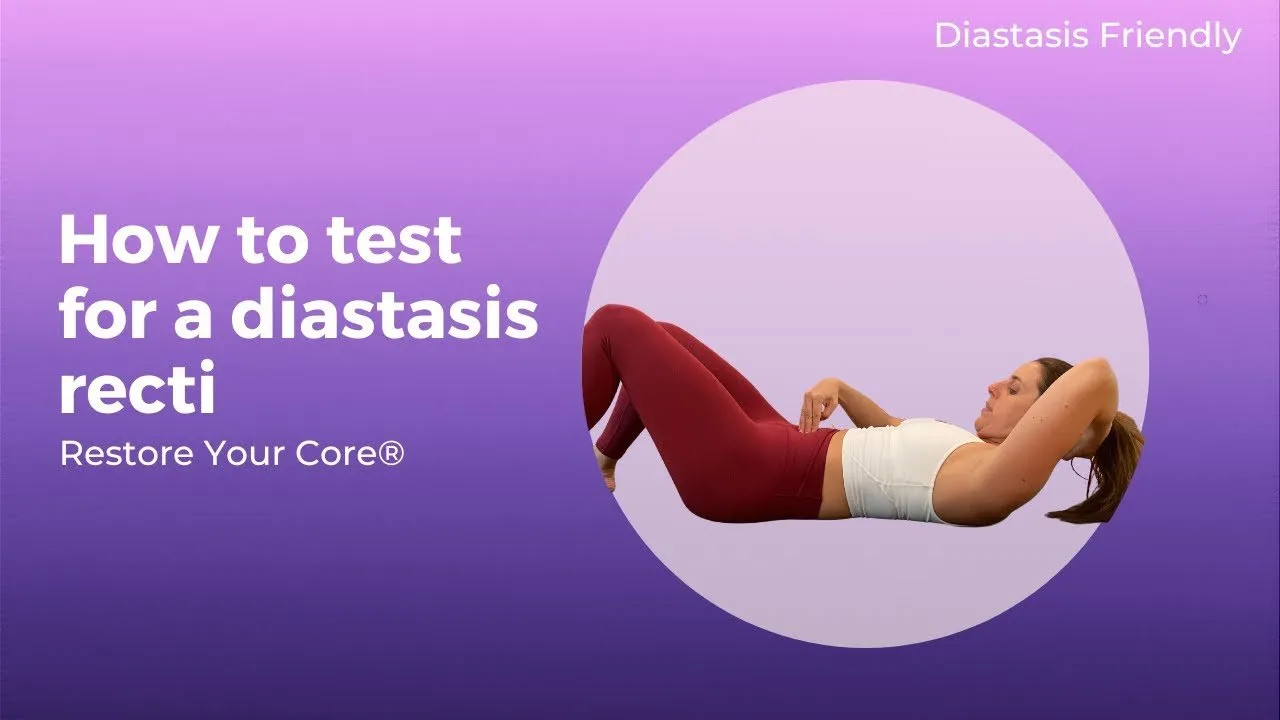
If you think you have a Diastasis Recti, you can perform a Diastasis Recti Test at home or have a physical therapist assess you.
A Self-Assessment Can Be Performed as Follows:
Pregnancy is only one underlying cause of Diastasis Recti. Learn more about Diastasis Recti During Pregnancy here.
Men can have Diastasis Recti, and babies are born with it! At birth, all babies will have some degree of separation and in most cases, it will close in the first few weeks. For some, it can take longer to close, if you’re at all concerned speak to your pediatrician.
What does diastasis recti look like in men? In men, Diastasis Recti symptoms can be similar. Though, appearance can be somewhat different: a flared rib cage or bulging belly may suggest a lack of core function or a possible diastasis. Constipation, low back pain, and difficulty with common exercises are also indicators that there’s a core function problem. Learn more about Diastasis Recti in Men here.
An example of a man with a diastasis is Joseph Pilates. Yes, THAT Pilates.
Discover the top 3 steps to heal your Diastasis Recti and get back to what you love
We really need to separate looks from function when addressing diastasis recti. A DR can change both how we look and function, but it might also not change how we look and might only change function. When we fall prey to the falsehood that flat=functional, we seek out a flat belly at the expense of function. So, when you ask, “what does diastasis recti look like?” The answer is “it varies.”
The biggest myth about core function and bodily appearance is that a flat belly means a functional belly. Truth is, it’s not always clear by just looking at someone whether or not they have a diastasis recti.
You don’t have to live in fear, pain or discomfort get back to the confident + life style you always loved.
Diastasis Recti symptoms are exacerbated by an unnatural amount of pressure within the abdomen.
Excess intra abdominal pressure can be due to many factors including:
These are some of the known risk factors that can lead to Diastasis Recti developing or delay healing. We can’t always pinpoint “why”, but it’s still important to look at all factors that could be impacting someone’s ability to heal.
Just as Diastasis Recti symptoms look different, healing can also look different for each person and the time it takes to heal depends on the individual and the severity of the injury. Connective tissue is slow to heal, but healing is possible. For some people, it can take years to properly heal and restore full function. Getting back to doing all the things you love can happen, it just takes time and consistency.
I have found that what best helps most of my clients with diastasis recti are:
Join our community and connect with over 35,000 women dedicated to healing their pelvic floor issues. The RYC® Facebook group offers an intimate space for women to openly discuss and learn more about issues such as diastasis recti, leaky pee, prolapses, etc. You don’t have to be alone in your journey for a stronger self, join us today!
“There is no thank you big enough for Lauren Ohayon existing and thinking and helping so many of us. Every time I do something I never thought I’d do again she is part of the reason why.”
Laura Gregg
in this FREE video and get the support you deserve
*10K+ women healed and healing
Please check your email inbox in a few minutes.
What is Diastasis Recti? Diastasis Recti is one symptom of core and pelvic floor dysfunction. It is the stretching or separation of the rectus abdominis (6 pack) muscles due to...
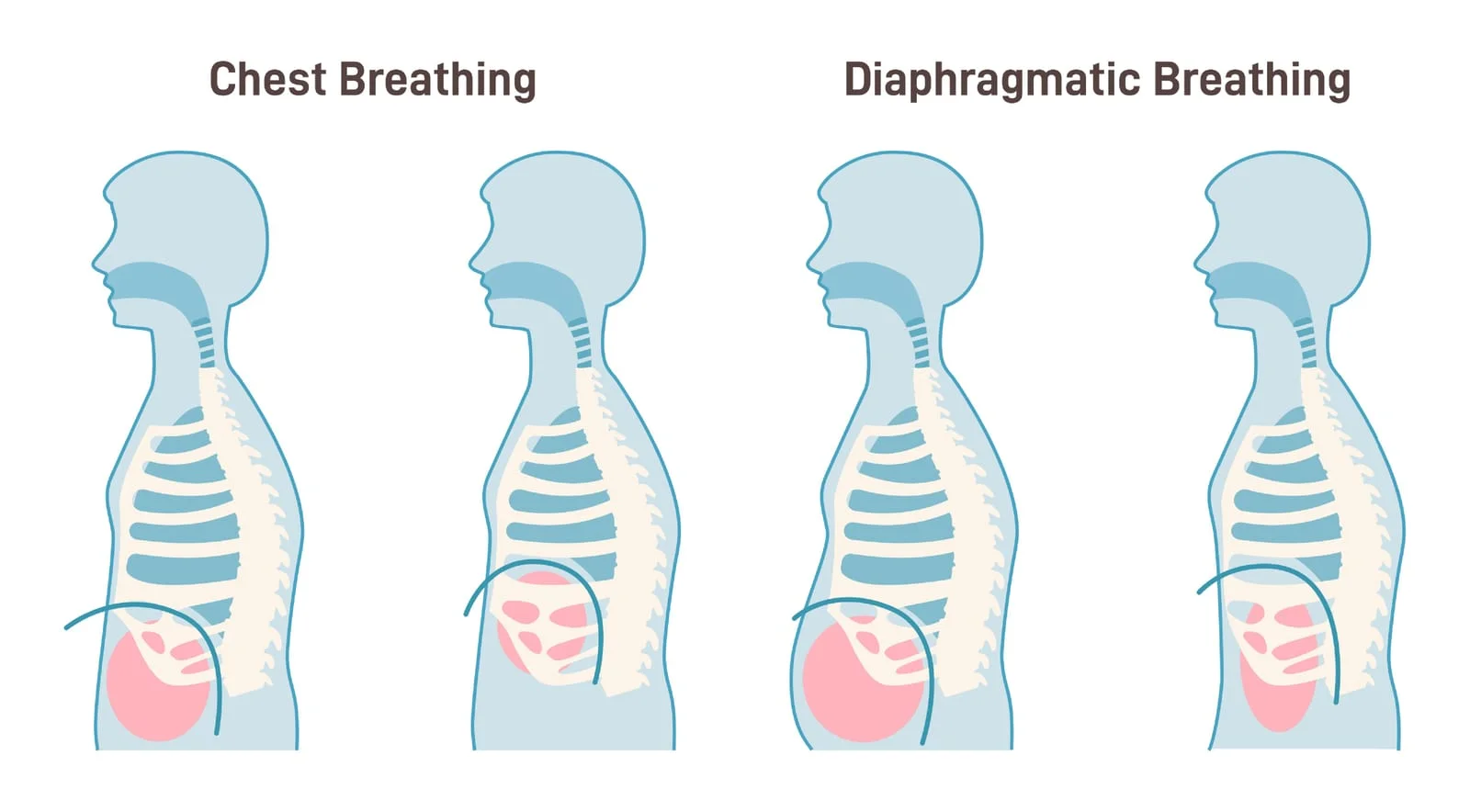
How to Test for Diastasis Recti? If you have diastasis recti (DR), you may notice a change in your breathing patterns or even experience shortness of breath. The connection between...
If you have diastasis recti (DR), you may notice a change in your breathing patterns or even experience shortness of breath. The connection between breathing and diastasis recti is significant...
While it’s relatively easy to assess yourself for diastasis recti, what do you do about it? PT is great; pressing play on a video at home is even easier. Read...
What does Diastasis Recti mean? Diastasis recti, or abdominal separation, is essentially a gradual stretching and separation of the abdominal muscles in your belly. The connective tissue (linea alba) that...
Healthcare professionals–including doctors, coaches, and doulas–have you been confused about how to help your patients and clients with diastasis recti? Is surgery the best and only option? Not necessarily. Read...
If you’ve recently discovered that you have a diastasis recti, you might be wondering whether you can keep up your regular workout routine. With the right information, you can safely...
Discover the top 3 steps to heal your Diastasis Recti and get back to what you love
*No spam, just quality content and support
in this FREE video and get the support you deserve
*10K+ women healed and healing
Please check your email inbox in a few minutes.