3D Pelvic Floor Workshop Free · Online September 10th

3D Pelvic Floor Workshop
Free · Online September 10th

Learn

Lauren Ohayon

Hi! I'm Lauren.

Nice to meet you

Lauren Ohayon is the creator of Restore Your Core® (RYC®), a comprehensive and sustainable whole-body fitness program that empowers women to achieve ideal pelvic floor / core function and be strong, long, mobile and functional.

Top articles

What Does Diastasis Recti Look Like?

What-does-diastasis-recti-look-like
Share
Table of Contents
Share
Table of Contents

What does Diastasis Recti look like? Well, Diastasis Recti symptoms and what it looks like can differ from person to person, making it difficult to diagnose. For some individuals, Diastasis Recti can look like an obvious vertical gap in the abs, while others may have a pooch or what is described as a “mummy tummy”. Diastasis Recti symptoms for some can be mild and go unnoticed for years, even decades. For others, Diastasis Recti may create a host of debilitating symptoms.

Get free expert advice and start your Diastasis Recti healing journey today

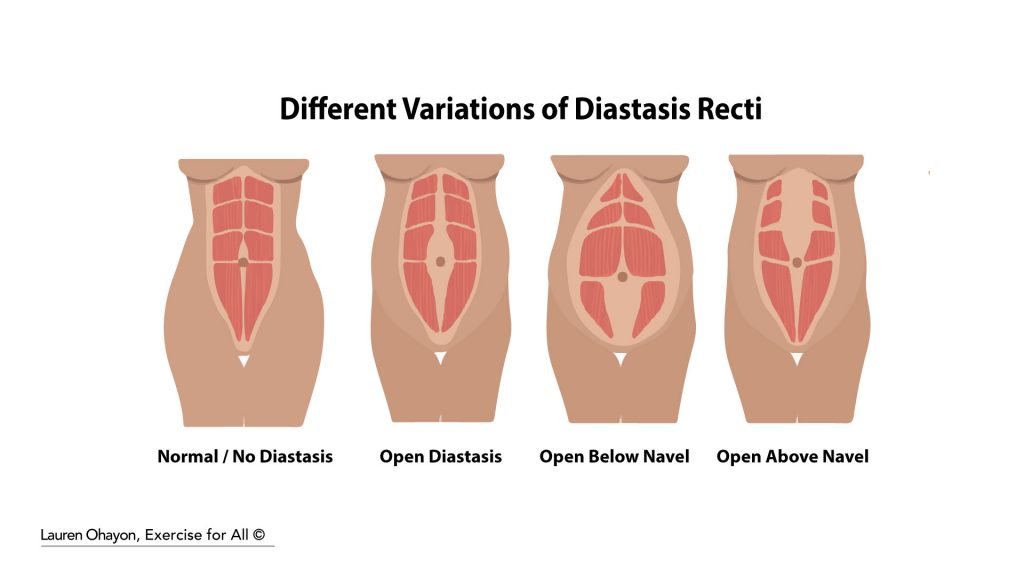
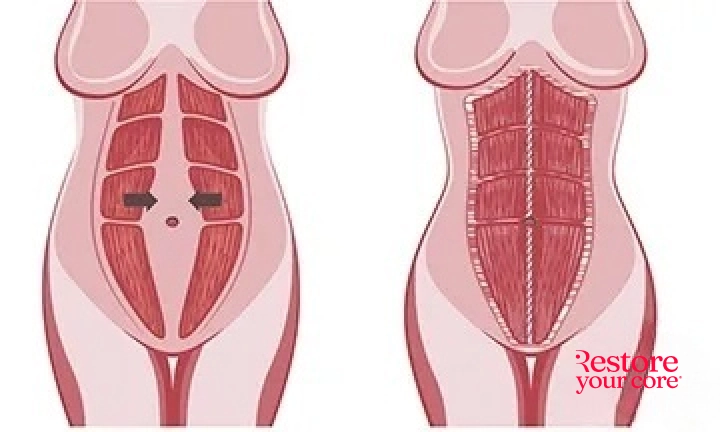
Diastasis Recti is one symptom of core and pelvic floor dysfunction. It is the stretching or separation of the rectus abdominis (6 pack) muscles due to the thinning of the linea alba (midline connective tissue). This separation can be isolated to the area above the belly button, centered around the belly button, or below the belly button. In some cases, the separation runs the entire length of the core.

Different variations of Diastasis Recti

Diastasis Recti Symptoms

  • Abdominal bloating
  • Urinary or fecal incontinence
  • Constipation
  • Back pain
  • Pelvic or hip pain
  • Sacroiliac joint pain
  • Lack of core strength and function
  • Pain when walking or performing everyday tasks

A minor separation (1-2 finger widths) is not a significant injury. Still, I advise considering a core-focused rehab program to prevent the gap from widening. Many people report diastasis recti symptoms even with a narrow gap, which can inhibit optimal core function.


You may be wondering yourself, what does diastasis recti look like in more severe cases? In more severe cases, the separation can measure as wide as 5-10 fingers. This effect is much more noticeable and can be seen as a bulge of the abdomen. Diastasis recti is also measured by depth, someone could potentially have a 10-finger width separation but it’s relatively shallow and less symptomatic than someone with a narrow gap that is deeper.

What Does Diastasis Recti Look Like?

Unless you have a low body fat percentage or an overly toned abdomen with a visible 6-pack, it is very hard to diagnose a diastasis recti on appearance alone. The linea alba lies beneath the fatty layer of the abdomen, so it is difficult to diagnose by appearance alone.


Diastasis Recti doesn’t look the same on everybody, so it often goes unnoticed, or worse, pointed out as some sort of personal failing for not  “bouncing back” after 3 months postpartum.

Diastasis Recti Can Look Like:

  • A visible “pooch” or “mummy tummy” above or below the belly button 
  • Distended abdomen
  • A midline gap in the abdominal muscles
  • Conning or doming when the abdominal muscles are contracted
  • Invagination when the abdominal muscles are contracted
  • Poor posture

diastasis recti – RYC®

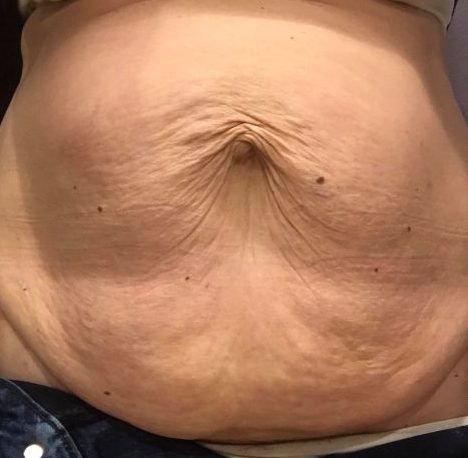
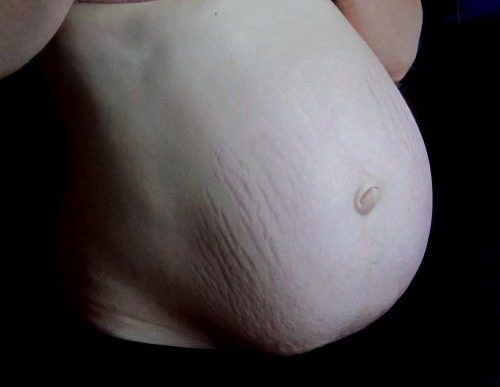
It’s important to note that there’s a difference between diastasis recti, bloating, and abdominal fat; however, all three can have similar appearances and be exacerbated by Diastasis Recti. Sometimes, Diastasis Recti can cause the skin to stretch too, so a lot of stretched skin–different from stretch marks–can indicate one.


Let’s look at the difference between stretched skin and stretch marks.


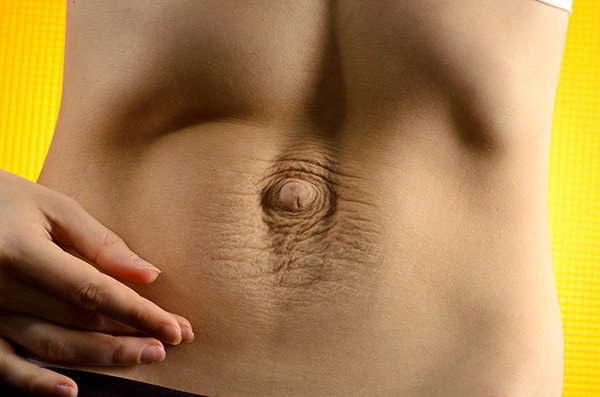
This image is of stretched skin:

Stretched-Skin-resized.jpg

And these are stretch marks:

This is what stretch marks look like on a pregnant woman

However, neither image in isolation tells me whether the person has a diastasis recti.

Discover the top 3 steps to heal your Diastasis Recti and get back to what you love

How Can I Tell if I Have Diastasis Recti?

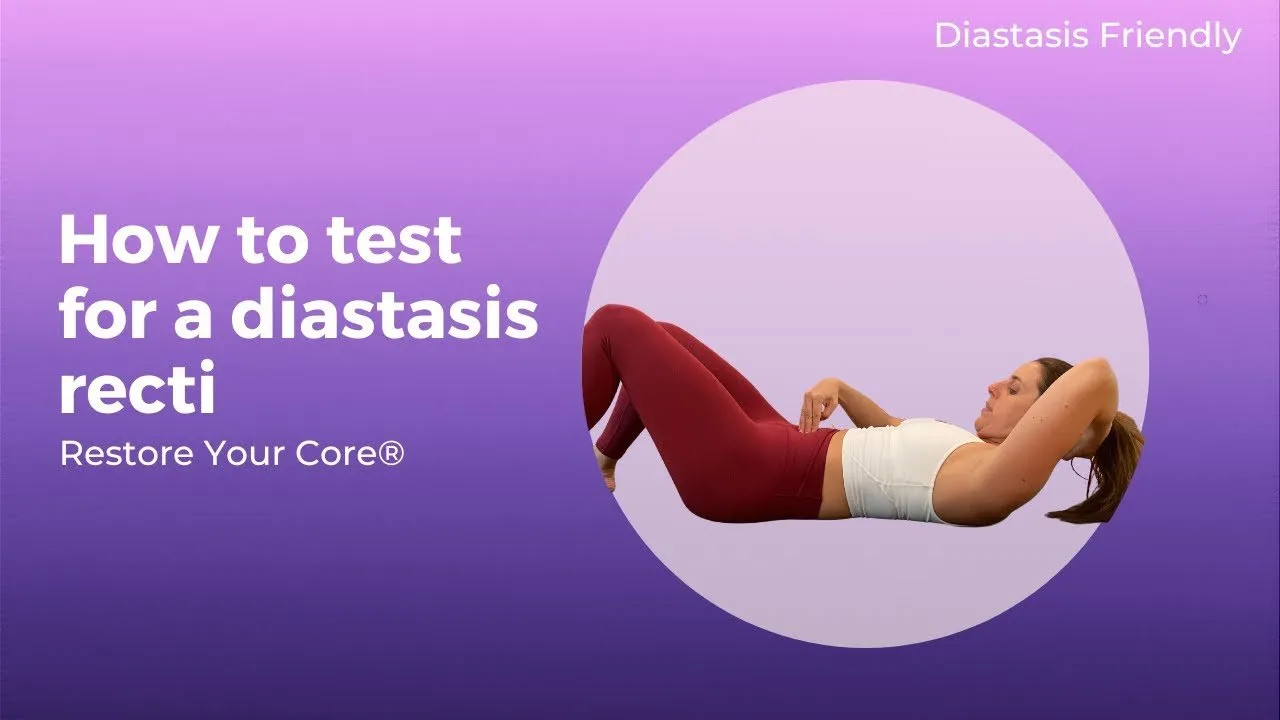
If you think you have a Diastasis Recti, you can perform a Diastasis Recti Test at home or have a physical therapist assess you.


A Self-Assessment Can Be Performed as Follows: 


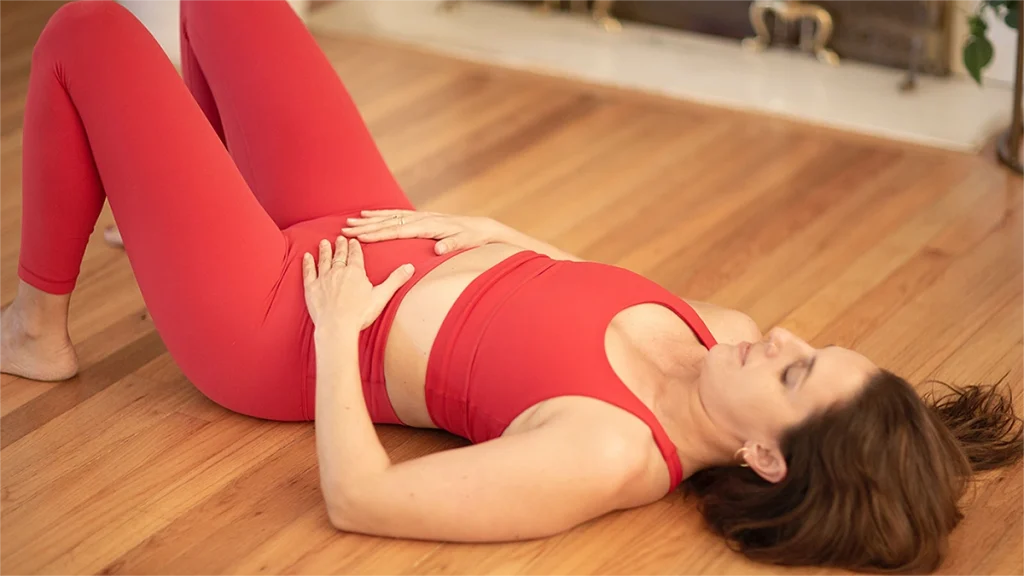
  1. Lie on your back in a comfortable position. Bend your knees and place your feet flat on the floor.
  2. Place one hand on the midline of your core with your fingers pointing straight down on your abs.
  3. Place one hand behind your head and neck for support. Slowly lift your head and add minimal pressure to your fingers placed on your core. With no diastasis recti, there is the feeling of a toned wall as you lift your head up. If you feel a gap or your fingers sink into your core, you likely have diastasis recti. In very obvious cases, you can feel the sides of your core muscles in between that gap on the left and right sides.
  4. Repeat the process for the areas just above your belly button and below your belly button to determine whether or not the diastasis recti is isolated or in your core as a whole.

Diastasis Recti Does Not Arise Solely From Pregnancy!

Pregnancy is only one underlying cause of Diastasis Recti. Learn more about Diastasis Recti During Pregnancy here.


Men can have Diastasis Recti, and babies are born with it!  At birth, all babies will have some degree of separation and in most cases, it will close in the first few weeks. For some, it can take longer to close, if you’re at all concerned speak to your pediatrician. 


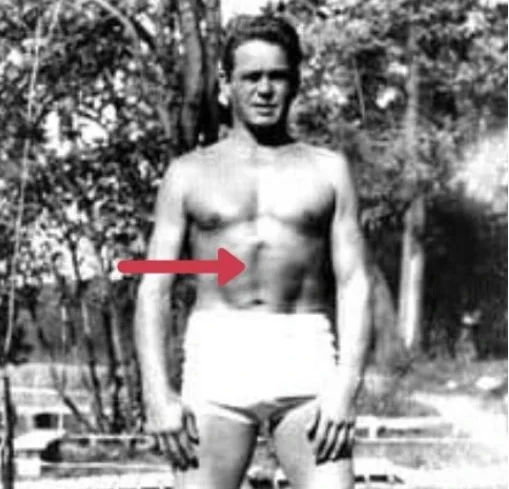
What does diastasis recti look like in men? In men, Diastasis Recti symptoms can be similar. Though, appearance can be somewhat different: a flared rib cage or bulging belly may suggest a lack of core function or a possible diastasis. Constipation, low back pain, and difficulty with common exercises are also indicators that there’s a core function problem. Learn more about Diastasis Recti in Men here.


An example of a man with a diastasis is Joseph Pilates. Yes, THAT Pilates.

Joseph-Pilates-arrow

Discover the top 3 steps to heal your Diastasis Recti and get back to what you love

We really need to separate looks from function when addressing diastasis recti. A DR can change both how we look and function, but it might also not change how we look and might only change function. When we fall prey to the falsehood that flat=functional, we seek out a flat belly at the expense of function. So, when you ask, “what does diastasis recti look like?” The answer is “it varies.”


The biggest myth about core function and bodily appearance is that a flat belly means a functional belly. Truth is, it’s not always clear by just looking at someone whether or not they have a diastasis recti. 

You don’t have to live in fear, pain or discomfort get back to the confident + life style you always loved.


Learn more today!

What Are the Risk Factors for Diastasis Recti?

Diastasis Recti symptoms are exacerbated by an unnatural amount of pressure within the abdomen.


Excess intra abdominal pressure can be due to many factors including:

  • Injury
  • Pregnancy
  • Frequent or rapid changes in weight
  • Weightlifting
  • Hypermobility
  • Poor breathing mechanics
  • Poor alignment
  • Poor core engagement strategy when performing core exercises
  • Underlying illnesses (i.e. stomach cancer, or cirrhosis)
  • Obesity

These are some of the known risk factors that can lead to Diastasis Recti developing or delay healing. We can’t always pinpoint “why”, but it’s still important to look at all factors that could be impacting someone’s ability to heal.

Can Diastasis Recti be Healed?

Just as Diastasis Recti symptoms look different, healing can also look different for each person and the time it takes to heal depends on the individual and the severity of the injury. Connective tissue is slow to heal, but healing is possible. For some people, it can take years to properly heal and restore full function. Getting back to doing all the things you love can happen, it just takes time and consistency. 


I have found that what best helps most of my clients with diastasis recti are: 


  • A program, like Restore Your Core®, is where you learn to optimize your alignment, movement patterns, and breathing to improve core loading strategies and encourage a holistic treatment method for healing and regaining function.
  • Diet modification; many people report digestive issues as a common symptom of Diastasis Recti. Consult a dietician or nutritionist if bloating and constipation are an issue for you.
  • Add more load; once you’ve addressed less than optimal movement and breathing patterns, heavier weights and harder moves strengthen your core further. 
  • Myofascial release with an expert can resolve unhealthy patterns like oblique dominance or release scar tissue that may be inhibiting function.
  • Add cardio; as the core becomes more reflexive and responsive to your movement demands you can begin to introduce cardio to your fitness routine.
  • Mindset; learning not to fear movement and changing your mindset about outcomes and expectations. Healing can happen, but it takes consistency, and it takes time.

Restore Your Core group of women, including founder, Lauren Ohayon

Join Our Community!

Join our community and connect with over 35,000 women dedicated to healing their pelvic floor issues. The RYC® Facebook group offers an intimate space for women to openly discuss and learn more about issues such as diastasis recti, leaky pee, prolapses, etc. You don’t have to be alone in your journey for a stronger self, join us today!

Top articles

“There is no thank you big enough for Lauren Ohayon existing and thinking and helping so many of us. Every time I do something I never thought I’d do again she is part of the reason why.”

Laura Gregg

Learn 3 ways to heal your Diastasis Recti

in this FREE video and get the support you deserve

*10K+ women healed and healing

envato-labs-image-edit 1@2x

Thank you!

Your FREE video is on the way

Please check your email inbox in a few minutes.

Related articles

Get more actionable info, inspiration and exclusive offers delivered to your inbox.

Learn 3 ways to heal your Diastasis Recti

in this FREE video and get the support you deserve

*10K+ women healed and healing

envato-labs-image-edit 1@2x

Thank you!

Your FREE video is on the way

Please check your email inbox in a few minutes.

envato-labs-image-edit 1@2x