Learn

Hi! I'm Lauren.
Nice to meet you
Lauren Ohayon is the creator of Restore Your Core® (RYC®), a comprehensive and sustainable whole-body fitness program that empowers women to achieve ideal pelvic floor / core function and be strong, long, mobile and functional.

Hi! I'm Lauren.
Nice to meet you
Top articles


How Do I Stop Peeing When I Sneeze or Cough? What Actually Helps with Stress Incontinence

Leaking when you sneeze or cough is one of those things many women spend years quietly accommodating. There are the small adjustments that happen gradually – finding the bathroom before a workout, keeping a change of clothes within reach, bracing before a laugh. Most women who experience this have been managing it for quite a while before they start wondering whether something could actually shift.
It is worth knowing that stress urinary incontinence, the term used for leaking triggered by physical pressure on the bladder, is remarkably common. Research published in Mayo Clinic Proceedings puts the prevalence at between 26% and 49% of women, and a large US national study found it was the most frequently reported form of incontinence, affecting over a third of women with urinary symptoms. Despite those numbers, most women with symptoms never seek help, often assuming this is simply how things are now.
That assumption is worth examining. Stress incontinence can improve significantly with non-surgical approaches, and what tends to make the biggest difference is understanding what is actually happening in the body – how the system is organised, how pressure moves through it, and what shapes the way it responds. That is where this article begins.
Start your healing today with this free workout
Table of Contents
What Is Actually Happening When You Leak?
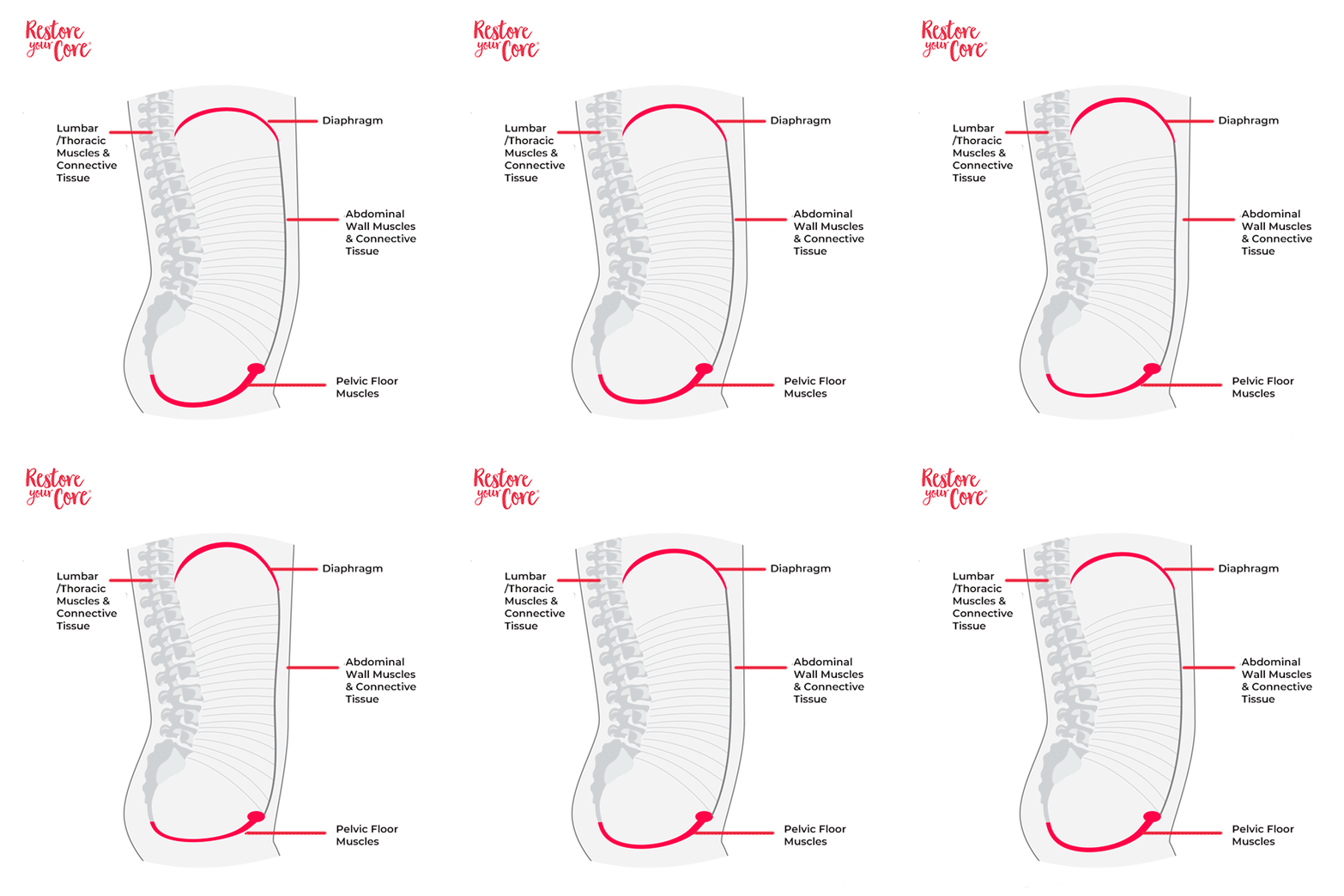
A useful way to picture the core is as a pressurised canister. The diaphragm forms the top, the pelvic floor the base, the deep abdominals wrap around the front and sides, and the spinal muscles close the back. Every breath, every step, every effort passes pressure through that system, and in a well-regulated body the whole structure works together to manage it continuously.
When you sneeze or cough, a sudden sharp spike of pressure moves through that canister. In a pelvic floor that is coordinating well, the muscles respond reflexively – contracting in the fraction of a second before the pressure surge can push urine out. This happens faster than any deliberate squeeze could manage. It is an automatic response, one the system builds over time through coordinated movement and healthy pressure regulation.
When that reflexive response is diminished or mistimed, the pressure spike can arrive without sufficient containment and a leak occurs. What is worth sitting with here is the reflexive quality of that response. A sneeze does not offer a window for conscious intervention. By the time awareness registers that a sneeze is coming, the pressure has already moved. The system either knows how to respond, or it does not, and that is what makes this a coordination and pressure management question as much as a strength one.
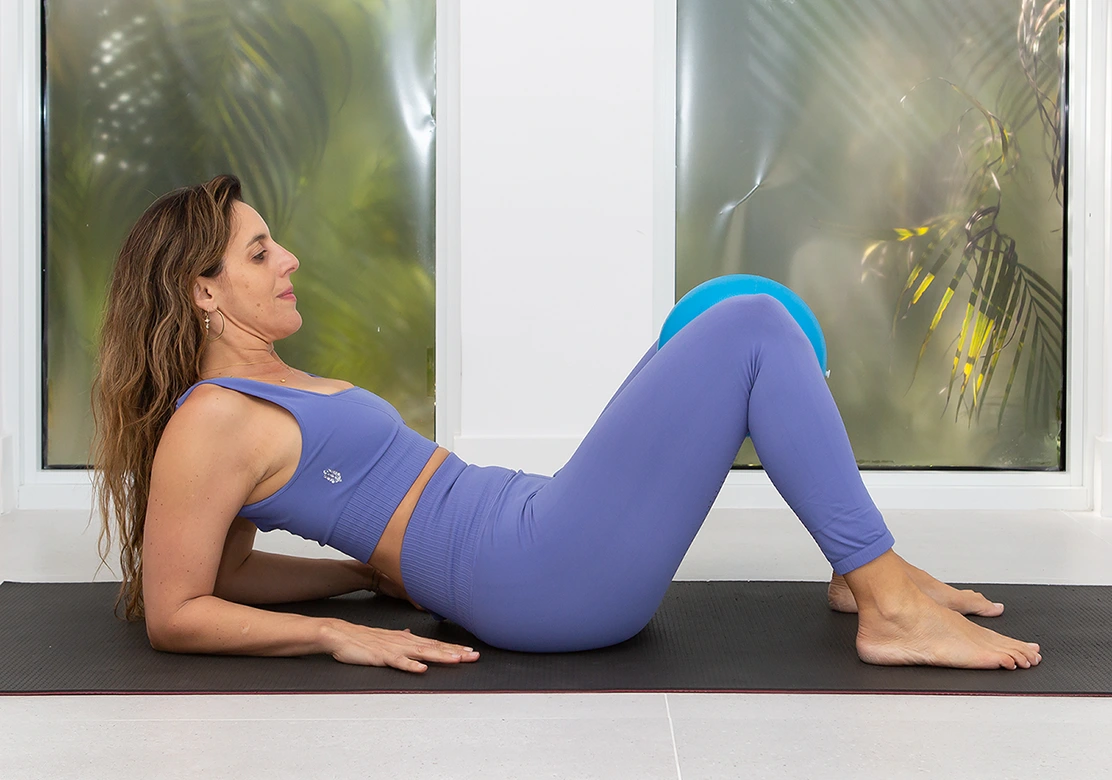
Why “Just Do Kegels” Is Only Part of the Answer
Kegels became the default recommendation for stress incontinence because they are straightforward to explain. The gap worth understanding is between what a Kegel actually trains and what the pelvic floor needs to do during a sneeze. A Kegel is a slow, voluntary, deliberate contraction. A sneeze demands a fast, involuntary, reflexive response that fires in milliseconds. Practising one builds capacity in one direction, and the reflexive response that prevents leaking in daily life requires something additional.
There is also a layer that tends to get overlooked. A healthy pelvic floor needs to be able to contract, to release fully, and to lengthen under load – staying engaged while it lengthens to absorb forces, in the way a bicep muscle lowers a heavy weight under control. When the pelvic floor has been gripping or holding chronically, it can lose access to that capacity to lengthen. A pressure spike arrives, the already-shortened muscles struggle to receive and distribute it, and a leak results. In these patterns, increasing the volume of Kegel practice can deepen the holding and make symptoms louder.
Pelvic floor dysfunction is documented across both ends of the muscle activity spectrum. A clinical reference widely used by practitioners – Pelvic Floor Dysfunction, published in StatPearls via NCBI Bookshelf – notes that disordered pelvic floor function can involve either increased activity (hypertonicity) or diminished activity (hypotonicity), and that urinary incontinence can result from either. When the muscles are holding excess tension, they lose their ability to function well during the high-pressure demands of activities like sneezing, coughing, or running. A proper assessment from a pelvic floor physiotherapist can clarify which pattern is present, because the approach for a pelvic floor that needs more strength looks quite different from one that needs more release and coordination work.
Try 18 minutes of healing, nourishing movement – the RYC® way
What Actually Helps: 6 Approaches Worth Taking Seriously
The approaches below each address a real dimension of what is happening. Most women who experience lasting change find themselves working with several of these over time, as each one tends to support and deepen the others.
1. Retrain Your Breathing Mechanics
The diaphragm and pelvic floor are deeply connected. On every inhale, the diaphragm descends and the pelvic floor lengthens and softens slightly to receive the shift in pressure. On every exhale, both return. This coordination runs through thousands of breaths a day, and when it is working well the whole pressure system stays regulated through all of it – including sudden spikes.
When breath moves primarily through the chest, with the belly held rigid and the ribs never expanding sideways, the pelvic floor loses a significant portion of its dynamic input. Over time this can limit its ability to respond to pressure changes, including sudden ones. Retraining breath to be fuller and more three-dimensional – driven by genuine rib expansion and diaphragmatic descent – can have a meaningful effect on how the pelvic floor responds when pressure arrives.
A useful starting place: sit comfortably and rest your hands around the sides of your lower ribs. On the inhale, see whether you can feel the ribs widening outward and slightly upward into your hands before the belly rises. On the exhale, let everything return without clenching the abdomen or the glutes. The goal is for the diaphragm and pelvic floor to move through their full range together, breath by breath.
2. Learn to Exhale on Exertion
Breath-holding during effort is one of the most common and least discussed contributors to stress incontinence. When you pick something up, stand from a chair, carry shopping, or cough while holding your breath, the pressure that builds has to go somewhere, and often it moves downward through the pelvic floor. This happens many dozens of times each day, and the cumulative load across months and years can significantly affect the system’s capacity.
The shift is to exhale with effort. When you stand up, exhale. When you lift something, exhale. When a sneeze is coming, try exhaling through pursed lips as it happens. This coordinates the pressure system so the pelvic floor works with the breath, and many women notice a difference in their symptoms within the first few weeks of applying this consistently. It tends to feel unfamiliar at first, and it can become quite automatic with repetition.
3. Follow a Structured Whole-Body Rehabilitation Program
Individual exercises can produce some progress, and lasting change tends to come from a structured progression that works through the whole pressure system. Breath, ribcage mobility, deep abdominal coordination, hip function, nervous system regulation, and everyday movement habits all shape how the pelvic floor functions, and working through them in a logical sequence gives the body the conditions it needs to genuinely reorganise.
A well-designed whole-body program like Restore Your Core® (RYC®) builds from foundational breath and coordination work and progresses load gradually, so the pelvic floor can develop the kind of reflexive capacity that continence during a sneeze, a run, or a jump actually requires. This is training that carries over into daily life in a way that isolated exercises often do not.
Programs like Restore Your Core® are structured around exactly this principle – sequencing breath mechanics, pressure management, postural awareness, and whole-body coordination so the pelvic floor can develop the reflexive function that matters in everyday moments. The work moves through the hips, diaphragm, deep abdominals, and movement patterns as an integrated system. The approaches covered throughout this article are all part of what RYC® guides you through in sequence, which matters because most of them are difficult to maintain consistently without that structure. For women who have been working on this with isolated exercises and finding limited progress, this kind of structured approach often provides the missing context.
4. Look at What the Pelvic Floor Is Actually Doing
When the pelvic floor has been chronically holding – through stress, old injury, a tucked pelvis, years of over-Kegeling, or the accumulated habit of gripping through the midsection – strengthening work alone may not shift the underlying pattern. A pelvic floor that cannot release fully has lost access to part of its functional range, and that affects how well it can respond when pressure arrives.
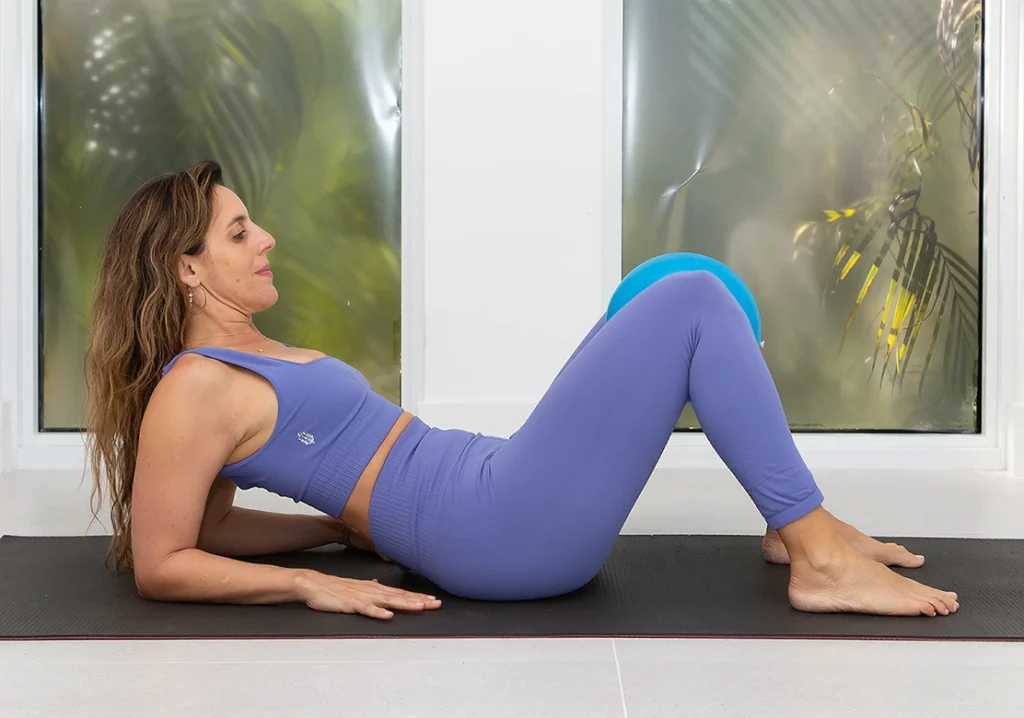
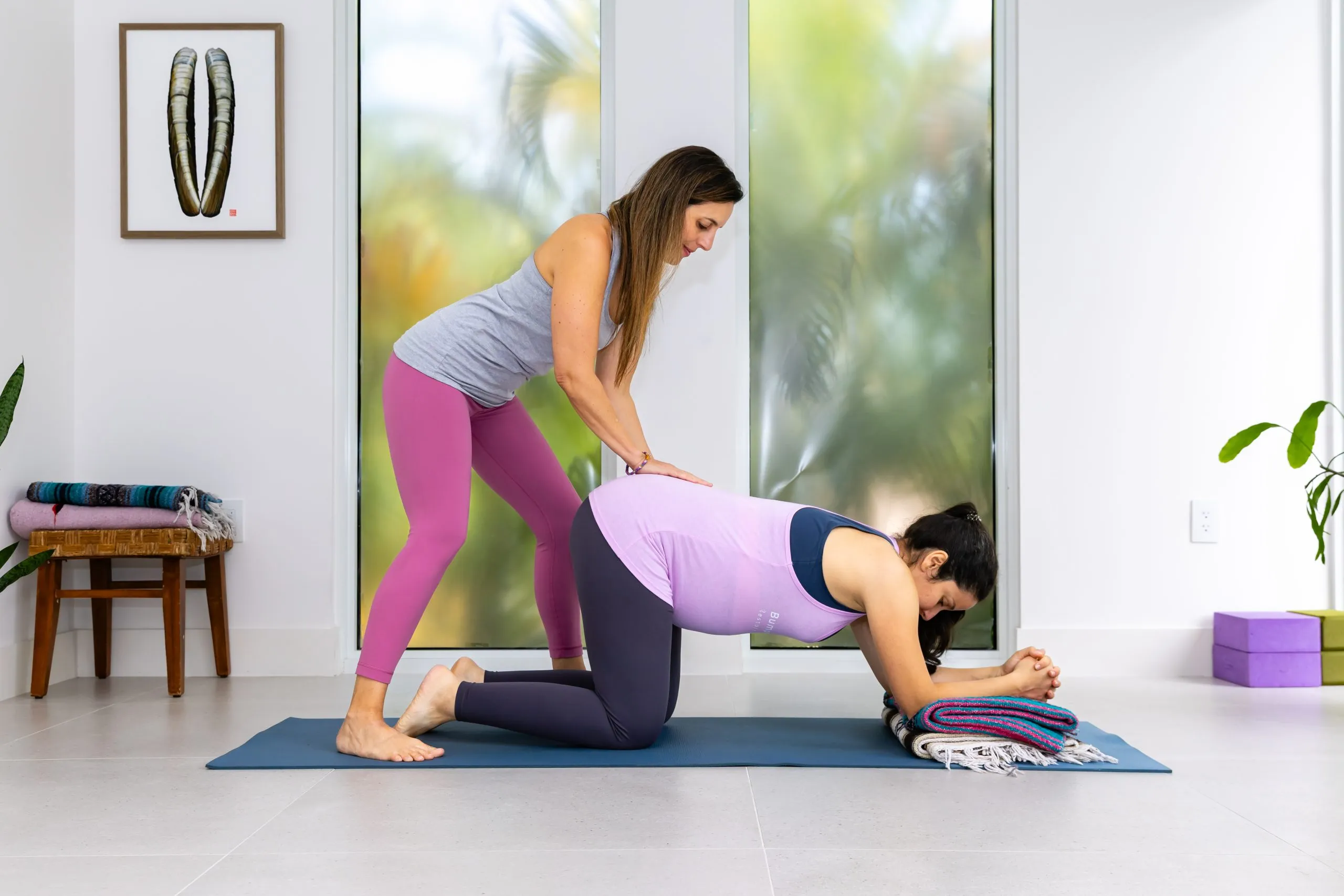
Down-training is the practice of giving the pelvic floor genuine opportunities to let go, and it tends to involve positions that open the hips and pelvis held with slow, three-dimensional breath. Child’s pose with wide knees, a supported deep squat, constructive rest (lying on your back, knees bent, feet flat), or side-lying with a pillow between the knees can all create this kind of space. Spending several minutes in each, with unhurried breath, allows the muscles to soften in a way that deliberate contraction work does not tend to offer.
A body scan a few times through the day can also be useful – noticing the jaw, shoulders, belly, glutes, and pelvic floor, and letting areas that have been holding soften on an exhale. This is a quiet practice, and over weeks and months it can produce a meaningful shift in the body’s baseline tone.
5. Modify the Daily Habits That Spike Pressure
How the body moves through an ordinary day has a cumulative effect on the pelvic floor that is easy to underestimate. Some common habits load the pressure system in ways that compound quietly over time.
Getting out of bed by sitting straight up – head lifting first, abs crunching – sends a pressure spike through the pelvic floor before the day has properly begun. Rolling to one side and pressing up with the arm takes two extra seconds and distributes the load very differently, and the difference accumulates meaningfully over months. On the toilet, straining creates intense downward pressure; a small footstool that raises the knees above the hips changes the angle enough to make elimination easier without bearing down. Hovering above public toilet seats keeps the pelvic floor in sustained contraction and adds to accumulated tension over time. Lifting while holding the breath, long periods of standing without movement breaks, and the chronic habit of drawing the belly in all load the pressure system in similar ways. None of these patterns require significant effort to change, and awareness of them tends to develop gradually as attention expands from dedicated exercise time toward how the body is moving all day.
6. Work With a Pelvic Floor Physical Therapist
A pelvic floor physiotherapist can assess what is happening internally – whether the muscles are underactive, overactive, or lacking coordination – and build guidance around what a specific body actually needs. This is a different quality of information from what home practice alone can surface, and for many women it clarifies why the standard recommendations have not been producing change.
A skilled PT looks at breath, posture, movement habits, scar tissue, and the pressure system as a whole. A home program gives the daily repetition and body education that sessions alone cannot deliver, and many women find the two work well in combination. The PT clarifies what the body needs, and the home program gives it the consistent practice to actually shift.

Enjoy a free, pelvic-floor & core healing whole-body workout today
What to Expect: Timeline and What Progress Looks Like
Breath and daily movement habit changes often produce noticeable shifts within the first few weeks – a sense of more ease in the pelvic floor, fewer leaks during lighter activities, a little less urgency. Deeper changes, particularly the development of more reliable reflexive function during high-pressure moments like sneezing or running, tend to build over several months of consistent work.
Progress is rarely linear. Symptoms can fluctuate during high-stress periods, around hormonal shifts, or when physical demands have been greater than usual, and that tends to reflect how the body is adapting, not whether the work is going in the right direction. For most women with stress incontinence, significant improvement is possible through non-surgical means, and the process tends to deepen the more comprehensively it addresses the full pressure system over time.
When to See a Healthcare Provider
Leaking that is worsening despite consistent effort, pain with urination, blood in the urine, symptoms that began following surgery, or any neurological changes alongside bladder symptoms all warrant prompt medical assessment. For most women, a GP referral to a pelvic floor physiotherapist is a reasonable starting point. If symptoms have shifted suddenly or are significantly affecting daily life, a urogynecologist can provide a more detailed evaluation and a fuller picture of the options available.
Ready for a Structured Approach?
If you are looking for a complete, structured method to work through, explore the RYC® 12-Week Program – a progressive whole-body approach to pelvic floor and core rehabilitation used by women across 80+ countries and trusted by pelvic floor physiotherapists worldwide.
Access your free workout and start healing your core and pelvic floor today
FAQ
Is leaking when you sneeze or cough something you just have to live with?
Many women have been managing this for years before discovering that meaningful improvement is possible. Stress incontinence is common, and it is also a pattern the body can learn to regulate differently over time. The pelvic floor and the wider pressure management system remain adaptable, and many women find significant improvement through a structured whole-body approach that works with coordination, breath mechanics, and how the body handles pressure – areas that isolated exercises often do not reach.
Does stress incontinence happen because the pelvic floor is weak?
Weakness can be one contributing factor. The fuller picture often involves coordination, reflexive timing, and how the whole pressure system is functioning. The pelvic floor needs to respond involuntarily within milliseconds when a sneeze creates a pressure spike, and that reflexive response can be disrupted by chronic tension, breathing patterns that bypass the diaphragm, or a reduced capacity to lengthen under load. In some women, the pelvic floor is holding too much tension, and that affects its ability to receive and distribute pressure effectively. A proper assessment helps clarify which pattern is present.
Can stress incontinence improve without surgery?
For the majority of women, yes. The underlying picture often involves coordination and pressure management alongside strength, and the path forward tends to involve retraining how the whole system handles load – through breath, posture, movement habits, and reflexive pelvic floor function. Surgery is an option when conservative approaches have been genuinely and consistently applied without adequate improvement, and for most women it is not where the work needs to start. Many find significant and lasting improvement through a structured whole-body approach, particularly one that addresses reflexive timing and pressure management.
Why does stress incontinence get worse during perimenopause?
Oestrogen plays a meaningful role in maintaining the elasticity and responsiveness of the tissues supporting the bladder and urethra. As levels fluctuate and decline during perimenopause and menopause, those tissues can become less resilient, which may lower the threshold at which leaking occurs. For women whose pelvic floor coordination was already marginal, this hormonal shift can make previously manageable symptoms more noticeable. Vaginal oestrogen, when prescribed by a healthcare provider, can support tissue quality and may make other approaches more effective. Pelvic floor rehabilitation remains relevant and worthwhile at any stage of this transition.
I've been doing Kegels consistently for months and nothing has changed. Why not?
There are a few possible explanations. One is technique – many women doing Kegels without guidance are compensating with the glutes, thighs, or abdomen and may not be engaging the pelvic floor effectively at all. Another is that voluntary Kegels build a slow, deliberate contraction, and the fast involuntary reflex a sneeze demands is a different capacity that develops differently. A third is that if the pelvic floor is already holding chronic tension, adding more contraction work can deepen that pattern. A pelvic floor physiotherapist can assess which of these is at play. Programs like the RYC® 12-Week Program address the broader coordination picture that Kegel practice alone tends not to reach.
Can stress incontinence happen to women who have never been pregnant?
Yes. Pregnancy and vaginal birth are significant contributing factors, and stress incontinence also occurs in women who have never been pregnant, including younger women. High-impact training without adequate pelvic floor preparation, chronic coughing from respiratory conditions, long-term heavy lifting, certain postural patterns, and inherited connective tissue differences can all play a role. The underlying mechanics and the approaches that address them are consistent across these different presentations.
How is stress incontinence different from urgency incontinence?
Stress incontinence is leaking triggered by physical pressure on the bladder – sneezing, coughing, laughing, lifting, jumping. Urgency incontinence involves a sudden strong urge to urinate that can be difficult to defer, sometimes leading to a leak before reaching the bathroom. Some women experience both, which is called mixed incontinence. The distinction matters because the mechanisms differ and the primary approaches differ as well. Stress incontinence tends to respond to pelvic floor coordination and pressure management work; urgency incontinence often also involves bladder retraining and nervous system regulation. A pelvic floor physiotherapist can assess which pattern is present and guide accordingly.
References
Jefferson, F. A., & Linder, B. J. (2024). Evaluation and management of female stress urinary incontinence. Mayo Clinic Proceedings, 99(11), 1802–1814. https://doi.org/10.1016/j.mayocp.2024.07.003
Grimes, W. R., & Stratton, M. (2023). Pelvic floor dysfunction. In StatPearls [Internet]. StatPearls Publishing. https://www.ncbi.nlm.nih.gov/books/NBK559246/
Top articles

“There is no thank you big enough for Lauren Ohayon existing and thinking and helping so many of us. Every time I do something I never thought I’d do again she is part of the reason why.”
Laura Gregg
Strengthen, heal & nourish your pelvic floor & core
Try a FREE workout
with Lauren
*10K+ women healed and healing
Thank you!
Your FREE video is on the way
Please check your email inbox in a few minutes.
Related articles





Enjoy a free, pelvic-floor & core healing whole-body workout today
Get more actionable info, inspiration and exclusive offers delivered to your inbox.
*No spam, just quality content and support
Thanks for subscribing!

inbox soon.
Thanks for subscribing!
Please check your inbox soon.