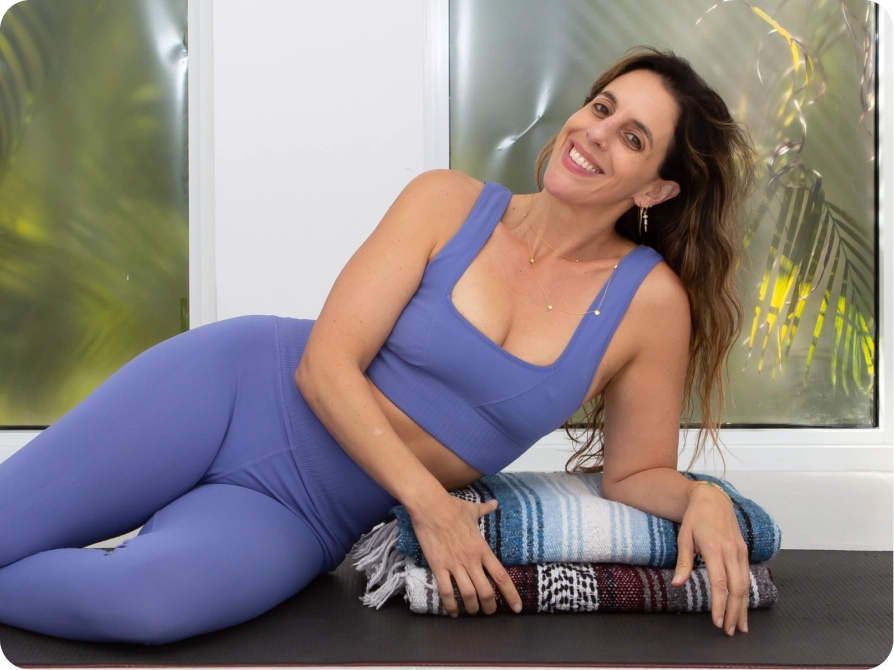
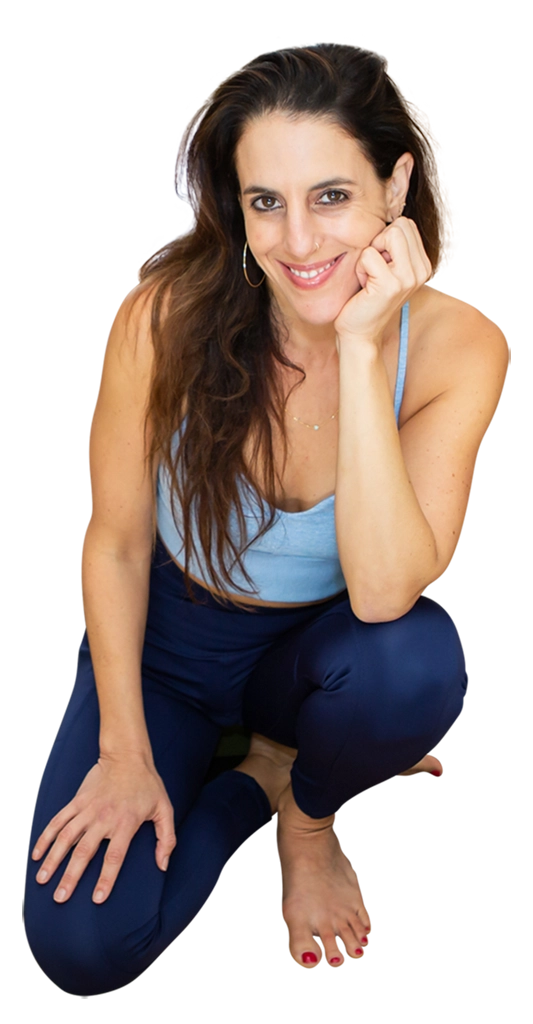
Lauren Ohayon is the creator of Restore Your Core® (RYC®), a comprehensive and sustainable whole-body fitness program that empowers women to achieve ideal pelvic floor / core function and be strong, long, mobile and functional.
Hi! I'm Lauren.
Nice to meet you
Lauren Ohayon is the creator of Restore Your Core® (RYC®), a comprehensive and sustainable whole-body fitness program that empowers women to achieve ideal pelvic floor / core function and be strong, long, mobile and functional.
Healing from diastasis recti rarely follows a straight path. It can bring up frustration, confusion, and even fear – especially when you’re getting mixed messages from social media, friends, or healthcare providers.
At Restore Your Core®, we believe healing happens through functional movement, breath, and awareness – not restriction or rigidity. These FAQs reflect the real questions we hear most often and the insights of our RYC® team: pelvic floor and movement specialists who’ve helped thousands rebuild strength and confidence through intelligent, sustainable movement.
Table of Contents
1. Can a large or severe case of diastasis recti heal naturally, without surgery?
Yes – even a large or “severe” diastasis can often heal naturally. We’ve seen people with separations as wide as ten fingers regain full function and strength without surgery.
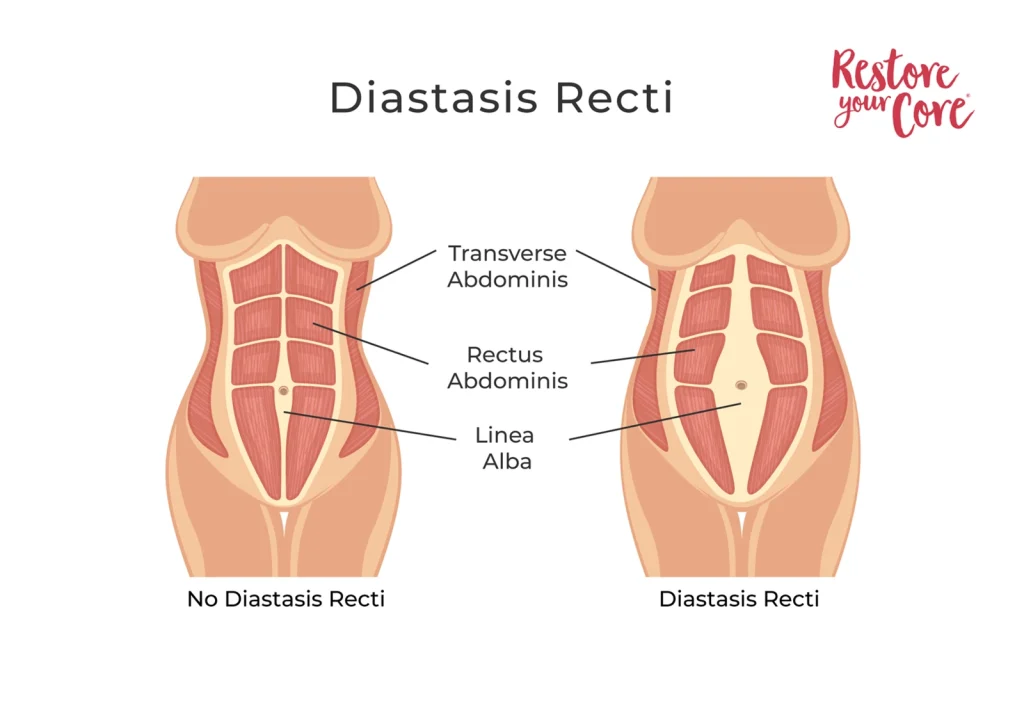
Healing doesn’t always mean the gap closes completely. It means the tissue between the abdominals – the linea alba – becomes stronger and more responsive, allowing your core to transfer load and support movement again. When that happens, your belly feels flatter, your spine more supported, and daily activities like lifting or twisting become easier and pain-free.
Surgery can be helpful in certain cases, especially if there’s a hernia or ongoing pain that limits daily life. But surgery doesn’t change how your body manages intra-abdominal pressure – and without retraining those underlying mechanics, the pressure has to go somewhere.
The RYC® 12-Week Program focuses on restoring those core strategies: how you breathe, align, and move, so your abdominal wall can remodel and strengthen naturally – no matter how wide your separation started.
Start your healing today with this free workout
2. What can I do if my diastasis recti causes pain and makes my belly look pregnant months later?
It’s very common to still look or feel “pregnant” months after birth – and it’s rarely just the gap itself. That rounded belly or heaviness often reflects how your body is managing pressure, tension, and load, not simply weak or separated muscles.
When the deep corecannot manage pressure effectively, it can lead to bloating, tenderness, or a visible “pooch.” This often happens when we hold our breath, suck our belly in, or grip through our abs instead of letting the whole core system – diaphragm, transverse abdominis, and pelvic floor – share the work.
To start shifting this, think pressure management first, not muscle work.
Here are a few ways to begin:
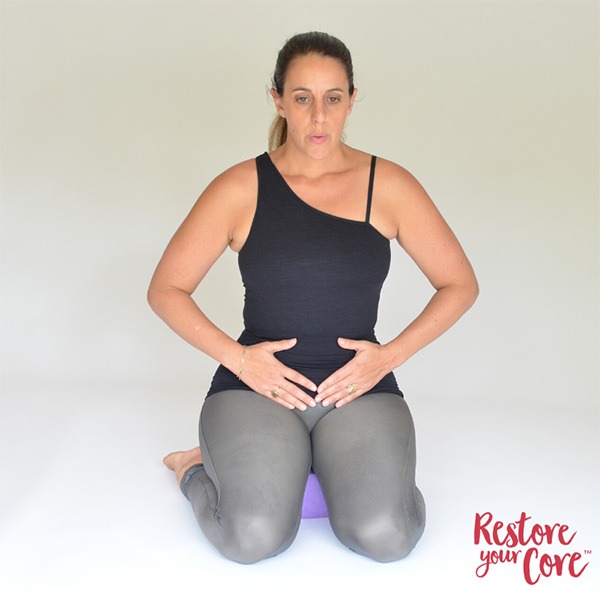
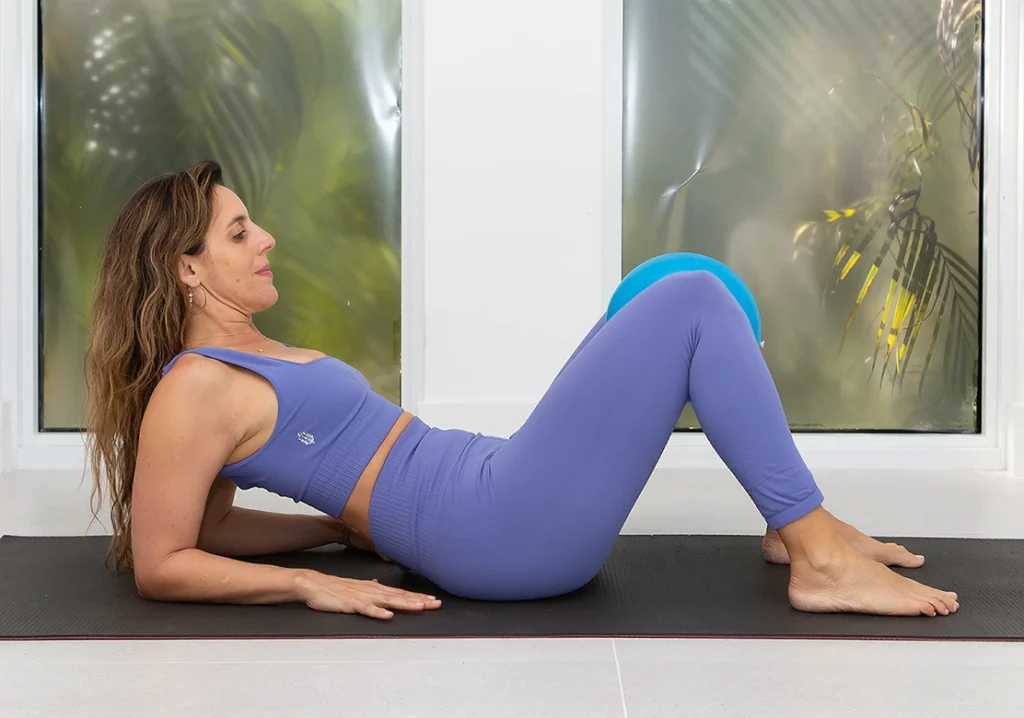
Breath first: Practice gentle rib breathing – place your hands around your ribs, inhale softly into the sides and back, exhale and feel your ribs glide inward and your core respond naturally. This helps your diaphragm and pelvic floor sync, reducing intra-abdominal pressure.
Stack your ribs over your pelvis: Whether you’re sitting, standing, or lifting, avoid flaring your ribs or tucking your tailbone. When the ribs and pelvis are aligned, your core can respond reflexively instead of bracing.
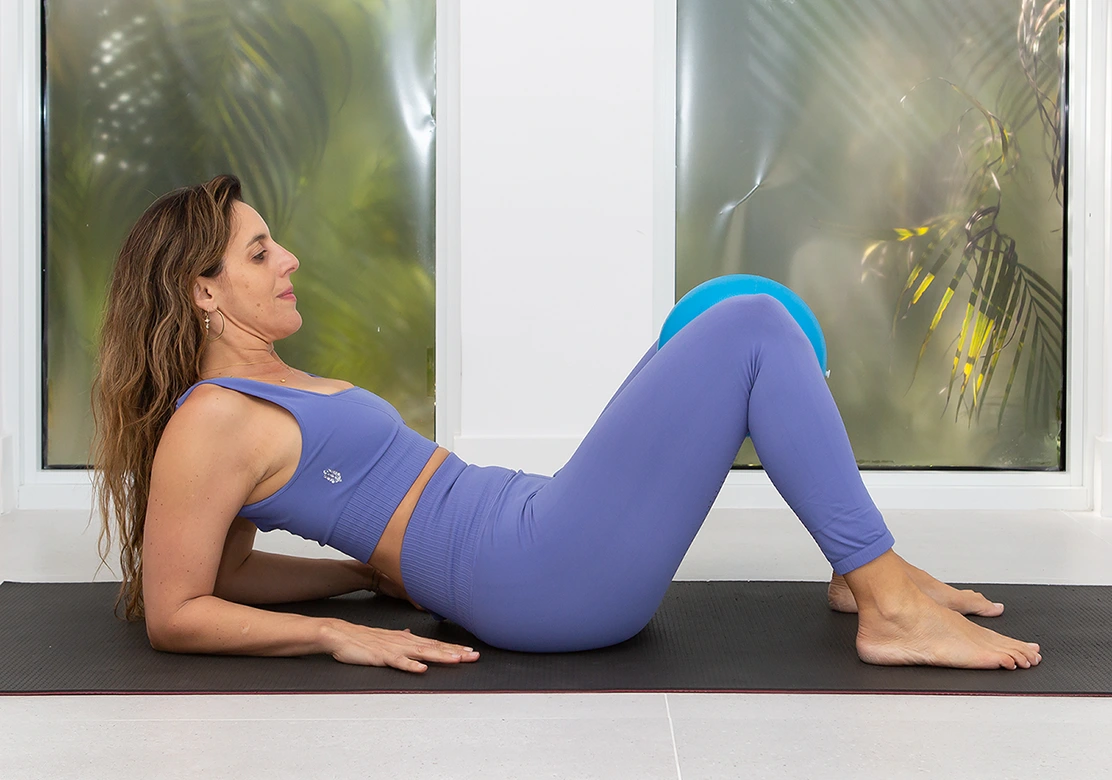
Replace crunches and planks with supportive moves: Try heel slides, bridge lifts with breath, gentle standing rotations, or exhale-to-reach movements where you can feel your abs drawing inward – not pushing out or doming.
Watch your everyday habits: Exhale when you lift your baby, stand from a chair, or climb stairs. Those small breath cues retrain your pressure system more than any single “core exercise.”
When your core learns to coordinate again, your belly naturally becomes flatter and more responsive – not because you’ve tightened it, but because your body is better able to manage pressure.
That’s the foundation of the RYC® 12-Week Program – it teaches you exactly how to re-pattern your breath, rebuild strength layer by layer, and move in ways that make your core functional again, so pain eases and your body feels (and looks) more like home.
3. Why does my belly still bulge or appear round even after narrowing my diastasis recti gap?
A smaller gap doesn’t always mean your core is fully functional yet. That soft or rounded belly often has less to do with the space between the muscles and more to do with how your body manages pressure and tension.
If your ribs lift, your pelvis tucks, or you breathe mostly into your belly, intra-abdominal pressure is increased– creating that bulging look. When your ribs, breath, and pelvis start working together again, your core can respond more evenly, and your belly naturally feels flatter and more supported.
It’s also worth knowing that connective tissue continues to remodel for months (even years) after your gap narrows – function improves long before aesthetics catch up.
The RYC® 12-Week Program guides you through the breath, alignment, and movement strategies that help your core work as a system again – so your belly looks and feels more integrated from the inside out.
4. Is it possible to heal diastasis recti if I’m older or many years postpartum?
Yes – healing is absolutely possible, no matter how long it’s been since birth. Many people discover a diastasis years or even decades later and still make meaningful progress once they start retraining how their body manages pressure and load.
While connective tissue tends to remodel more slowly with age, the same principles apply at every stage:
Restore your breath mechanics. When you breathe into your ribs (not just your belly), and your diaphragm and pelvic floor work together to reduce excess intra-abdominal pressure.
Rebuild postural alignment. When your ribs stack over your pelvis, your core can engage reflexively instead of bracing or pushing out.
Load intelligently. Gentle, progressive strengthening (like bridges, heel slides, or supported standing moves) helps tissue remodel and your body learn to manage everyday forces – lifting, walking, even coughing – without strain.
People often do better later in life because they move with more attention and they have more time to focus on their health and well-being. That awareness helps re-establish the reflexive support your body needs for stability, not just appearance.
The RYC® 12-Week Program follows this exact process – teaching breath, alignment, and load progression in a way that adapts to your current capacity. It’s not about age; it’s about how you’re moving and breathing now.
Try 18 minutes of healing, nourishing movement – the RYC® way
5. Can diastasis recti and prolapse still improve two years after giving birth?
Yes – both diastasis recti and prolapse can continue to improve well beyond the first year postpartum. Two years might feel like a long time, but in movement and tissue recovery, it’s not. Your body never stops adapting to how you move and breathe.
At this stage, progress often looks less like dramatic “before and after” changes and more like steady functional gains – feeling stronger, more supported, and less symptomatic in daily life.
If your symptoms or belly shape have plateaued, it usually means your system needs refinement, not reinvention. For example:
How do you lift or carry weight throughout your day – with your breath, or against it?
Are you bracing or gripping out of habit?
Do your workouts challenge your core and pelvic floor in ways that build coordination, or just strength?
These small awareness shifts are what create long-term change. By gradually improving how your body manages load – not just in exercise, but in the way you live and move – the tissue and coordination of your core and pelvic floor can continue to remodel and strengthen.
The RYC® 12-Week Program is designed for exactly this kind of refinement. It helps you identify the habits that keep your system stuck and replace them with movement patterns that support lasting improvement – no matter how long it’s been since you gave birth.
6. I’ve been told I don’t have diastasis recti, but I still feel weak and disconnected in my core. What’s going on?
A strong, functional core isn’t just about how close your abdominal muscles are to each other – it’s about how well the whole system works together. Even if your gap is considered “healed,” you can still feel weak, unsupported, or “off” if the deeper layers of your core – your diaphragm, transverse abdominis, pelvic floor, and obliques – aren’t coordinating.
That feeling of disconnection can come from several things:
Scar tissue from surgery or birth
Years of movement patterns that favor gripping or bracing
Nerve desensitization after pregnancy or trauma
Or simply a nervous system that hasn’t yet relearned trust and responsiveness in movement
The good news? This can change. Re-establishing connection takes mindful retraining – not harder workouts. Start with gentle breath-based work that helps you feel your ribs expand laterally, your abdomen soften and respond, and your pelvic floor move with the breath. Then, add small, functional loads – reaching, hinging, squatting – with awareness of pressure rather than force.
In the RYC® 12-Week Program, we rebuild that connection through intelligent movement progressions that retrain your brain-to-core communication, improve load management, and restore your confidence from the inside out.
7. Why is rib breathing so difficult while working on diastasis recti?
When you’re retraining your core after diastasis recti, rib breathing can feel surprisingly hard – and that’s completely normal. Most of us have spent years breathing shallowly into our upper chest or belly, often without realizing it.
Pregnancy, stress, and posture all play a role. Over time, the rib cage and spine can lose mobility, and the diaphragm – your main breathing muscle – stops moving through its full range.
When that happens, your body finds workarounds. You might lift your shoulders to “breathe bigger” or push your belly out instead of expanding the ribs. Neither of those patterns helps your core heal – in fact, they can increase pressure on your abdominal wall or pelvic floor.
To retrain this, it helps to slow down and focus on sensation rather than perfection:
Place your hands around your lower ribs. As you inhale, feel the ribs gently widen sideways and backward – like an umbrella opening.
On the exhale, feel the ribs glide inward and the abdominal wall naturally draw in.
Keep your shoulders soft and your neck relaxed. Breathing shouldn’t feel like effort.
Practice for just a few minutes a day. Consistency matters more than duration. Over time, your ribs will start to move more freely, and your breath will feel fuller and easier.
This kind of rib movement is key for managing intra-abdominal pressure – the subtle shifts that keep your core and pelvic floor working with you instead of against you.
In the RYC® 12-Week Program, we spend intentional time restoring this relationship between the ribs, diaphragm, and core. You’ll learn to use your breath as both a stabilizer and a release valve – a way to rebuild strength, ease, and trust in your body from the inside out.
8. Is it safe to exercise if I still have diastasis recti?
Yes – and in fact, movement is essential for healing. The goal is to move with awareness of your body’s current capacity rather than avoid exercise altogether.
If you notice doming, bulging, or bearing down in your pelvic floor, the load is likely too heavy or your strategy needs adjusting. With the right modifications, movement becomes a powerful tool for recovery rather than something to fear.
The RYC® 12-Week Program is built around that principle – guiding you through intelligent progressions that strengthen your core and pelvic floor while protecting the tissue as it heals.
9. Should I modify plank exercises if I have diastasis recti in the upper abdomen?
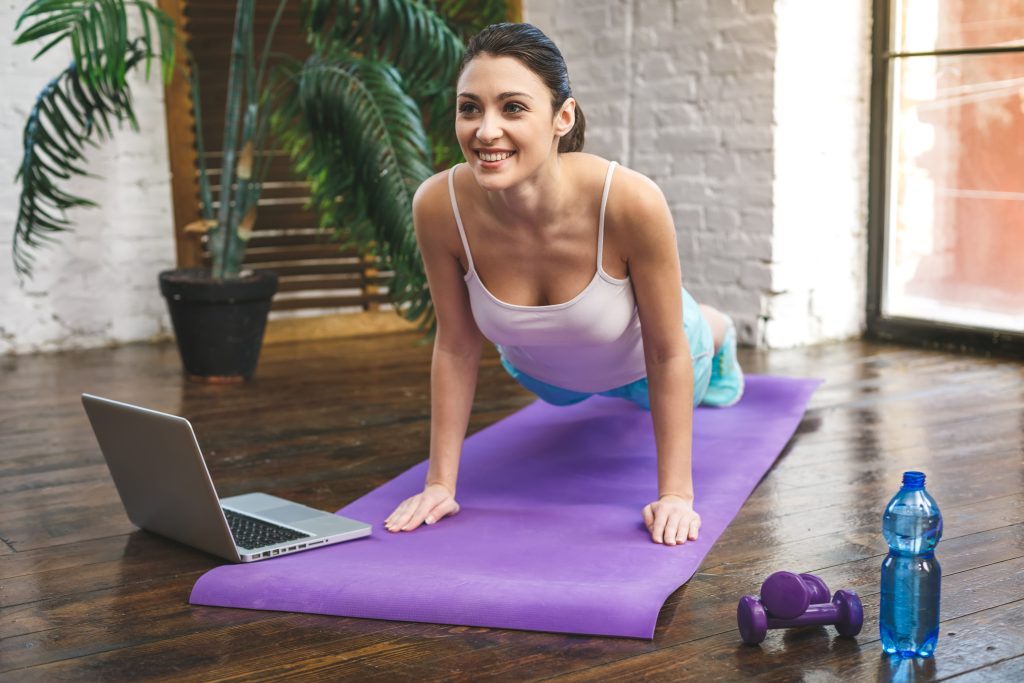
Absolutely. A plank is a load – and load isn’t bad, but it has to match your system’s capacity. If you see doming or feel pressure near the top of your abs, modify rather than push through.
Try these alternatives:
Elevate your hands on a wall, bench, or countertop to decrease the load
Keep your knees down to reduce the demand on the core
Focus on exhaling as you move into the plank, maintaining your ribs stacked over your pelvis
Limit hold time – shorter, smarter holds are more beneficial than longer, strained ones
These modifications allow your connective tissue to adapt safely, building both strength and resilience. Over time, as your coordination improves, you’ll naturally progress toward a full plank without bulging or bearing down.
This responsive, progression-based approach is core to the RYC® 12-Week Program, which helps you build load tolerance in your core and pelvic floor gradually – not by pushing harder, but by moving smarter.
Discover the top 3 steps to heal your Diastasis Recti and get back to what you love
10. Can carrying my baby up stairs worsen diastasis recti?
Carrying your baby – or any load – up stairs increases intra-abdominal pressure, but that’s not inherently harmful. It’s a normal part of functional movement. The important thing is how your body manages that pressure.
If you tend to hold your breath, clench your abs, or flare your ribs, you create unnecessary strain on the abdominal wall. Instead:
Exhale gently as you lift or step up
Keep your ribs aligned over your pelvis (avoid leaning back)
Let your exhale connect with your deep core – not as a forceful “brace,” but as a coordinated support
If it still feels hard, pause halfway, reset your breath, and continue
These small adjustments teach your system to distribute load efficiently – so you can keep doing real-life tasks without fear.
That’s a huge part of the RYC® 12-Week Program – it doesn’t train you for the gym, it trains you for life. You’ll learn strategies that make lifting, climbing, and even carrying your baby feel supportive rather than stressful, helping your core and pelvic floor work with you, not against you.
Continuing Your Core Healing Journey
Healing your core takes time, curiosity, and support. If you’re navigating symptoms or building strength after diastasis recti, know you’re not alone. The Restore Your Core® Program offers guidance, structure, and a compassionate approach to reconnecting with your body.
You’re always welcome in the RYC® Facebook community – a supportive, no-shame space where thousands of women ask questions, share wins, and learn from one another. Whether you’re curious about symptoms, healing, or everyday movement, it’s a great place to get clarity and connection.
“There is no thank you big enough for Lauren Ohayon existing and thinking and helping so many of us. Every time I do something I never thought I’d do again she is part of the reason why.”
Laura Gregg
Strengthen, heal & nourish your pelvic floor & core
Compare Bump & Birth with pregnancy, birth prep and postpartum memberships to see how lifetime access, recurring costs and long-term value differ over time for families....
Explore how vaginismus can improve without surgery through pelvic floor therapy, dilators, movement, nervous system regulation, and compassionate whole-body support and care today....
Try this free restorative workout with Lauren Ohayon, designed for all levels with gentle, breath-led movement, supportive props and space to move at your own pace today....
Discover a whole-body approach to postpartum strength with Lauren Ohayon’s free video, exploring your core, pelvic floor, breath, pressure, movement, and recovery....
Discover Lauren Ohayon’s best prolapse exercises on YouTube and learn how breath, movement, and pressure management can support pelvic floor health and recovery....
Explore RYC® Bump & Birth, a continuous program supporting pregnancy, birth preparation, and early postpartum recovery with expert pelvic floor guidance. for every pregnancy....
Discover what's inside the Restore Your Core® 12-Week Program, including workouts, education, Guided and Essentials tracks, pricing, and who it's designed for....
Prepare your body for birth with RYC® Bump & Birth, an online program combining pregnancy workouts, pelvic floor training, breathwork, and postpartum recovery support....
Discover a free 15-minute pregnancy and birthing class that combines breath, pelvic floor coordination, and gentle movement to help you prepare confidently for labor....
Bladder leakage after menopause is common but treatable. Learn why you pee when you cough or sneeze and discover evidence-based strategies to improve pelvic floor function....