Resources
- How Stress, Fascia & Your Nervous System Affect Your Pelvic Floor
- How Do I know If My Pelvic Floor Is Tight Or Weak?
- Finding Relief from Pain During Sex: Pelvic Floor Exercises That Work
- The Connection Between Exercise and Bloating: What Every Professional (and Their Clients) Need to Know
- How to Strengthen Pelvic Floor Safely
- Pelvic Floor Exercises for Constipation: Awareness, Movement, and Nervous System Relief
- High-Tone Pelvic Floor Dysfunction: Symptoms, Causes & Relief Tips
- How Menopause Affects the Pelvic Floor: Symptoms, Support & Hormonal Impact
- Tailbone Wagging for Tailbone Pain Relief and Pelvic Floor Mobility
- The Power of Tremoring: How Tension Release Exercises Support Your Nervous System
- Pelvic Floor Postpartum Exercises for Faster Recovery
- Navigating Coccyx Pain in Pregnancy: A Trimester-by-Trimester Guide
- Understanding Coccyx Pain: Symptoms, Causes, Healing and Prevention
- Pilates and Pelvic Floor Dysfunction: Is It the Solution You’re Seeking?
- 5 Pilates Pelvic Floor Exercises You Don’t Want to Leave Out
- Pelvic Floor Massage: A Comprehensive Guide
- Does Pilates Strengthen Pelvic Floor Muscles? A Comprehensive Guide
- Hypermobility and Pelvic Floor Health: What You Need to Know
- The Foot to Pelvic Floor Connection: A Whole-Body Approach to Movement and Health
- Understanding Pelvic Floor Pain After Running: Causes and Solutions for Professionals
- Do Squats Strengthen Pelvic Floor Muscles? Insights for Movement Professionals
- How Pelvic Floor Health Is Related to the Process of Moving from Arousal to Orgasm
- 5 Things I Wish People Knew About Your Pelvic Floor & Orgasm
- Pelvic Floor Tension: Everything You Need to Know
- How Running and Pelvic Floor Health Are Interconnected: What Every Runner Should Know
- Does Running Strengthen Pelvic Floor Muscles? Myths vs. Facts
- Understanding Urine Leakage Causes: Why It Happens and How to Manage It
- How to Strengthen Your Pelvic Floor: The Ultimate Guide
- Strengthening and Restorative Yoga Poses for Full Body Health
- Understanding Queefing: Causes, Symptoms, and Simple Prevention Tips
- How Do You Know if You Have a Weak Pelvic Floor
- What Does Pelvic Floor Pain Feel Like?
- How Can I Strengthen My Pelvic Floor Without Kegels?
- Pelvic Floor Stretches | 5 Quick Ways To Relax Your Pelvis
- Pelvic Floor Specialist | Finding Help To Heal Your Pelvis
- Is Pelvic Floor Repair Major Surgery? | Pelvic Health Guide
- Pelvic Floor Exercises
- How to Strengthen Pelvic Floor
- Is Pelvic Floor Repair Major Surgery? | Pelvic Health Guide
- Pelvic Floor Therapy | Improving Your Pelvic Health
Resources
- How Stress, Fascia & Your Nervous System Affect Your Pelvic Floor
- How Do I know If My Pelvic Floor Is Tight Or Weak?
- Finding Relief from Pain During Sex: Pelvic Floor Exercises That Work
- The Connection Between Exercise and Bloating: What Every Professional (and Their Clients) Need to Know
- How to Strengthen Pelvic Floor Safely
- Pelvic Floor Exercises for Constipation: Awareness, Movement, and Nervous System Relief
- High-Tone Pelvic Floor Dysfunction: Symptoms, Causes & Relief Tips
- How Menopause Affects the Pelvic Floor: Symptoms, Support & Hormonal Impact
- Tailbone Wagging for Tailbone Pain Relief and Pelvic Floor Mobility
- The Power of Tremoring: How Tension Release Exercises Support Your Nervous System
- Pelvic Floor Postpartum Exercises for Faster Recovery
- Navigating Coccyx Pain in Pregnancy: A Trimester-by-Trimester Guide
- Understanding Coccyx Pain: Symptoms, Causes, Healing and Prevention
- Pilates and Pelvic Floor Dysfunction: Is It the Solution You’re Seeking?
- 5 Pilates Pelvic Floor Exercises You Don’t Want to Leave Out
- Pelvic Floor Massage: A Comprehensive Guide
- Does Pilates Strengthen Pelvic Floor Muscles? A Comprehensive Guide
- Hypermobility and Pelvic Floor Health: What You Need to Know
- The Foot to Pelvic Floor Connection: A Whole-Body Approach to Movement and Health
- Understanding Pelvic Floor Pain After Running: Causes and Solutions for Professionals
- Do Squats Strengthen Pelvic Floor Muscles? Insights for Movement Professionals
- How Pelvic Floor Health Is Related to the Process of Moving from Arousal to Orgasm
- 5 Things I Wish People Knew About Your Pelvic Floor & Orgasm
- Pelvic Floor Tension: Everything You Need to Know
- How Running and Pelvic Floor Health Are Interconnected: What Every Runner Should Know
- Does Running Strengthen Pelvic Floor Muscles? Myths vs. Facts
- Understanding Urine Leakage Causes: Why It Happens and How to Manage It
- How to Strengthen Your Pelvic Floor: The Ultimate Guide
- Strengthening and Restorative Yoga Poses for Full Body Health
- Understanding Queefing: Causes, Symptoms, and Simple Prevention Tips
- How Do You Know if You Have a Weak Pelvic Floor
- What Does Pelvic Floor Pain Feel Like?
- How Can I Strengthen My Pelvic Floor Without Kegels?
- Pelvic Floor Stretches | 5 Quick Ways To Relax Your Pelvis
- Pelvic Floor Specialist | Finding Help To Heal Your Pelvis
- Is Pelvic Floor Repair Major Surgery? | Pelvic Health Guide
- Pelvic Floor Exercises
- How to Strengthen Pelvic Floor
- Is Pelvic Floor Repair Major Surgery? | Pelvic Health Guide
- Pelvic Floor Therapy | Improving Your Pelvic Health
Top 5 Exercises to Strengthen the Pelvic Floor
By Lauren Ohayon 07/30/2024
5 Min Read
Strengthening your pelvic floor can be achieved through a variety of different exercises. Here are five exercises that you can easily integrate into your regular exercise routines. Performing these exercises regularly can help enhance your overall well-being and address or prevent pelvic floor-related issues.
Table of Contents
Why You Need a Strong Pelvic Floor
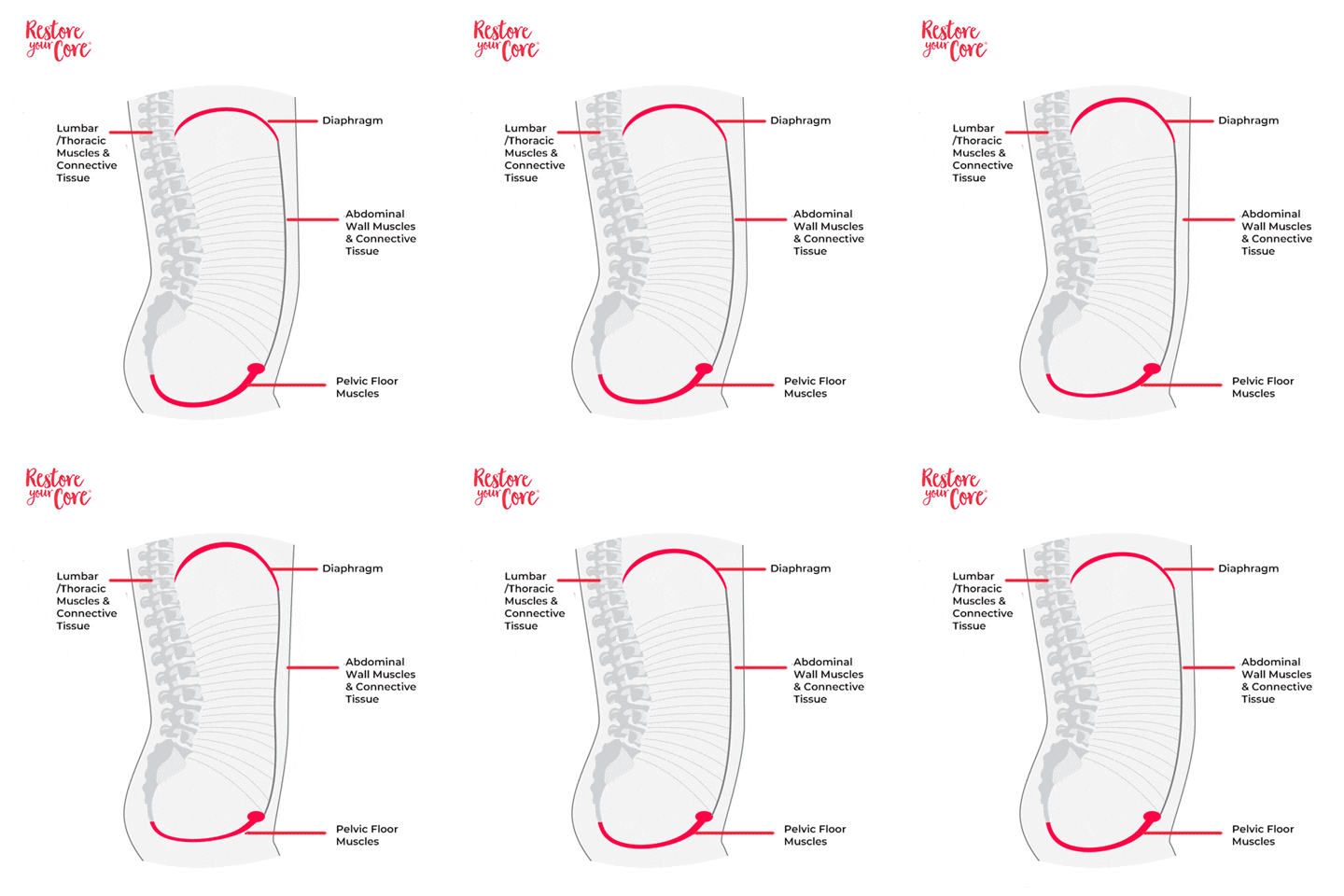
The pelvic floor muscles line the pelvis and serve multiple functions. They support the organs nestled in the pelvis and, therefore, affect digestion, elimination, sexual function, and reproduction. The pelvic floor muscles also work reciprocally with the diaphragm as part of the breathing process and engage along with the core to support your body as you move through life.
Ideally, you wouldn’t have to think much about how to acquire a strong pelvic floor. Your pelvic floor muscles should be responsive to the many inputs they receive all day, engaging and yielding as necessary. However, due to many factors, the vast majority of people assigned female at birth will experience some form of pelvic floor dysfunction during their lifespan.
There are numerous symptoms and conditions related to pelvic floor dysfunction:
- Urinary incontinence – frequency and/or urgency
- Fecal incontinence, poor bowel control, pain during bowel movements
- Constipation
- Pain with penetrative sex
- Difficulty reaching orgasm or pain after
- Pelvic organ prolapse
- Low back pain
- Pelvic pain
- Hip pain
While we cannot always prevent pelvic floor issues, there are ways to ensure that your pelvic floor functions as well as possible, such as pelvic floor strengthening exercises. If you are currently experiencing pelvic floor symptoms such as those listed above, you should consult with a medical professional before beginning any exercise program.
Benefits of Strengthening the Pelvic Floor Muscles
The strength and responsiveness of your pelvic floor muscles can affect numerous areas of your daily life. For example, if you’re experiencing frequent stress urinary incontinence (sneeze pee, urine leakage while jumping, etc.), your day may include making sure that you have an incontinence pad in place for your workout, or running home to change clothes due to a leak. The degree of disruption and discomfort that pelvic floor issues cause varies from person to person.
There are numerous medical approaches to managing and healing pelvic floor problems; however, all interventions will require some form of rehabilitative exercise as part of the process. The best approach to pelvic floor strengthening includes whole-body exercises. The pelvic floor is a system that includes your glutes, hamstrings, core, and pelvis.
The exercises below will help you maintain your pelvic floor strength and responsiveness if you currently have no issues; if you do have pelvic floor issues, these are some of the best exercises to strengthen your pelvic floor muscles. You can perform these exercises as often as works for you, though consistent practice is essential. Aim for at least 2-3 days per week. If you’d like a whole-body program that focuses on building strength and responsiveness in your pelvic floor, my Restore Your Core® program provides step-by-step workouts designed to do exactly that.
Before we get into the exercises: The information provided on this website is for educational and informational purposes only and is not intended as medical advice. It is not a substitute for professional medical advice, diagnosis, or treatment. Always seek the advice of your physician or other qualified health provider with any questions you may have regarding a medical condition.
5 Exercises to Strengthen the Pelvic Floor
These exercises can be incorporated into your regular exercise routine, or you can repeat all of them as a stand-alone routine.
Exercise #1: Kegel Exercises:
Kegel exercises are the most commonly known type of pelvic floor strengthening exercise, and this is the only reason they are at the top of this list. Kegels are not recommended as a first exercise for people who have overactive pelvic floor muscles. If you frequently experience a sense of your pelvic floor being “too tight,” or if you’ve been diagnosed with a hypertonic pelvic floor, you may want to start with one of the other exercises listed here. As well, when you perform a kegel, you are training the pelvic floor in isolation, this doesn’t always translate to more dynamic whole-body movements. Kegels are appropriate at times, but they’re not the only exercise for pelvic floor strength and not the first that I recommend.
A Kegel, performed correctly, includes both a concentric contraction and a relaxation of that contraction. Here’s how to do it:
- Begin by sitting or lying down
- Imagine that you’re holding a blueberry or marble just at the entrance to your vagina, or imagine that you’re trying to draw your scrotum up into your pelvis, if you have a penis
- Gently lift the marble and hold it for a few seconds
- Slowly release it all the way down and allow yourself to relax
- Do not hold your breath, and try to focus only on the muscles toward the front of your pelvic floor, not the butt, anus, or abdominal muscles
- Repeat 10 times, or break up into smaller sets throughout your day
Exercise #2: Squats:
Squats are a functional movement pattern and can benefit your pelvic floor when performed correctly. I generally teach a squat that is more like a hip hinge (watch a video of this here). Use a mirror to check your form as you perform this exercise.
- Stand with feet parallel and a little wider than pelvis width apart
- Bend your knees and rest your hands on your thighs
- Really stick your butt out behind you, and check to make sure you’re not tucking your pelvis under you
- Don’t let your ribs sink in and collapse, but don’t arch your back, either
- Lifting out of your butt is going to put your glutes on a big stretch as you strengthen them–and that’s exactly what your pelvic floor needs
- Inhale, and exhale as if blowing out candles, so that the abdominals corset in
- Then take your hands off your thighs, one at a time
- Holding this position, check your form in the mirror
- Then push down through your legs to come up to stand
- Repeat several times (8-10 times)
You can also use a chair to support:
- Sit on a chair with your feet parallel and slightly wider than pelvis width
- Make sure your knees are stacked over your ankles and weight on the sit bones (not a tucked pelvis)
- Lean forward slightly and try to stand up. If you find yourself holding your breath, using your hands, shifting your feet back, or otherwise struggling to get up, grab some folded up towels or a bolster and raise the height of your seat until you can push through your feet to stand without your knees coming forward of your ankles
- Repeat several times
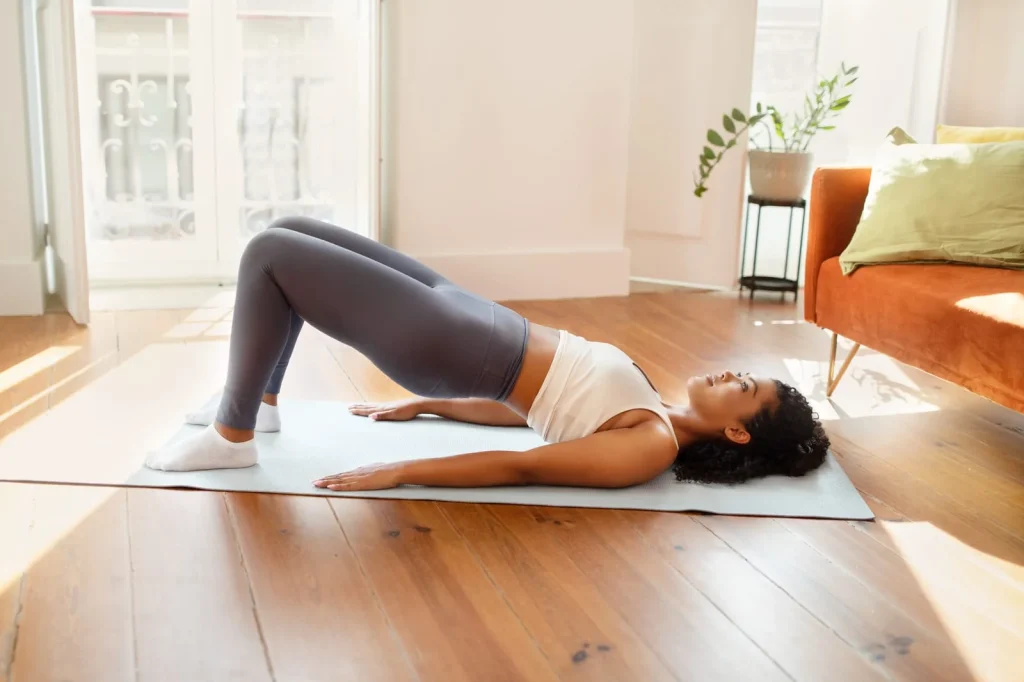
Exercise #3: Bridge Pose:
Bridge pose is a great pelvic floor strengthening exercise because it targets the glutes, hamstrings, and inner thighs. Try these two options to increase the effectiveness of this exercise:
Option 1: bridge with a block (substitute with a pillow or squishy Pilates ball)
- Lie on your back with your feet pelvis width apart, flat on the floor
- Bring place the block between your thighs, squeezing with with just enough tension to keep the block in place
- Press down through your feet and squeeze the block more firmly as you lift your hips
- Only go as high as you can without straining or arching your back
- Slowly lower your hips and release the tension on the block
- Repeat 8-10 times. Bonus round: Come up into the bridge, hold that position and add 10 small pulses up and down, then release
Option 2: Crooked bridge
- Lie on your back with your feet pelvis width apart, flat on the floor
- Step one foot out to the side slightly (if you’re on a yoga mat, place it just off the mat)
- Press down through your feet to raise your hips, keeping your pelvis level
- Only go as high as you can without straining or arching your back
- Slowly lower your hips
- Repeat 8-10 times each side
For a fun before and after experience: Try a regular bridge before you do the crooked bridge reps, then try again after you’ve worked each side. Notice what feels different from the first time you did the bridge
Exercise #4: Pelvic Tilts:
Pelvic tilts are a classic pelvic floor rehabilitation exercise. They help you mobilize the pelvis and isolate pelvic movement from the rest of the body. You can perform this exercise lying down, sitting in a chair, or standing with your back against a wall and knees bent, or even on all fours. The basic instructions remain the same: Begin from a neutral pelvic position
- Exhale as you tuck your pelvis so that your pubic bone moves toward your nose
- Inhale and untuck your pelvis as if sending your sit bones behind you
- Repeat until the movement becomes fluid and even
Exercise #5: Reverse Marching
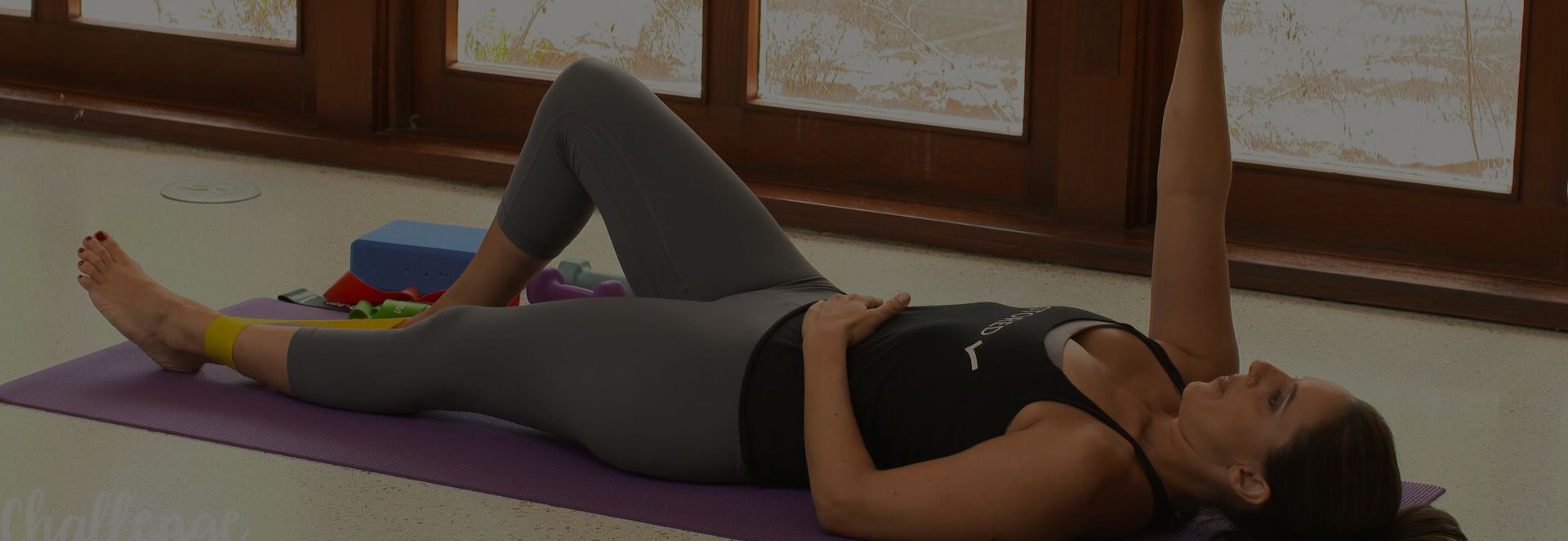
Reverse marching is an exercise that engages the deep core muscles to stabilize spine and torso as you lift your leg. It’s a precursor to other exercises like single leg raises and dead bug. Reverse marching helps train your core to be responsive to loads like walking, so that your core and pelvic floor can be better coordinated. As part of practicing reverse marching, let’s also test your core engagement strategy:
- Lie on your back with your pelvis and spine neutral and feet flat on the floor; you may need to place a rolled-up towel under your head so your ribs are in line with your pelvis. If your ribs are thrust forward, it’s difficult to activate your deep core
- Place your hands on your belly below your bellybutton
- Inhale and allow your ribcage to expand
- Exhale slowly through your mouth as if you’re blowing out 100 candles on a birthday cake. This exhale is called “candles breath”
- As you exhale, allow your lower belly to sink down toward the floor–you will feel your belly move away from your hands
- If your belly moves up into your hands instead of down during the exhale this is what I call bulging. Experiment with the way that you engage your core muscles until you can find a sense of “corseting in” as if you’re zipping up a jacket. Do not bear down with your pelvic floor muscles as you do this
- Inhale and allow the breath to fill your lungs and your belly to gently relax, and repeat as many times as needed to get a sense of core engagement
Now, add some movement:
- On your next exhale, lift your right knee until your shin is parallel to the floor
- Slowly lower it down, then switch sides; repeat 8 times per side
- Do not push through the foot on the floor to get your leg up; imagine that the leg is floating up
- Notice whether your pelvis rocks to the side as you lift your leg; what do you need to do to keep the pelvis stable?
The Best Exercises to Strengthen the Pelvic Floor
The best exercises are always the ones you’ll actually do. Start small and add one new move at a time, or make a plan and schedule and stick to it. You might find that taking a class or working one-on-one with a movement teacher trained in pelvic floor health is easiest for you. You can start as simply as gently moving your pelvis while you sit on a chair. As always, if you have any symptoms that are bothersome or increase in intensity, consult your healthcare provider. Pelvic floor health has benefits that last throughout the lifespan–why not start caring for it now?
FAQ
1. Are there any age restrictions for performing pelvic floor exercises?
There are no specific age restrictions for performing pelvic floor exercises. People of all ages can benefit from these exercises, as they help maintain and improve pelvic floor strength and function, which is important throughout life. However, it’s a good idea to consult with a healthcare provider for personalized guidance if you have any pre-existing conditions or symptoms of pelvic floor dysfunction.
2. How soon after childbirth can I start pelvic floor exercises?
You can typically start gentle pelvic floor exercises, such as kegel exercises or pelvic tilts, within a few days after childbirth, provided you had an uncomplicated delivery. However, it is essential to listen to your body and consult with your healthcare provider before beginning any exercise regimen postpartum to ensure it is safe and appropriate for your individual recovery process.
3. How long should I hold each exercise for optimal benefits?
How long to hold each exercise depends on the exercise, but for most, a hold of a few moments (a breath or two) is sufficient. Consult with your exercise teacher for instructions about specific exercises.
4. Are there any exercises I should avoid if I have a weak pelvic floor?
If you have a weak pelvic floor, you may need to avoid or modify high-impact exercises and activities that put excessive pressure on the pelvic floor, such as heavy lifting, jumping, and certain abdominal exercises like sit-ups. Focus on low-impact, targeted pelvic floor exercises that will gradually build up strength. You may wish to work with a PT or movement professional specializing in pelvic health in order to create a plan to rehab your pelvic floor muscles.
5. Can pelvic floor exercises be done without any previous experience?
Yes, many pelvic floor exercises can be done without any previous experience. They are generally simple and easy to learn, making them accessible for beginners. Starting with basic exercises like modified squats or pelvic tilts can help you build a strong foundation. It is important to ensure you are performing the exercises correctly, so seeking guidance from a movement specialist or physical therapist can be beneficial.
6. How can I incorporate pelvic floor exercises into my existing workout routine?
You can incorporate pelvic floor exercises into your existing workout routine by adding them to your warm-up or cool-down sessions. Whole-body exercises that benefit your pelvic floor can also be woven into a standard exercise routine with some modifications.